12.12.2017

FounderTalks.org: „The event we would’ve wanted for ourselves“

The next FounderTalks.org event will take place in Vienna on February 16th, 2018. We talked to co-creators Andreas Klinger and Michael Ströck about the Austrian startup ecosystem and their current endeavors.
/artikel/foundertalks-org-we-offer-founders-what-we-wouldve-wanted-ourselves
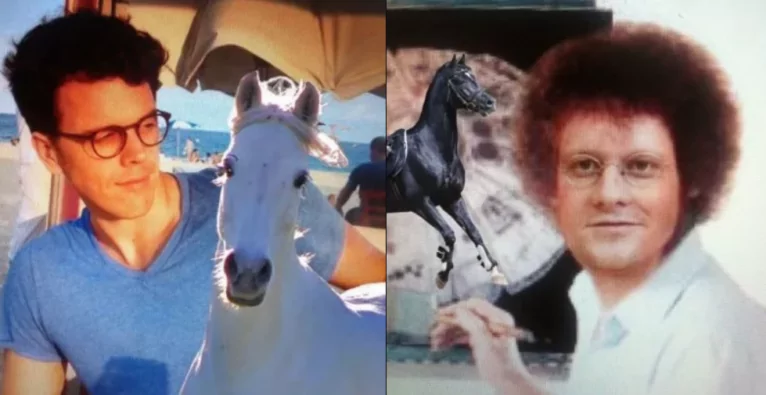
foundertalks.org - Andreas Klinger and Michael Ströck
(c) foundertalks.org - Andreas Klinger and Michael Ströck
kooperation

FounderTalks.org started in 2014 in Vienna by Audrey Kim (formerly YCombinator, Google, United Nations, Cruise Automation), Andreas Klinger (Co-Founder diesocialisten.at, now Product Hunt) and Michael Ströck (Co.Founder Kochabo.at and Gustav). Klinger and Ströck bring in a lot of experience from starting and exiting their own companies, and as angel investors. Their main inspiration for FounderTalks.org was to offer founders and investors what they would’ve wanted for themselves and their portfolio companies when they were getting started.

+++ FounderTalks.org: A private session with Silicon Valley founders in Vienna +++

Klinger’s company Product Hunt was acquired by AngelList last year, and Ströck participated in the YCombinator program with his HR startup Gustav this past summer. Der Brutkasten talked to them about their current activities and the Austrian startup ecosystem.

FounderTalks.org is accepting applications for the upcoming event. The invitations are given on a rolling basis and the event is limited to 100 participants in order to keep the small mentoring session ratio. The event focuses on curated advice, exclusive content, personal relations and networking. Open applications are accepted from founders, investors, accelerator/innovation leaders, and those interested in entrepreneurship (85 percent of the invitations are reserved for startup founders. The rest goes to investors, innovation managers, corporates and accelerators).

⇒ Apply for the event here


Andreas, you were one of Austrias Startup Pioneers. How do you see the Austrian Startup ecosystem today? What are its biggest challenges from your point of view?

The austrian ecosystem matured a lot in the last 10 years. I can go on and on how amazing several of the players in our ecosystem are and how great many recent exits were. But let’s not waste time on this – You know who you are! So let’s dive into the biggest challenges. From my point of view Austrian entrepreneurs mainly face two issues:

First, there are what I call „beginner issues“. It’s essentially inefficiencies, complexities and inexperience about how to start a company.
There’s lots of progress and sure lots to do. But more and more founders have experience and the government tries to work together and help.

Secondly, there are „European problems“. Basically all problems founders in Austria face that I didn’t just mention  are actually European problems. Startups in the US aren’t more successful because they hustle harder or have smarter founders. They are more successful because they have a bigger and more unified market, concerning consumers, media, networks and legal affairs. If you launch something in Los Angeles it might go viral in Boston or New York and you start taking off. You can do everything wrong as American founder. If the market shows slight interest it will be enough to keep you going in the beginning.

In Europe in comparison, if you launch in Portugal people in Romania won’t notice. If you launch in Germany, even your neighbor France won’t care. If you need to expand to other markets in Europe you pretty much need to start from scratch every time. It gets to the point that if you already expanding to other European countries it’s almost easier to instantly go to the US then doing another european country. In my opinion any real approach to help startups in Austria has to be done on European level. A good start would be a European-wide legal entity that is meant for small companies and equity investment.

Other topic: Did your daily work at product hunt change since the acquisition through AngelList?

Not that much – AngelList acts in small units – Product Hunt is now one of them. Their culture and values are really close to the ones we already had before acquisition. Actually everyone was surprised how smooth the acquisition went.

Is founding another company an option for you?

Yes definitely. At Product Hunt /AngelList I want to focus on projects that move Europe forward, even when this is done from San Francisco. In the long term I want to start something in this space as well, but for now Product Hunt/AngelList is the best place to make this happen.

Michael, you recently attended YCombinator with your Startup Gustav. Tell us about it.

To be honest, we never thought this would even be possibility. YC opened their late applications, we took a chance, spent a few hours on writing the application, applied. Then we were interviewed and were accepted on our first application. Joining YCombinator is really big for us, considering we came from Austria where it’s much harder to do business than it is in the U.S. We really enjoyed the time during YC. It basically gave us a whole new perspective on our own business and it’s truly an honor to be among companies like Airbnb, Dropbox or Stripe.

You also got a funding there. What are you using the money for?

We actually haven’t announced any funding besides YC yet, but stay tuned for some news late in the year (laughs). Right now, we’re focussing on launching version 2.0 of our platform.

What are your next steps with Gustav?

Continue building what our users love and create a really meaningful company which will change the entire staffing industry for the better.

+++ Firstbird, Gustav, hokify, myVeeta, PreScreen und whatchado starten HR-Tech Hub +++


⇒ Apply for the event here

Deine ungelesenen Artikel:
07.07.2026

411 Millionen Euro für Proxima Fusion von Google und RWE – Münchner Startup nun 2,4 Mrd. Euro wert

Proxima Fusion gab heute eine Finanzierungsrunde in Höhe von 411 Millionen Euro bekannt. Diese hebt die Unternehmensbewertung des Münchner Fusionsunternehmens auf 2,4 Milliarden Euro an.
/artikel/411-millionen-euro-fuer-proxima-fusion-von-google-und-rwe-muenchner-startup-nun-24-mrd-euro-wert
07.07.2026

411 Millionen Euro für Proxima Fusion von Google und RWE – Münchner Startup nun 2,4 Mrd. Euro wert

Proxima Fusion gab heute eine Finanzierungsrunde in Höhe von 411 Millionen Euro bekannt. Diese hebt die Unternehmensbewertung des Münchner Fusionsunternehmens auf 2,4 Milliarden Euro an.
/artikel/411-millionen-euro-fuer-proxima-fusion-von-google-und-rwe-muenchner-startup-nun-24-mrd-euro-wert
Proxima Fusion
© Screenshot.

Die Finanzierungsrunde wurde von XTX Ventures und East X Ventures angeführt, mit RWE und Google als strategische Investoren. Zudem schlossen sich KfW Capital, SPRIND und Burda Principal Investments der 411-Millionen-Runde an, neben wiederkehrenden Investoren wie Plural, UVC Partners, Balderton, Cherry Ventures, DST Global Partners, Brevan Howard Macro Venture, Lightspeed, DTCF, redalpine, Leitmotif, Elaia, CDP Venture Capital, Bayern Kapital und dem EIC Fund.

Proxima Fusion: Kapital für Alpha

Konkret konnte der deutsche Energiekonzern RWE wenige Monate nachdem jener eine Partnerschaftsvereinbarung mit Proxima über den Bau des ersten Stellarator-Fusionskraftwerks auf dem Gelände eines ehemaligen Kernspaltungskraftwerks im bayerischen Gundremmingen unterzeichnet hatte, als Investor gewonnen werden. Die Investition von Google indes unterstreiche „das anhaltende Interesse an der Kernfusion als potenzieller langfristiger Quelle für reichlich vorhandene, kohlenstofffreie und grundlastfähige Energie“, verlautbart das Unternehmen per offiziellem Statement.

Die Finanzierung soll nun den nötigen Rückhalt für den Bau von Alpha, Proximas Nettoenergie-Stellarator-Demonstrator in der Nähe von München, bieten. Alpha bilde die „entscheidende Brücke zwischen jahrzehntelanger Fusionsforschung und der kommerziellen Nutzung“, heißt es weiter.

Unter der Leitung von Proxima, in Partnerschaft mit dem Freistaat Bayern, dem Max-Planck-Institut für Plasmaphysik und RWE, soll das Projekt nun Schlüsseltechnologien validieren und die Entwicklung des weltweit ersten Fusionskraftwerks (Anfang der 30er Jahre) beschleunigen.

„Wettrennen mit den Vereinigten Staaten und China“

„Europa liefert sich ein Wettrennen mit den Vereinigten Staaten und China um das erste Fusionskraftwerk. Die Finanzierung von Proxima zeigt, dass Europa nicht nur bahnbrechende Technologien erfinden, sondern auch global wettbewerbsfähige Unternehmen darum herum aufbauen kann. Die Investoren erkennen sowohl die Dringlichkeit als auch die Chance dessen, was wir tun, und unterstützen uns dabei, ein Energietechnologieunternehmen von generationenübergreifender Bedeutung aufzubauen“, sagt Francesco Sciortino, Mitbegründer und CEO von Proxima Fusion. Somit hat sich Proxima in weniger als drei Jahren mehr als 650 Millionen Euro gesichert, darunter 95 Millionen Euro an öffentlichen Fördermitteln.

Team soll wachsen

Mit dem frischen Kapital wird Proxima die Fertigstellung seiner Stellarator-Modellspule gezielt vorantreiben. Zu den weiteren Schwerpunkten zählen der Ausbau der HTS-Kabel- und Magnetproduktion (Hochtemperatursupraleiter) sowie die Weiterentwicklung der spezialisierten Konstruktions- und Fertigungssysteme. Um diese Ziele zu erreichen, wird das Münchner Unternehmen zudem sein Team personell deutlich verstärken.

Toll dass du so interessiert bist!
Hinterlasse uns bitte ein Feedback über den Button am linken Bildschirmrand.
Und klicke hier um die ganze Welt von der brutkasten zu entdecken.

brutkasten Newsletter

Aktuelle Nachrichten zu Startups, den neuesten Innovationen und politischen Entscheidungen zur Digitalisierung direkt in dein Postfach. Wähle aus unserer breiten Palette an Newslettern den passenden für dich.

Montag, Mittwoch und Freitag

AI Summaries

FounderTalks.org: „The event we would’ve wanted for ourselves“

AI Kontextualisierung

Welche gesellschaftspolitischen Auswirkungen hat der Inhalt dieses Artikels?

Leider hat die AI für diese Frage in diesem Artikel keine Antwort …

FounderTalks.org: „The event we would’ve wanted for ourselves“

AI Kontextualisierung

Welche wirtschaftlichen Auswirkungen hat der Inhalt dieses Artikels?

Leider hat die AI für diese Frage in diesem Artikel keine Antwort …

FounderTalks.org: „The event we would’ve wanted for ourselves“

AI Kontextualisierung

Welche Relevanz hat der Inhalt dieses Artikels für mich als Innovationsmanager:in?

Leider hat die AI für diese Frage in diesem Artikel keine Antwort …

FounderTalks.org: „The event we would’ve wanted for ourselves“

AI Kontextualisierung

Welche Relevanz hat der Inhalt dieses Artikels für mich als Investor:in?

Leider hat die AI für diese Frage in diesem Artikel keine Antwort …

FounderTalks.org: „The event we would’ve wanted for ourselves“

AI Kontextualisierung

Welche Relevanz hat der Inhalt dieses Artikels für mich als Politiker:in?

Leider hat die AI für diese Frage in diesem Artikel keine Antwort …

FounderTalks.org: „The event we would’ve wanted for ourselves“

AI Kontextualisierung

Was könnte das Bigger Picture von den Inhalten dieses Artikels sein?

Leider hat die AI für diese Frage in diesem Artikel keine Antwort …

FounderTalks.org: „The event we would’ve wanted for ourselves“

AI Kontextualisierung

Wer sind die relevantesten Personen in diesem Artikel?

Leider hat die AI für diese Frage in diesem Artikel keine Antwort …

FounderTalks.org: „The event we would’ve wanted for ourselves“

AI Kontextualisierung

Wer sind die relevantesten Organisationen in diesem Artikel?

Leider hat die AI für diese Frage in diesem Artikel keine Antwort …

FounderTalks.org: „The event we would’ve wanted for ourselves“