19.07.2018

Teenah: „Empowering refugee women and creating exciting products“

Interviev. We talked to Agnes Aistleitner and Martin Zvada of the social startup Teenah about their motivation and their future plans.
/artikel/teenah-empowering-refugee-women-and-creating-exciting-products
Teenah
(c) Teenah. The team of Teenah at work.

Teenah is a social startup based in Vienna and Jordan for Syrian and Jordanian refugee women. Agnes Aistleitner and Raneem Meqbel established it in Irbid, Jordan during the 2016 refugee crisis. They wanted to contribute more and faster to the improvement of the situation, that Syrian refugees and Jordanian women face in the area of North Jordan. By now, the team consists of 15 Syrian refugees and Jordanian women. Their living situation has incresed significantly because of the dignified job they were offered, which also includes training and practical education. The goal of Teenah is to empower women, so they are able to deal with the challenges of today’s and tomorrow’s society. Also, the aim is to create a company, that can keep up with the technological advancements in the textile industry. Not only has Teenah made partnerships with notable organisations like Unicef and Luminus Shamal Start, but also acquired well-known customers, e.g. Arbeiterkammer Austria, WeAreDevelopers and goodbag.

+++ Fairmittlerei: Social Startup holt Wiener Umweltpreis +++

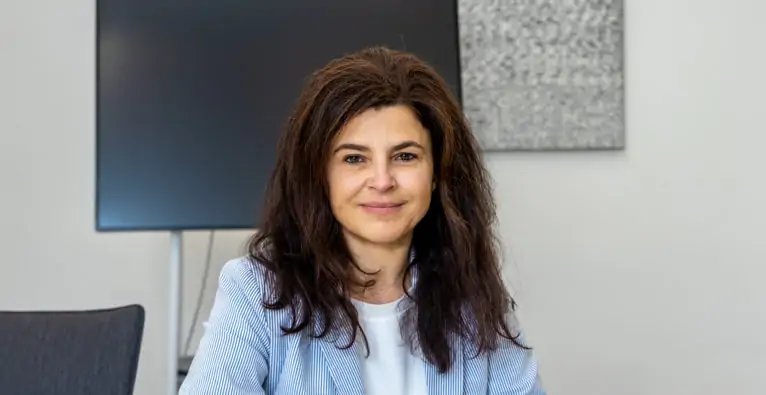
The social startup now made an announcement, that the new website with the new online shop has been launched. „We are excited about our new website launch as it provides a great experience and useful information to our customers, investors, partners and media to better understand our company and products“, describes Agnes Aistleitner, CEO and co-founder of Teenah in a press release. So Teenah cought our attention and we had a chance to talk with CEO and co-founder Agnes Aistleitner and Martin Zvada, Marketing &PR Manager, about the remarkable social startup, it’s goals and plans for the future.


What is Teenah and what do you want to achieve?

We are a sustainable merchandise company with a strong e-commerce focus. As for our product lines, we are aiming to focus on long-lasting quality products, we want our clients to have the perfect merchandise for their company that reflects their values and product standards. In the future we want to become a leading provider of affordable quality design items that can be customized for individual clients, not just as promotional giveaways but also as their own merchandise products for sale, making it easier for businesses to sell their own quality lines.

Who had the idea for Teenah and why?

The idea for Teenah developed with the parameters in mind, specifically how can we create as many meaningful jobs for refugee women and women from their host communities on the ground in the Middle East, while at the same time making something that is exciting for our customers. Products and services that matter to customers and would value years from now, and somehow we ended up in the Promotional product/Imprintable apparel segment as it is steadily growing and still underdeveloped in the Middle East. The backstory is that I thought during the height of the refugee crisis in 2016 – Couldn’t business react faster with more sustainable solutions to the often decade-long displacement of refugees on the ground in the region? So I went to Jordan where I met my amazing co-founder Raneem Meqbel who at that time was growing tired of the humanitarian aid sector while working for the Norwegian Refugee Council, wanting to do more faster.

Your startup is based in Irbid, Jordania and Vienna, Austria. What kind of work takes place at which location?

Manufacturing and sales for the MENA region take place in Irbid and sales, e-commerce and marketing takes place in Vienna.

What are your plans for the future concerning Teenah?

We are bullish, we want to expand. We see all these motivated young women from Syria in Jordan and the Jordanian women and then our smart young team in Austria that is eager to innovate on many levels to make this work. That is extremely motivating for us as founders. And not just because every job we create in Jordan really can change a life and that of that woman’s family, but also because we want our ideals that we have carefully woven into that corporation to succeed. We are a human-centric corporation, whether it is on the customer side or on the employee side. From a business perspective, we want to carve out our position on the European market as a great quality provider of affordable custom merchandise, and in the Middle East we will be THE provider of affordable custom merchandise and quality basics.

⇒ To the startup’s website

Deine ungelesenen Artikel:
11.08.2026

Phoenics: Steirisches Konsortium entwickelt Speicherzellen ohne Kobalt und Nickel

Virtual Vehicle, Varta Innovation, das Materials Center Leoben und AVL forschen drei Jahre lang an einem neuen Kathodenmaterial für stationäre Batteriespeicher. Die Zellen sollen 20 Prozent mehr Energie speichern und 40 Prozent länger halten. So lauten die Projektziele. Budget: 2,9 Millionen Euro.
/artikel/phoenics-steirisches-konsortium-entwickelt-speicherzellen-ohne-kobalt-und-nickel
11.08.2026

Phoenics: Steirisches Konsortium entwickelt Speicherzellen ohne Kobalt und Nickel

Virtual Vehicle, Varta Innovation, das Materials Center Leoben und AVL forschen drei Jahre lang an einem neuen Kathodenmaterial für stationäre Batteriespeicher. Die Zellen sollen 20 Prozent mehr Energie speichern und 40 Prozent länger halten. So lauten die Projektziele. Budget: 2,9 Millionen Euro.
/artikel/phoenics-steirisches-konsortium-entwickelt-speicherzellen-ohne-kobalt-und-nickel
Strom aus Wind und Sonne braucht Speicher. Für sie entwickelt das Projekt Phoenics neue Batteriezellen. Konzeptbild, mit KI erstellt. | (c) Virtual Vehicle

Wind und Sonne liefern Strom, wann sie wollen, nicht wann ihn jemand braucht. Diese Lücke schließen Batteriespeicher. Sie werden damit zur Schlüsseltechnologie der Energiewende. Genau hier setzt Phoenics an: Ein steirisches Konsortium entwickelt die nächste Generation von Lithium-Ionen-Zellen für stationäre Speicher.

Koordiniert wird das Projekt von der Virtual Vehicle Research GmbH in Graz. Partner sind Varta Innovation, die Materials Center Leoben Forschung GmbH (MCL) und AVL List. Phoenics läuft 36 Monate und kostet 2,9 Millionen Euro. Knapp zwei Millionen davon kommen von der FFG, aus der Ausschreibung „Energieforschung 2024″.

Ein Material, zwei Ziele

Im Zentrum steht ein Kathodenmaterial: Lithium-Mangan-Eisenphosphat, kurz LMFP. Es ist eine Weiterentwicklung des etablierten Lithium-Eisenphosphats (LFP). LFP-Zellen gelten als sicher und robust, und sie kommen ohne kritische Rohstoffe wie Kobalt oder Nickel aus. LMFP soll zusätzlich bis zu 20 Prozent mehr spezifische Energiedichte liefern. Auf gleichem Bauraum ließe sich damit mehr Energie speichern.

Diesen Materialvorteil will das Konsortium in die fertige Zelle bringen. Die Zielmarken: 20 Prozent mehr Energiedichte, 40 Prozent längere Lebensdauer.

Was noch offen ist

Bis dahin bleiben Fragen. Wie verhält sich das Material über die Lebensdauer, wie altert es, und lässt es sich industriell verarbeiten und skalieren?

Das Konsortium kombiniert deshalb Experiment und Simulation. Die Partner untersuchen das Kathodenmaterial über den gesamten Lebenszyklus, mit Materialcharakterisierung, hochauflösender Bildgebung und KI-gestützter Auswertung. Parallel entstehen physikbasierte und datengetriebene Modelle. Sie bilden das Verhalten der Zelle von der Mikrostruktur bis zum kompletten Speichermodul ab und sollen Entwicklungszyklen verkürzen.

„Die Mikrostruktur von Elektrodenmaterialien beeinflusst maßgeblich Leistung, Lebensdauer und Zuverlässigkeit von Batteriezellen“, sagt Roland Brunner, Gruppenleiter am MCL.

Ein eigener Schwerpunkt gilt der Sicherheit. Spezielle Testverfahren sollen zeigen, ob LMFP-Zellen den Anforderungen an Betriebssicherheit und Zuverlässigkeit genügen. AVL bringt dafür seine Erfahrung in der elektrochemischen Modellierung ein. Verbinde man physikalische Modelle mit Methoden des maschinellen Lernens, ließen sich kritische Betriebszustände und Sicherheitsaspekte frühzeitig vorhersagen, sagt Roland Wanker, Geschäftsbereichsleiter Advanced Simulation Technologies bei AVL.

Aufbauen statt neu anfangen

Phoenics setzt die Zusammenarbeit aus dem Vorgängerprojekt OpMoSi fort. „Unsere Stärke liegt darin, modernste Simulations- und Analysemethoden mit industrieller Entwicklungskompetenz zu verbinden“, sagt Projektleiter Philip Kargl von Virtual Vehicle.

Varta Innovation steuert die Fertigungsseite bei, von der Materialentwicklung über die Elektrodenfertigung bis zur Zellintegration. Großes Potenzial sehen die Partner vorerst bei stationären Speichern. Langfristig könnten die Ergebnisse auch der Elektromobilität nützen.

Toll dass du so interessiert bist!
Hinterlasse uns bitte ein Feedback über den Button am linken Bildschirmrand.
Und klicke hier um die ganze Welt von der brutkasten zu entdecken.

brutkasten Newsletter

Aktuelle Nachrichten zu Startups, den neuesten Innovationen und politischen Entscheidungen zur Digitalisierung direkt in dein Postfach. Wähle aus unserer breiten Palette an Newslettern den passenden für dich.

Montag, Mittwoch und Freitag

AI Summaries

Teenah: „Empowering refugee women and creating exciting products“

AI Kontextualisierung

Welche gesellschaftspolitischen Auswirkungen hat der Inhalt dieses Artikels?

Leider hat die AI für diese Frage in diesem Artikel keine Antwort …

Teenah: „Empowering refugee women and creating exciting products“

AI Kontextualisierung

Welche wirtschaftlichen Auswirkungen hat der Inhalt dieses Artikels?

Leider hat die AI für diese Frage in diesem Artikel keine Antwort …

Teenah: „Empowering refugee women and creating exciting products“

AI Kontextualisierung

Welche Relevanz hat der Inhalt dieses Artikels für mich als Innovationsmanager:in?

Leider hat die AI für diese Frage in diesem Artikel keine Antwort …

Teenah: „Empowering refugee women and creating exciting products“

AI Kontextualisierung

Welche Relevanz hat der Inhalt dieses Artikels für mich als Investor:in?

Leider hat die AI für diese Frage in diesem Artikel keine Antwort …

Teenah: „Empowering refugee women and creating exciting products“

AI Kontextualisierung

Welche Relevanz hat der Inhalt dieses Artikels für mich als Politiker:in?

Leider hat die AI für diese Frage in diesem Artikel keine Antwort …

Teenah: „Empowering refugee women and creating exciting products“

AI Kontextualisierung

Was könnte das Bigger Picture von den Inhalten dieses Artikels sein?

Leider hat die AI für diese Frage in diesem Artikel keine Antwort …

Teenah: „Empowering refugee women and creating exciting products“

AI Kontextualisierung

Wer sind die relevantesten Personen in diesem Artikel?

Leider hat die AI für diese Frage in diesem Artikel keine Antwort …

Teenah: „Empowering refugee women and creating exciting products“

AI Kontextualisierung

Wer sind die relevantesten Organisationen in diesem Artikel?

Leider hat die AI für diese Frage in diesem Artikel keine Antwort …

Teenah: „Empowering refugee women and creating exciting products“
