08.08.2017

Beatrice Tourou: „Women and men are not the same, even if society is trying to make us believe we are“

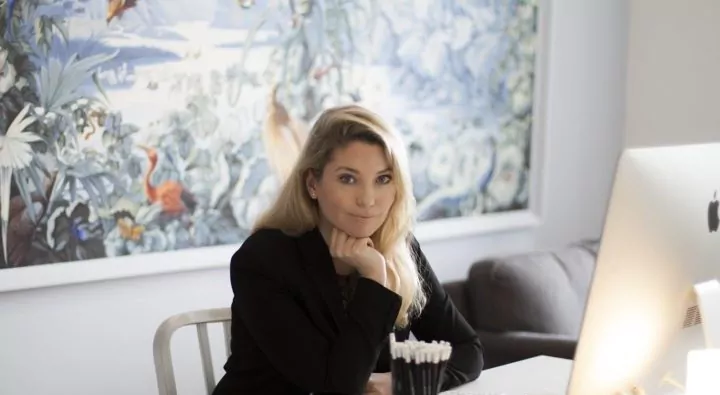
Beatrice Tourou, a young female entrepreneur, shares her personal struggles and ideas from founding the tech startup Boulesse.
/artikel/interview-with-beatrice-tourou-female-entrepreneur-at-the-helm-of-a-tech-startup
(c) Boulesse

BOULESSE.com is the online luxury marketplace where manufacturers with products of highest quality come together. From handcrafted shoes to high end furniture, Boulesse has it all. Beatrice Tourou saw an opportunity in the Viennese market, when she noticed the number of traditional luxury Viennese shops that people traveled across the world to come visit. In part due to their old heritage, most of these shops had not taken the plunge into the world of E-commerce due to fast changing technological developments. Thus, Tourou decided to bring these shops together onto one platform, and provide each shop with its unique and personalised E-Shop, and thereby also making their exquisite products available around the globe.

Where did the idea of Boulesse come from?

I used to work as a fashion editor at the Financial Times in Germany and spent quite some time dealing with topics such as lifestyle, and thus also came in contact with countless stores. This is where I learnt that a number of shops in Vienna didn’t have their own E-Shop. I approached some of them and asked why this was. At the time it was already 2014, the trend for most shops to go online had already started. Their response was that they didn’t have the resources for it, nor were they big enough to cope with the challenges. This led me to the idea of creating a platform, a so called online marketplace, that would enable to group all these shops together with their own E-Shop.

What were the key challenges when starting your own business?

The biggest challenge is of course finding enough funding to start, as well as keep the company going. Finding the right people to set up the team was also an unexpected challenge. It was also a struggle to get coders on board who were genuinely interested in E-Commerce, especially because of the startup trend waves. At the time, E-Comerce wasn’t as hot of a topic as it used to be. The hot topics having transitioned to VR (virtual reality) and fintech, which made it more difficult to find programmers that were willing to invest their time and energy into an E-Commerce platform. I sadly missed the time span where people were throwing money at E-Commerce, so maybe we were a bit late. However, for these shops we weren’t, as they were all still quite behind on the whole tech aspect of their business.

Do you think the company would have evolved differently had you founded it somewhere other than Vienna?

The thing is, there are no pros without cons, and no cons without pros. It was obviously cheaper and easier perhaps to win the Austrian market as they weren’t fully established online yet. For exactly that reason, Vienna works because of its lack in tech development, which in turn allowed us to take advantage and create the platform itself. However, we started with too little funding, and it probably could have been easier to raise more money in a more tech centered city. London for example.
It is a tricky question, and one I have asked myself before. The key is to adjust your business idea to the public that you are trying to address and involve.

 Would you be ready or wish to start another company?

No, definitely not. It takes a lot of strength, effort and power to start a business from scratch, and I think I used up all my power for this lifetime. For this type of a business you really have to pour all your heart and soul into it, work late and on the weekends. Physically you can do that for a couple of years, but then you start to feel the strength and energy diminishing. I don’t think I would be able to repeat everything I did and worked so hard for. Building a startup is different from a nine to six job, you have to devote all your spare time and extra energy into it. I have of course learnt a lot.
Trying for a second time would be easier however, due to all the experience I have gathered. For example, if I decided to create another business, I wouldn’t do anything where I needed to depend on investors. I would create something on my own. A business where things can grow slowly and steadily. In this case there would be less pressure for me to deliver as well as have the success of the other’s investment on my conscience.

Where did your strength and courage stem from to set up your own business?

I am quite a disciplined person. When I decide upon something, I put all my energy and will into pursuing it. Seeing as it wasn’t only my money involved but also the money of other people. I thus pushed myself to work a lot harder and use their funding to succeed. I took the fact very seriously that there were others involved and their money was at stake. This gives you an extra boost to take your work seriously and to push yourself just that bit more.


Redaktionstipps

When faced with your biggest challenge, how did you overcome it?

What you learn from leading this type of a business is that even if you are really scared, and you don’t want to face the struggles, you have to get through it either way. You have two choices, either you run away, and your business closes down the next day, or you face your anxieties and struggles. For me there were a number of unpleasant challenges I had to face. To which I quickly realised you really just have to suck it up, persevere and push forward. That is the thing about startups. It’s not easy facing the harsh reality of its making, but you need to get through it.

Now onto more controversial topics, do you think any aspects of your business might have differed had you been a male entrepreneur?

I probably would be more aggressive concerning the financial aspects of the company. I personally am a little bit more cautious when it comes to spending. However, I must say I am not a big fan of this whole gender separation topic. I think men and women have their separate advantages and disadvantages. In the end it comes down to how you play your cards. I have never felt that anyone has treated me differently in the business sector because I am a blonde woman, nor that someone didn’t take me seriously for that reason. Yes, I have been in situations where men have used harsh tones towards me, however they would have acted the same towards any other man.
It is true yes, looking at the Pioneers Festival for example, most of the people there are men. This may be because you usually begin to create your own business after you’ve had sufficient years of experience, after you have created a network of potential investors. This is most often when you are in your thirties. Around that time however, women begin to have children and decide to take a step back from their career line. During that time most women will be placing their energy in creating a family rather than pushing for the success of a business. Its is the woman that has the responsibility to carry the child, so it makes sense that they are the ones to take a step back when deciding what to do with their future career. I think this is one of the biggest explanations to why there are so few female founders / CEO’s.

What aspects, if any, of your business do you think might have differed had you been a male entrepreneur?

I don’t think there would be any striking differences. The only big difference is that now I am in my thirties and I am thinking of starting a family and will have to transition my energy into focusing on my children for the time being. A man does have that on his mind as he also has to sustain and support a family, but this only gives him even more of a boost to keep pushing his career forward. The group of women that wish to have children just have a different mind set than men do. It is a simple equation.
One has to take biology into account. The older a woman gets, the more difficult she has it to get pregnant. Of course stress and health are a large factor that contribute to being able to get pregnant sooner. Men don’t have this aspect to keep in mind, so naturally they have a larger chance of being able to place more energy into sustaining a business. It is also difficult for men not being able to carry around a child for nine months and develop the connection all mothers have. There are downsides for both men and women.

Do you think one gender has more of an advantage over the other?

Women and men are not the same, even if society is trying to make us believe that we are. I think that there are some qualities that women have which are more enhanced. For example, you may be more into building a team, making people cooperate, maybe be more intuitive about issues, or even more cautious. Men can be more into driving a team, getting a proper performance out of the members, as some say, they push the pedal to the metal. This is sometimes needed to really get a business going. So again there is nothing wrong or right about either of the two methods, it just depends on the business as well as the situation.

Deine ungelesenen Artikel:
22.06.2026

Wenn der Verbündete den Stecker zieht: Europas digitale Souveränität

Die VivaTech in Paris ist Europas größte Startup- und Technologiekonferenz. Bei der zehnten Ausgabe war digitale Souveränität das bestimmende Thema. brutkasten war vier Tage vor Ort. Eine Einordnung.
/artikel/wenn-der-verbuendete-den-stecker-zieht-europas-digitale-souveraenitaet
22.06.2026

Wenn der Verbündete den Stecker zieht: Europas digitale Souveränität

Die VivaTech in Paris ist Europas größte Startup- und Technologiekonferenz. Bei der zehnten Ausgabe war digitale Souveränität das bestimmende Thema. brutkasten war vier Tage vor Ort. Eine Einordnung.
/artikel/wenn-der-verbuendete-den-stecker-zieht-europas-digitale-souveraenitaet
Schulterschluss in Paris: Macron und Modi warben auf der VivaTech 2026 gemeinsam für eine „verantwortungsvolle KI" als Wertegemeinschaft. | (c) VivaTech

Am 12. Juni erreicht Anthropic ein Brief des US-Handelsministeriums. Drei Tage zuvor war Claude Fable 5 erschienen, das leistungsfähigste allgemein verfügbare Modell des Hauses. Nun ist es für jede Person ohne US-Staatsbürgerschaft zu sperren, im In- wie im Ausland. Weil sich Staatsangehörigkeit nicht in Echtzeit prüfen lässt, schaltet Anthropic beide Modelle weltweit ab, auch für die eigenen US-Kund:innen. Betroffen sind nicht nur einzelne Nutzer:innen: Anwendungen, die das Modell direkt einbinden, stehen über Nacht still, und der Fall führt vor Augen, wie viele Produkte und ganze Geschäftsmodelle auf einem einzigen, von außen abschaltbaren Modell ruhen. Der „kill switch“, über den Europa seit Jahren theoretisch debattiert, ist plötzlich real, und er trifft die fortgeschrittenste KI ihrer Generation. Anthropic kündigte an, den Zugang so rasch wie möglich wiederherzustellen, zum Redaktionsschluss war die Sperre weiter in Kraft.

Fünf Tage später öffnet in Paris die VivaTech, Europas größte Tech-Messe, zum zehnten Mal. 15.000 Startups, Jeff Bezos als Stargast, und doch reibt sich die KI-Euphorie an der Angst vor der eigenen technologischen Abhängigkeit. Schon auf der Eröffnungsbühne nimmt Frankreichs Wirtschaftsminister Roland Lescure direkt Bezug auf die Anthropic-Sperre: Es gehe nicht länger um eine Zugangsdebatte, Regeln könnten sich über Nacht ändern, und Souveränität heiße, dann noch handlungsfähig zu sein. Tags zuvor hatte Premier Lecornu verkündet, der französische Inlandsgeheimdienst trenne sich vom US-Konzern Palantir zugunsten des heimischen Anbieters ChapsVision. Die Kulisse ist gesetzt.

Souveränität, messbar gemacht

Ausnahmsweise lässt sich Souveränität hier auch messen. Nvidia hatte auf der VivaTech 2025 mehr als 20 KI-Fabriken für Europa versprochen und Mistral zum souveränen Compute-Champion erklärt. Und anders als im Vorjahr liefert die Messe Konkretes: Mistral Compute geht als europäische GPU-Cloud teilweise in Betrieb, Foxconn und Bull kündigen eine Serverfertigung im französischen Angers an. Aus Ankündigung wird Auslieferung. Nur ist selbst das Souveräne es nur halb: Mistral Compute läuft auf 18.000 Nvidia-Chips. Die ganze europäische KI ruht auf einem nicht-europäischen Silizium-Sockel. Doch genau hier liegt Europas einziger echter Trumpf: Ohne die EUV-Lithografie des niederländischen Konzerns ASML, dessen Chef Christophe Fouquet ebenfalls in Paris war und der inzwischen Europas wertvollstes Unternehmen ist, kann weltweit niemand Spitzenchips fertigen. Abhängig auf der einen Ebene, unverzichtbar auf der anderen. Souveränität als Baustelle, nicht als Zustand.

„Tech for humanity“: Narendra Modi positionierte Indien auf der VivaTech 2026 als KI-Länderpartner Frankreichs. (c) VivaTech

Und Österreich?

Und Österreich? Steht in dieser Debatte überraschend weit vorn. Die „Declaration on European Digital Sovereignty“, die inzwischen alle 27 EU-Staaten mittragen, geht auf eine österreichische Initiative rund um Digitalisierungs-Staatssekretär Alexander Pröll zurück. Wien als Anstoßgeber dessen, worüber Paris nun diskutiert. Und das Bundesheer hat seine 2020 begonnene Migration von rund 16.000 Arbeitsplätzen auf LibreOffice 2025 abgeschlossen, bewusst ohne Cloud, also ohne fremden Schalter. Die unbequeme Frage für die heimische Szene lautet, ob aus solchen Verwaltungsentscheidungen auch ein Markt für österreichische Anbieter wird, oder ob Souveränität Behördensache bleibt.

Verhandeln aus der Schwäche

Den wahren Lackmustest liefert nicht die Bühne, sondern eine Frage am Rande. Auf die Fable-5-Sperre angesprochen, fordert Emmanuel Macron keine Unabhängigkeit. Er appelliert an die USA, ihre Spitzentechnologie zu teilen, und kündigt zugleich mehr Geld für die französische KI-Industrie an. Zuerst die Bitte um Zugang, dann, hilfsweise, die eigene Souveränität. Das kann man als Schwäche lesen. Man kann es auch als nüchterne Arbeitsteilung verstehen: das Beste nutzen, das es gibt, und parallel absichern, falls es wegbricht. Dass Macron sich die politische Bühne mit Indiens Premier Narendra Modi teilte, der für eine menschenzentrierte KI jenseits von Washington und Peking wirbt, unterstreicht denselben Reflex: Souveränität wird als Wertegemeinschaft inszeniert, die offene Frage nach Compute, Kapital und Chips bleibt.

Joe Tsai Chairman at Alibaba Group bei der VivaTech | (c) brutkasten / Martin Pacher

„Souveränität ist keine Isolation, sie ist Offenheit aus einer Position der Stärke“, sagt Deutschlands Digitalminister Karsten Wildberger. Schön gesagt, nur verhandelte Europa diese Woche aus Abhängigkeit, nicht aus Stärke. Alibabas Joe Tsai formulierte es zynisch ehrlicher: Europa solle seine Eier in zwei Körbe legen. Ein zweiter Lieferant ist keine Unabhängigkeit. Und doch, hier wird es unbequem, ist Diversifizierung für eine Region, die den ganzen Stack realistisch nie allein bauen wird, womöglich nicht die feige, sondern die rationale Antwort. Die ehrliche Variante von Souveränität wäre dann nicht Autarkie, sondern die Fähigkeit, den Lieferanten zu wechseln, wenn einer den Schalter umlegt, ohne dass das eigene Geschäft mit ihm stillsteht.

Der Preis der Autonomie

Bleibt die Frage, die diese Ausgabe aufwirft. Dass Europa Souveränität will, bestreitet niemand. Die eigentliche Frage ist der Preis: höhere Kosten, langsamere Verfügbarkeit, weniger Zugriff auf das jeweils beste Modell. Und ob das Geld dafür da ist. Auf die USA entfallen rund 50 Prozent des globalen Risikokapitals, auf China 40, auf Europa fünf. Solange sich daran nichts ändert, bleibt Souveränität das würdevollere Wort für eine gut gemanagte Abhängigkeit. Die Fable-5-Woche hat Europa beides gegeben, den Schreck und die Ausrede. Welche Lehre hängen bleibt, entscheidet sich nicht in den Hallen von Porte de Versailles, sondern in den Beschaffungsabteilungen, die nächsten Monat wieder eine Lizenz verlängern müssen.

Toll dass du so interessiert bist!
Hinterlasse uns bitte ein Feedback über den Button am linken Bildschirmrand.
Und klicke hier um die ganze Welt von der brutkasten zu entdecken.

brutkasten Newsletter

Aktuelle Nachrichten zu Startups, den neuesten Innovationen und politischen Entscheidungen zur Digitalisierung direkt in dein Postfach. Wähle aus unserer breiten Palette an Newslettern den passenden für dich.

Montag, Mittwoch und Freitag

AI Summaries

Beatrice Tourou: „Women and men are not the same, even if society is trying to make us believe we are“

AI Kontextualisierung

Welche gesellschaftspolitischen Auswirkungen hat der Inhalt dieses Artikels?

Leider hat die AI für diese Frage in diesem Artikel keine Antwort …

Beatrice Tourou: „Women and men are not the same, even if society is trying to make us believe we are“

AI Kontextualisierung

Welche wirtschaftlichen Auswirkungen hat der Inhalt dieses Artikels?

Leider hat die AI für diese Frage in diesem Artikel keine Antwort …

Beatrice Tourou: „Women and men are not the same, even if society is trying to make us believe we are“

AI Kontextualisierung

Welche Relevanz hat der Inhalt dieses Artikels für mich als Innovationsmanager:in?

Leider hat die AI für diese Frage in diesem Artikel keine Antwort …

Beatrice Tourou: „Women and men are not the same, even if society is trying to make us believe we are“

AI Kontextualisierung

Welche Relevanz hat der Inhalt dieses Artikels für mich als Investor:in?

Leider hat die AI für diese Frage in diesem Artikel keine Antwort …

Beatrice Tourou: „Women and men are not the same, even if society is trying to make us believe we are“

AI Kontextualisierung

Welche Relevanz hat der Inhalt dieses Artikels für mich als Politiker:in?

Leider hat die AI für diese Frage in diesem Artikel keine Antwort …

Beatrice Tourou: „Women and men are not the same, even if society is trying to make us believe we are“

AI Kontextualisierung

Was könnte das Bigger Picture von den Inhalten dieses Artikels sein?

Leider hat die AI für diese Frage in diesem Artikel keine Antwort …

Beatrice Tourou: „Women and men are not the same, even if society is trying to make us believe we are“

AI Kontextualisierung

Wer sind die relevantesten Personen in diesem Artikel?

Leider hat die AI für diese Frage in diesem Artikel keine Antwort …

Beatrice Tourou: „Women and men are not the same, even if society is trying to make us believe we are“

AI Kontextualisierung

Wer sind die relevantesten Organisationen in diesem Artikel?

Leider hat die AI für diese Frage in diesem Artikel keine Antwort …

Beatrice Tourou: „Women and men are not the same, even if society is trying to make us believe we are“
