15.11.2017

FounderTalks.org: A private session with Silicon Valley founders in Vienna

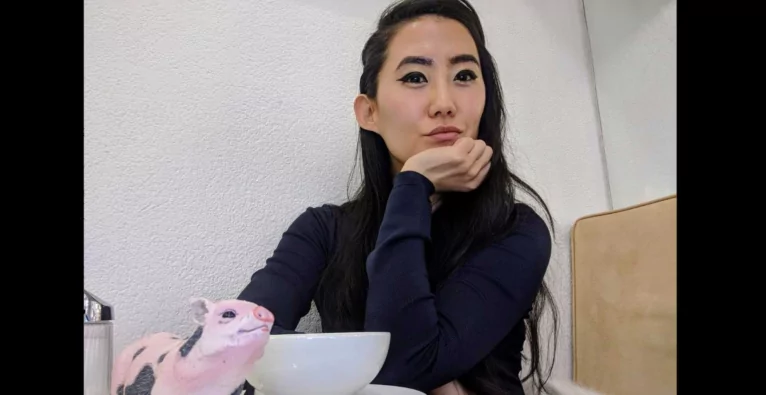
The next FounderTalks.org event will take place in Vienna on February 16th, 2018. We talked to founder and organizer, Audrey Kim, about her mission and how everything started.
/artikel/foundertalks-org-a-private-session-with-silicon-valley-founders-in-vienna
(c) Audrey Kim
kooperation

Der Brutkasten is not going to report on what happens at the upcoming FounderTalks.org event taking place in Vienna on February 16th, 2018. The reason being that everything that happens at this annual invite-only event is off-the-record. Startup founders, investors and corporate innovation managers must be invited to this private event with a very focused approach. Though the event itself is discerningly small, there is nothing small about its program and impact. The founders of WordPress, Google Analytics and Reddit were present in past years, and are just a few names among the all keynote-level speakers/mentors whose individual companies average valuations, exits or IPOs above one billion US-Dollars.

FounderTalks.org is already accepting applications for the upcoming event. The invitations are given on a rolling basis and the event is limited to 100 participants in order to keep the small mentoring session ratio. The event focuses on curated advice, exclusive content, personal relations and networking. Open applications are accepted from founders, investors, accelerator/innovation leaders, and those interested in entrepreneurship (85 percent of the invitations are reserved for startup founders. The rest goes to investors, innovation managers, corporates and accelerators).

FounderTalks.org started in 2014 in Vienna by Audrey Kim (formerly YCombinator, Google, United Nations, Cruise Automation), Andreas Klinger (Co-Founder diesocialisten.at, now Product Hunt) and Michael Ströck (Co.Founder Kochabo.at and Gustav). Der Brutkasten talked to founder Audrey Kim about the idea behind FounderTalks.org and her vision for the future.

⇒ Apply for the event here


How did you come up with the idea of FounderTalks.org? How did everything start?

After working for YCombinator in 2012, several conferences, accelerators and government organizations developing startup initiatives around Europe and Asia began asking me to help them source speakers from Silicon Valley for their events. It was a lot of fun to fly around to all the different countries and organize the spectacular events, but once I settled back in Vienna (where I have been living part-time since 2009) I wanted to create something optimized for bridging my two homes, San Francisco and Vienna in a personalized and sustainable way.

I’m not a particular expert in any tech field, but because I’ve spent so much time working in different tech industries and cities, I’m often making 1:1 introductions between people working on interesting things who could mutually benefit from knowing each other. FounderTalks.org was a way to scale this by bringing together a curated group of great people at once and creating a platform for candid conversations (events are off-the-record) and personal connections (mentor sessions and reception). The goal was to foster a community of entrepreneurial-minded people who would want to help each other out.

+++ Interview: In diese Startups investiert Wesley Chan von Google Analytics +++

That sound like a lot of work for a good cause. Where did you take your motivation from?

My original motivation for creating FounderTalks.org was two part. First, I selfishly wanted to get my friends from the US, many of whom are founders and investors, to visit Vienna more regularly while I was here. The best way to do that seemed to be to get them to invest in Vienna and to make them fall in love with the city as much as I have.

By making FounderTalks.org invite-only and curating for high-calibre and high-potential founder attendees, we offer good dealflow for investments, and create an event where the speakers and mentors themselves are excited to get to know the attendees and engaged with the interesting things they are working on. Many of our past speakers and mentors have stayed in touch and invested in the founder attendees. Additionally, the reason FounderTalks.org is always organized around a Viennese Ball is because we take the speakers to one after the event so they get to experience this enchanting bit of uniquely Viennese culture. I also arrange Viennese Waltzing lessons before so Vienna is adding a bit of culture and fun to the Silicon Valley. Maybe we’ll eventually be able to have Ball Season in San Francisco, too!

Second, I love Vienna, and not only do I think it’s the most beautiful city in the world, I believe Austria has a lot to offer the world with its illustrious culture, great infrastructure and diversity of talented people. It has great potential to become a center for innovation and already is one for culture.

“I don’t think Austria should try to make Vienna “the next Silicon Valley”. The Silicon Valley is the best Silicon Valley because it is itself.”

 width=
(c) foundertalks.org: Impression from a previous event.

So could Vienna become the European or at least the CEE-Silicon Valley?

I don’t think Austria should try to make Vienna “the next Silicon Valley” as many cities are aspiring to be. The Silicon Valley is the best Silicon Valley because it is itself, which includes its unique history, location and inertia which is not duplicable. Rather, I think Austria’s impact will be stronger by identifying its natural, unique strengths, and taking into account what levers it can effectively pull to optimize for a fecund environment of innovation and industry that might look very different from what Silicon Valley is today, but be just as powerful in its own way.

As Andi (Klinger) said, a big impediment for startups in Europe is that it is difficult to scale outside of one’s own country as there is a lot of overhead to expanding country by country with different languages, laws, and geographies. I agree with Andi that making it easier for startups to scale and work at a European level will be beneficial, especially for founders with B2C business models for whom scaling by people is important.

Also, I see that aside from traditional B2C and B2B business models, there is a lot of opportunity now for earlier tech heavy development that are more culturally agnostic. For example, self-driving cars, artificial intelligence, machine learning, AR/VR, in addition to the supporting hardware (like GPUs and Lidars).

I can’t speak to the ins-and-outs of growing a startup from scratch since I’ve not founded one myself — my expertise and what I enjoy doing is in cross-cultural community growth and development, scaling, business analysis and event planning from my experience with Google, the United Nations, YCombinator and Cruise Automation.

To those points, Austria not only has great universities and resources for research and development, Vienna is uniquely a geographical nexus point between Western and Eastern Europe. Also, over 70 percent of the country speaks English, so there is a higher probability that there will be a denominating language between all the best people around the world to work together. This means that there are fewer barriers to both having experts in tech heavy ventures from all over the world come together in Austria, and for Austrian based companies to scale globally (since English is currently the lingua franca).

When did you first meet Michael and Andreas and why did you decide to do FounderTalks.org together?

I think I originally got connected to Andi from a mutual acquaintance because we each wanted to learn from the other more about the Austrian and SV startup ecosystem. As for Michi, I got a hold of his number somehow and cold-called him to ask for free food from Ströck-Brot for a FounderTalks.org pilot event to keep costs down. He said no for that event, but now if you come to FounderTalks.org events, you get delicious Ströck food! I immediately liked Andi and Michi when I first met them. I think it was mutual? (laughs) And we quickly became friends and have now been for five years. We also had a shared belief in the importance of building a community for our vision of an ideal startup ecosystem, so when I proposed the initial idea of FounderTalks.org they helped to refine the concept with their expertise and insights. And then we just started organizing it. I don’t think we realized going into it how much work it would be. We joke now that FounderTalks.org started as a very expensive and time-consuming hobby.

After the first years of FounderTalks.org: What were your biggest learnings so far? Did you change your approach or your philosophy since the beginning?

FounderTalks.org is organized in three parts: Talks/Q&A, Small Group Mentor Sessions and Social Reception. The Talks/Q&A are off-the-record to enable candidness and insights not usually shared in highly publicized events. For the Mentor Sessions, our speakers break out into small groups with the attendees in ratios of 1:10 to talk more in-depth about the individual’s needs. And so folks can get to know each other personally. We pair attendees with the mentor who seems most suited or has aligned knowledge for what they’re working on. At the Reception, all our Speakers/Mentors are out and about eating and drinking with the attendees, so everyone can have the opportunity to connect with all speakers even if they weren’t paired with them as mentors. It’s also a great setting and for all our invited guests to connect with each other. We limit the number of invited guests to 70-100 in order to maintain low ratios for Mentor Sessions and to promote community building at the Social Receptions.

We got so much positive feedback after the first event about how valuable and special the Mentor Sessions were that we doubled the number of Mentor Sessions in the last two events. Now for our 4th event, we will host two break-out groups so attendees meet with two different Speaker and Mentors at the event. Attendees also expressed that they gained a lot of value from the unique content of the talks, which I think is due to the speakers knowing what they say is off-the-record, and because they are speaking to an invite-only audience so we will continue to keep the events small and well curated.

+++ Edward Kim von Gusto im Interview: “Scheitern war nicht erlaubt” +++

What are your future plans?

I think we’ve created something really special and powerful. A lot of that potency comes from the curation and small, private nature of the event. So the core FounderTalks.org event will remain founder-focused, off-the-record, and invite-only small batches in Austria.

I also see potential to impact the ecosystem and aid innovation by building more integration between founders, investors, corporations and government agencies both across Europe and the US. I plan to grow the program to liaise between and be optimized for what each of these pieces of the ecosystem needs. I’m not sure yet what the most impactful form or arrangement will be, but it could be in the form of spin-off corporate and government events, and hopefully events in the Silicon Valley forAustrian-based companies an organizations. Right now I’m taking time to meet with these different players to learn more about them and am thinking about how we can best build a stronger community together. Basically though, I believe helping to make experts from different worlds curious about and respect each other, then allowing a safe space for them to talk and get to know each other is a winning formula for innovation and creation.

Recently there were more and more comments predicting the end of the startup era (at least in Silicon Valley). What is your opinion on that?

The people saying those things are probably not going to be the ones creating the next big startups.

⇒ Apply for the event here

Deine ungelesenen Artikel:
20.08.2026

Teslakee: Österreichischer Sicherheitsforscher baute App um Tesla-Schwachstellen entgegenzuwirken

Die toothR new media GmbH, ein österreichisches IT-Sicherheitsunternehmen im Wissenspark Urstein bei Salzburg, das unter der Marke IT Wachdienst.com kleine und mittlere Unternehmen berät, veröffentlicht die Android-App TeslaKee. Sie entschärft eigenen Angaben nach zwei dokumentierte Schwachstellen des Bluetooth-Autoschlüssels von Tesla.
/artikel/teslakee-oesterreichischer-sicherheitsforscher-baute-app-um-tesla-schwachstellen-entgegenzuwirken
20.08.2026

Teslakee: Österreichischer Sicherheitsforscher baute App um Tesla-Schwachstellen entgegenzuwirken

Die toothR new media GmbH, ein österreichisches IT-Sicherheitsunternehmen im Wissenspark Urstein bei Salzburg, das unter der Marke IT Wachdienst.com kleine und mittlere Unternehmen berät, veröffentlicht die Android-App TeslaKee. Sie entschärft eigenen Angaben nach zwei dokumentierte Schwachstellen des Bluetooth-Autoschlüssels von Tesla.
/artikel/teslakee-oesterreichischer-sicherheitsforscher-baute-app-um-tesla-schwachstellen-entgegenzuwirken
Tesla
(c) Tesla

Der österreichische Sicherheitsforscher Martin Herfurt hat bereits vor Jahren eine Sicherheitslücke bei Tesla entdeckt, wie er damals auf der Videoplattform YouTube demonstrierte: Der digitale Autoschlüssel am Smartphone sei zwar bequem, jedoch bei allen Tesla-Fahrzeugen ohne Ultra-Breitband-Technik (UWB) grundsätzlich angreifbar. ToothR new media bzw. IT-Wachdienst.com veröffentlicht nun mit TeslaKee eine Smartphone-App, die dokumentierte Schwachstellen des Bluetooth-PhoneKey-Protokolls entschärfen soll: den Relay-Angriff, der zum Fahrzeugdiebstahl in Sekunden führt, und die sogenannte BlueBait-Attacke, mit der sich Fahrerinnen und Fahrer über gefälschte Fahrzeug-Signale orten lassen — selbst dann, wenn das eigene Auto kilometerweit entfernt steht.

Teslakee-Founder: „App beantwortet jede Authentifizierungsanfrage“

„Tesla-Fahrzeuge entriegeln, sobald sich das gekoppelte Smartphone in Bluetooth-Reichweite meldet. Die eingesetzte Kryptografie ist solide. Die Schwachstelle liegt eine Ebene darüber, in der Logik: Die offizielle App beantwortet jede Authentifizierungsanfrage — bedingungslos, ohne zu prüfen, ob die Situation überhaupt plausibel ist. Genau das macht zwei Angriffe möglich“, beschreibt Herfurt per Aussendung das Tesla-Problem.

Bei einem Relay-Angriff arbeiten zwei Täter mit zwei handelsüblichen Funkmodulen zusammen. Einer folgt Fahrzeughaltern ins Einkaufszentrum, der zweite steht am Auto auf dem Parkplatz. Die Funkstrecke zwischen beiden verlängert die Bluetooth-Reichweite künstlich um beliebige Distanzen. Für das Fahrzeug sieht es so aus, als stünden Besitzer direkt daneben. Das Auto entriegelt, lässt sich starten und wegfahren — während das Handy unberührt in der Jackentasche steckt.

Der Angriff wurde von Herfurt im Rahmen des Projekts TEMPA auf Sicherheitskonferenzen live demonstriert und als Video dokumentiert. Er benötige keine Kenntnis von Passwörtern, keinen Tesla-Account und hinterlasse keine Einbruchsspuren — ein Umstand, der in der Schadensregulierung regelmäßig zu Problemen mit Versicherungen führt, wie der Sicherheitsforscher sagt.

Das Bluetooth-Problem

Neuere Fahrzeuge begegnen diesem Problem mit UWB-Distanzmessung: Das Auto misst hierbei physikalisch, wie weit das Telefon tatsächlich entfernt ist, und ein weitergeleitetes Signal fliegt auf. Diesen Schutz hat die große Mehrheit der Fahrzeuge jedoch nicht. Die weltweite Tesla-Flotte mit Bluetooth-PhoneKey wird derzeit auf rund acht Millionen Fahrzeuge geschätzt. Davon sind jedoch nur etwa 20 Prozent mit UWB ausgestattet.

Der zusätzliche Schutz kam erst mit den jüngsten Modellgenerationen – für rund sechs Millionen Fahrzeuge bleibt Bluetooth damit die Grundlage des Zugangs. Beim Model S und Model X wurde UWB ab 2021 (Palladium) eingeführt, beim Model 3 ab 2024 (Highland) und beim Model Y ab 2025 (Juniper). Betroffen sind damit alle älteren Modelle der jeweiligen Baureihen.

Erschwerend komme hinzu: UWB schütze nur, wenn Fahrzeug und Smartphone die Technik beherrschen. Ein Großteil der verbreiteten Android-Geräte hat, Herfurt zufolge, keinen UWB-Chip. Selbst Besitzer eines neuen Fahrzeugs würden damit still auf die ungeschützte Bluetooth-Ebene zurückfallen.

BlueBait-Attacke

Weniger bekannt, aus Sicht des Datenschutzes aber gravierender, sei ein Angriff, den die Forschung als BlueBait-Attacke bezeichnet — nach dem Köder, mit dem gearbeitet wird: Die offizielle App antwortet auch auf gefälschte Fahrzeuge. Wer einen nachgebauten Tesla-Beacon betreibt — ein Gerät für wenige Euro, wie Herfurt betont — bekommt von jedem vorbeigehenden Tesla-Fahrer eine Antwort des Smartphones. Damit lässt sich zuverlässig feststellen: Diese konkrete Person war zu dieser Uhrzeit an diesem Ort.

„BlueBait funktioniert vollkommen unabhängig davon, wo das Auto steht. Die Halterin muss nicht in der Nähe ihres Fahrzeugs sein — es genügt, dass sie ihr Telefon dabei hat. Mehrere solcher Beacons, verteilt über eine Stadt, ergeben ein Bewegungsprofil“, beschreibt Herfurt diese Gefahr. „Die Anwendungsfälle sind unangenehm konkret: Stalking, häusliche Gewalt und Nachstellung, verdeckte Beobachtung durch Dritte, kommerzielles Kunden-Tracking im Einzelhandel, das Ausspähen von Fahrzeugen als Vorbereitung eines Diebstahls. Betroffene bemerken davon nichts — es gibt keine Anzeige, keinen Hinweis, kein Protokoll.“

Entscheidend dabei ist, dass UWB nicht gegen BlueBait helfe. Die Distanzmessung greife erst, wenn das Fahrzeug die Nähe des Telefons überprüft — sie verhindert den Diebstahl. Die Ortung entstehe jedoch schon eine Stufe davor, allein dadurch, dass das Telefon auf eine Anfrage überhaupt reagiere. Von der Ortbarkeit sind deshalb auch Halterinnen und Halter brandneuer Fahrzeuge mit UWB betroffen. Solange die Entscheidung, ob geantwortet wird, nicht auf dem Telefon selbst getroffen wird, bleibe das Problem bestehen. Hier kommt die App von Herfurt ins Spiel.

Die Idee hinter TeslaKee

Die zentrale Idee hinter TeslaKee besteht nicht darin, die offizielle Tesla-App zu ersetzen, sondern eine ganz konkrete Schwachstelle in Teslas eigener Umsetzung zu schließen: den Bluetooth-basierten digitalen Schlüssel, mit dem sich das Smartphone am Fahrzeug authentifiziert.

Eine Policy-Engine prüft jede Authentifizierungsanfrage gegen einen selbst definierten Regelsatz, bevor eine Antwort erfolgt. Passt der Gerätekontext nicht zu einer plausiblen Annäherung, bleibt die Reaktion aus, das Angreifersignal läuft ins Leere, das Fahrzeug bleibt verschlossen, und auch ein BlueBait-Köder erhält keine verwertbare Antwort. Fahrzeug- und Privatsphärenschutz laufen so über denselben Mechanismus, so der Claim.

Alle internetbasierten Funktionen der Tesla-App, etwa Navigationsziele, Updates, Supercharger-Planung oder der Fernzugriff über hunderte Kilometer, bleiben eigenen Angaben nach unverändert erhalten, da sie über Teslas Server laufen. „Beide Apps sind parallel nutzbar: TeslaKee übernimmt nur den Bluetooth-Nahbereich, in dem die Schwachstellen liegen, und dafür wird der offiziellen App lediglich die Berechtigung „Geräte in der Nähe“ entzogen, ihr Schlüssel bleibt im Fahrzeug hinterlegt“, liest man in der Aussendung.

Kern des Tesla-Schutzes

Den Kern des Tesla-Schutzes bildet ein Baukasten aus zehn konfigurierbaren Kontextregeln (Pflicht- oder optionale Regel mit Quorum), etwa Bewegungserkennung, GPS-Geofence, Abgleich mit dem letzten Parkplatz samt Mobilfunkzellen, bekanntes WLAN, Zeitfenster, Signalstärke, Schrittzähler, barometrische Höhe, Bildschirmstatus und erlaubte Funkzellen. Für Ausnahmen wie Fahrzeugübergabe oder Werkstattbesuch gibt es eine befristete manuelle Übersteuerung (15/30/60 Minuten), und ein Live-Policy-Test zeige jederzeit nachvollziehbar, welche Regel gerade greift.

„Die Verschlüsselung von Tesla ist in Ordnung — das Problem ist, dass das Telefon jede Frage beantwortet, ohne sich zu fragen, wer da eigentlich fragt. Ein Auto, das aufgeht, weil jemand mein Signal aus dem Supermarkt auf den Parkplatz verlängert hat, ist die eine Hälfte. Die andere Hälfte ist, dass ein zwanzig Euro teures Bastelgerät am Straßenrand mitschreiben kann, wann ich vorbeigegangen bin — dafür muss mein Auto nicht einmal in der Nähe sein“ präzisiert Herfurt. „Gegen den Diebstahl hilft UWB tatsächlich, aber nur bei neuen Fahrzeugen mit passendem Telefon. Gegen das Mitschreiben hilft es überhaupt nicht: Das Telefon antwortet dem gefälschten Beacon weiterhin, auch im nagelneuen Auto. Deshalb muss die Entscheidung, ob überhaupt geantwortet wird, auf das Telefon — und genau das macht TeslaKee.“

TeslaKee ist ab sofort für alle Interessierten öffentlich verfügbar — für Android ab Version 10, vorausgesetzt wird ein Gerät mit StrongBox-Sicherheitschip (verbreitet ab Baujahr 2019). Parallel läuft weiterhin ein internes Testprogramm, dessen Rückmeldungen in die Weiterentwicklung einfließen. Kompatibel sind Tesla Model 3, Y, S und X mit Bluetooth-PhoneKey. Für die einmalige Schlüsselanmeldung wird die NFC-Keycard des Fahrzeugs benötigt. An einer TeslaKee-App für das iPhone wird bereits gearbeitet.

Toll dass du so interessiert bist!
Hinterlasse uns bitte ein Feedback über den Button am linken Bildschirmrand.
Und klicke hier um die ganze Welt von der brutkasten zu entdecken.

brutkasten Newsletter

Aktuelle Nachrichten zu Startups, den neuesten Innovationen und politischen Entscheidungen zur Digitalisierung direkt in dein Postfach. Wähle aus unserer breiten Palette an Newslettern den passenden für dich.

Montag, Mittwoch und Freitag

AI Summaries

FounderTalks.org: A private session with Silicon Valley founders in Vienna

AI Kontextualisierung

Welche gesellschaftspolitischen Auswirkungen hat der Inhalt dieses Artikels?

Leider hat die AI für diese Frage in diesem Artikel keine Antwort …

FounderTalks.org: A private session with Silicon Valley founders in Vienna

AI Kontextualisierung

Welche wirtschaftlichen Auswirkungen hat der Inhalt dieses Artikels?

Leider hat die AI für diese Frage in diesem Artikel keine Antwort …

FounderTalks.org: A private session with Silicon Valley founders in Vienna

AI Kontextualisierung

Welche Relevanz hat der Inhalt dieses Artikels für mich als Innovationsmanager:in?

Leider hat die AI für diese Frage in diesem Artikel keine Antwort …

FounderTalks.org: A private session with Silicon Valley founders in Vienna

AI Kontextualisierung

Welche Relevanz hat der Inhalt dieses Artikels für mich als Investor:in?

Leider hat die AI für diese Frage in diesem Artikel keine Antwort …

FounderTalks.org: A private session with Silicon Valley founders in Vienna

AI Kontextualisierung

Welche Relevanz hat der Inhalt dieses Artikels für mich als Politiker:in?

Leider hat die AI für diese Frage in diesem Artikel keine Antwort …

FounderTalks.org: A private session with Silicon Valley founders in Vienna

AI Kontextualisierung

Was könnte das Bigger Picture von den Inhalten dieses Artikels sein?

Leider hat die AI für diese Frage in diesem Artikel keine Antwort …

FounderTalks.org: A private session with Silicon Valley founders in Vienna

AI Kontextualisierung

Wer sind die relevantesten Personen in diesem Artikel?

Leider hat die AI für diese Frage in diesem Artikel keine Antwort …

FounderTalks.org: A private session with Silicon Valley founders in Vienna

AI Kontextualisierung

Wer sind die relevantesten Organisationen in diesem Artikel?

Leider hat die AI für diese Frage in diesem Artikel keine Antwort …

FounderTalks.org: A private session with Silicon Valley founders in Vienna
