13.08.2018

Digital Nomad & International: „I’ve worked online my whole life“ – John Coates (Cancun)

The digital nomad John Coates is working in the app and jailbreak market. Most of his friends work in normal office jobs and in startups, they prefer a stable life within the States. For John this wouldn't be an option and he encourages everyone to try to live like a digital nomad.
/artikel/digital-nomad-international-worked-online-life-john-coates-cancun
Digital Nomad & International: John Coates
Digital Nomad & International: John Coates im Interview mit Bernhard Holzer
  • Name: John Coates
  • Age: 29
  • From: Wisconsin, USA
  • Job: Mobile-Apps-Developer, fotographer
  • On the road for: 8 months
  • Destinations: Bali, Thailand, Malaysia, China, Mexico, Hungary, Ukraine, Iceland
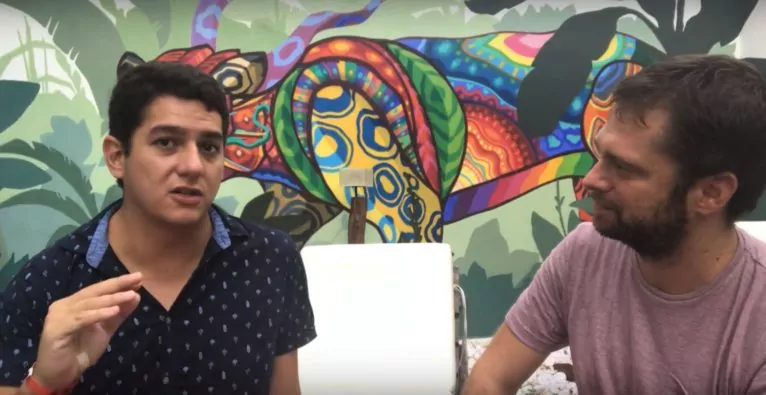
I met John Coates in a Hostel in Cancun as one of the few digital nomads in Mexico. He works online since Highschool, right now in the jailbreak-market to modify mostly every app on your phone and also founded the plattform Flex  for this topic with already half a million users. His second big passion is doing fashion-related foto-shootings and he already managed to get his pics and a story on www.petapixel.com, the biggest website for photography in the world.

+++ Digital Nomad & International: „Mobility- und Retail-Startups explodieren hier gerade!“ – Daniel Zawarczynski (Bangkok) +++

The US-guy with Mexican roots has never been regularly employed before, mostly worked home office and after being bored in Las Vegas for a while he finally made the step to become a digital nomad. Stable internet as well as power are the keys for feeling weel in this remote world.

An unlikely origin

John met Nomads from all over the world, mostly from Europe and especially from Germany. Digital Nomads from the U.S. are rare though – most of his friends work in normal office jobs and in startups, they prefer a stable life within the States. Finding your perfect work-life-balance is the main challenge, working between 6 and 80 hours a month depending on how much to see or how many interesting people you meet. This flexibility is the main advantage when you work on the road. Hostel bars, tours and pub crawlings are good ways to meet new people on your way, especially when you mostly live in Airbnbs were social contact is not as easy compared to when you stay in a hostel or work in co-working spaces. Most digital nomads he meets are in coding, marketing, social media or any kind of wordpress business, but he also found guys working in security IT or as government advisors. He mostly stays in one place a month, long enough to get settled, a workflow and routine going before finally getting a bit restless and move on to the next destination, he only knows of some days in advance.

Digital Nomad John Coates: „Everyone should at least try to work this way!“

One of the major achievements for a person who works location independent is that you discover not only places, but much more important a lot about yourself. „Many people really can’t imagine how independent they could be, what opportunities and what freedom  you have when you work remotely. Everyone should at least try to work this way!“ His perception: The majority of nomads is around 30 and already has some working experience. His next stops right now are Budapest and Kiev, Iceland is soon ahead. Also soon on his list: charity-work on plattforms like workaway.

Digital Nomad & International: John Coates

The digital nomad John Coates is working in the app and jailbreak market. Most of his friends work in normal office jobs and in startups, they prefer a stable life within the States. For John this wouldn't be an option and he encourages everyone to try to live like a digital nomad.

Gepostet von DerBrutkasten am Montag, 13. August 2018

Deine ungelesenen Artikel:
30.07.2026

Exit: Von Linzer gegründetes Startup Kaikaku wird von US-Unternehmen übernommen

Das Gastro-Startup Kaikaku, das 2023 vom Linzer Josef Chen gemeinsam mit Ivan Tregear gegründet wurde, wird vom US-Unternehmen Reef übernommen. Das Kaikaku-Kernteam wird bei Reef weiter an Robotik und KI für Restaurants arbeiten. Über den Kaufpreis wurden keine Informationen bekannt gegeben.
/artikel/exit-von-linzer-gegruendetes-startup-kaikaku-wird-von-us-unternehmen-uebernommen
30.07.2026

Exit: Von Linzer gegründetes Startup Kaikaku wird von US-Unternehmen übernommen

Das Gastro-Startup Kaikaku, das 2023 vom Linzer Josef Chen gemeinsam mit Ivan Tregear gegründet wurde, wird vom US-Unternehmen Reef übernommen. Das Kaikaku-Kernteam wird bei Reef weiter an Robotik und KI für Restaurants arbeiten. Über den Kaufpreis wurden keine Informationen bekannt gegeben.
/artikel/exit-von-linzer-gegruendetes-startup-kaikaku-wird-von-us-unternehmen-uebernommen
Gründer-Duo Josef Chen (l.) und Ivan Tregear (r.) mit dem Roboter Fusion. (c) Kaikaku

Im China-Restaurant seiner Eltern in Linz schälte Josef Chen bereits in seiner Kindheit Kartoffeln und half im Betrieb. Die Idee für sein Startup kam dem Oberösterreicher genau hier: Wiederkehrende Restaurantarbeit mit Robotik zu automatisieren. Über Chens Werdegang hat brutkasten bereits berichtet.

Nach einigen Gründungen verzeichnete Chen durch Kaikaku seinen bislang größten Erfolg: Innerhalb von drei Monaten nach der Gründung im April 2023 konnten dafür bereits 750.000 US-Dollar an Investments eingesammelt werden. Nun gibt der Founder die Übernahme durch das US-Unternehmen Reef, und damit einen erfolgreichen Exit bekannt.

„Kaikaku haben wir in London aufgebaut. Die Idee entstand aber im Restaurant meiner Eltern in Linz. Dass wir jetzt bei Reef daran weiterarbeiten können, macht mich stolz“, sagt Chen.

360 Bowls pro Stunde

Das Herzstück von Kaikaku heißt Fusion, ein modularer Roboter. Im eigenen Bowl-Restaurant Common Room, das bis November 2024 in London geöffnet hatte, wurde der Roboter getestet. Mittlerweile hat Kaikaku fünf Generationen von Fusion entwickelt. Der Roboter portioniert die Zutaten nach Bestellung. Nach Unternehmensangaben schafft die fünfte Generation je nach Konfiguration bis zu 360 Bowls pro Stunde.

30 Mio.-Dollar Bewertung

„Wir haben eine (bisher) unangekündigte Seed-Runde über 4 Millionen Dollar in einer Branche eingesammelt, die die meisten Investoren – ehrlich gesagt – als total unsexy abgeschrieben hatten“, kommentiert der Founder auf LinkedIn. Das Unternehmen wurde nach Angaben von Chen Ende 2025 mit 30. Mio.-US-Dollar bewertet.

Über den jetzigen Verkaufspreis an Reef wird geschwiegen. Was bekannt ist: Kaikaku bringt seine Technologie und sein Kernteam zu Reef.

SoftBank Vision Fund 1 als Investor

Das US-Unternehmen Reef – spezialisiert auf digitale Infrastruktur für Gastronomie und lokale Services – hat seit der Gründung über 1,5 Milliarden US-Dollar Kapital eingeworben. Zu den Investoren zählt unter anderem der 98,6 Milliarden US-Dollar schwere SoftBank Vision Fund 1. Details zur aktuellen Finanzlage, der Eigentümerstruktur oder der genauen Höhe einzelner Beteiligungen lässt Reef in seiner aktuellen Ankündigung allerdings offen.

„Reef ist die Skalierung“

Mit den Worten: „Wir sind nicht hier, um einfach nur einen beeindruckenden Roboter zu bauen. Wir sind angetreten, um zu beweisen, dass die Technologie reif ist, die Unit Economics funktionieren und das Einzige, was jetzt noch fehlt, Skalierung ist. Reef ist diese Skalierung. Bald mehr dazu“, lässt Chen die Zukunft des Unternehmens offen. Was nach Chen jedenfalls feststeht: Im Markt für Gastronomie-Infrastruktur und Kitchen-Tech würde sich derzeit eine Phase hoher Kapitalzuflüsse abzeichnen.

Toll dass du so interessiert bist!
Hinterlasse uns bitte ein Feedback über den Button am linken Bildschirmrand.
Und klicke hier um die ganze Welt von der brutkasten zu entdecken.

brutkasten Newsletter

Aktuelle Nachrichten zu Startups, den neuesten Innovationen und politischen Entscheidungen zur Digitalisierung direkt in dein Postfach. Wähle aus unserer breiten Palette an Newslettern den passenden für dich.

Montag, Mittwoch und Freitag

AI Summaries

Digital Nomad & International: „I’ve worked online my whole life“ – John Coates (Cancun)

AI Kontextualisierung

Welche gesellschaftspolitischen Auswirkungen hat der Inhalt dieses Artikels?

Leider hat die AI für diese Frage in diesem Artikel keine Antwort …

Digital Nomad & International: „I’ve worked online my whole life“ – John Coates (Cancun)

AI Kontextualisierung

Welche wirtschaftlichen Auswirkungen hat der Inhalt dieses Artikels?

Leider hat die AI für diese Frage in diesem Artikel keine Antwort …

Digital Nomad & International: „I’ve worked online my whole life“ – John Coates (Cancun)

AI Kontextualisierung

Welche Relevanz hat der Inhalt dieses Artikels für mich als Innovationsmanager:in?

Leider hat die AI für diese Frage in diesem Artikel keine Antwort …

Digital Nomad & International: „I’ve worked online my whole life“ – John Coates (Cancun)

AI Kontextualisierung

Welche Relevanz hat der Inhalt dieses Artikels für mich als Investor:in?

Leider hat die AI für diese Frage in diesem Artikel keine Antwort …

Digital Nomad & International: „I’ve worked online my whole life“ – John Coates (Cancun)

AI Kontextualisierung

Welche Relevanz hat der Inhalt dieses Artikels für mich als Politiker:in?

Leider hat die AI für diese Frage in diesem Artikel keine Antwort …

Digital Nomad & International: „I’ve worked online my whole life“ – John Coates (Cancun)

AI Kontextualisierung

Was könnte das Bigger Picture von den Inhalten dieses Artikels sein?

Leider hat die AI für diese Frage in diesem Artikel keine Antwort …

Digital Nomad & International: „I’ve worked online my whole life“ – John Coates (Cancun)

AI Kontextualisierung

Wer sind die relevantesten Personen in diesem Artikel?

Leider hat die AI für diese Frage in diesem Artikel keine Antwort …

Digital Nomad & International: „I’ve worked online my whole life“ – John Coates (Cancun)

AI Kontextualisierung

Wer sind die relevantesten Organisationen in diesem Artikel?

Leider hat die AI für diese Frage in diesem Artikel keine Antwort …

Digital Nomad & International: „I’ve worked online my whole life“ – John Coates (Cancun)