

17.04.2020

Corporate Edupreneurship as a driver of innovation

In Edupreneurship, companies and educational institutions cooperate to provide valuable practical knowledge. This is more important in the corona crisis than ever before.
/artikel/corporate-edupreneurship-innovation-driver
elearning studentin mit laptop
(c) Adobe Stock / Antonioguillem
sponsored

In times like these, both companies and the education sector face new challenges. It is essential now to react more and more flexibly and agilely to new developments. At the moment we all feel how fast our environment is changing and how quickly we have to react to it in order to survive.

Entrepreneurship is an essential tool to be able to react successfully. Because it does not mean inventing something new or managing the company in difficult times – it means much more to recognize market opportunities, find solutions and implement them successfully.

Just as companies react to new circumstances, educational institutions must constantly adapt and create new learning concepts and content to equip students with the right skills. Edupreneurship describes this process of driving change and developing new learning programs to best meet the challenges of our time.

Corship: An EU-project for Co-Innovation

The concept of „Corporate Edupreneurship“ is also the core of the EU project Corship, in which co-innovation between established companies and startups is supported with innovative training formats. The knowledge alliance is funded by the EU and brings together seven industry and research partners: FH Joanneum (AT; coordinator), AVL List GmbH (AT), Cracow University of Economics (PL), Hasso Plattner Institute (DE), BETA-I Incubator (PT) and European Startup Network (BE).

The core element is a free Massive Open Online Course (MOOC), which brings together over 1500 entrepreneurs, managers and students online to learn about the potential, challenges and opportunities for cooperation. The next MOOC starts already on April 22, 2020, and free registration is available under this link.

Toolbox and MasterClass as parts of Corship

A specially developed „toolbox“ facilitates matchmatching and cooperation between the participants. The „Co-Innovation Builder“ is at the centre of the toolbox: This is a kind of business model canvas for collaboration, which is used in the MOOC.

Additonally, the Co-Innovation MasterClass offers 30 startups, managers and students the opportunity to deepen their knowledge and work together on Co-Innovation Challenges in two Innovation Bootcamps in Berlin and Krakow.  The Co-Innovation MasterClass will take place in 2021, you can apply for a place via the MOOC .

„With Corship we want to show new ways of connecting key players of the start-up ecosystem through innovative training approaches in order to exploit the full potential of co-innovation,“ says Christian Friedl, Coordinator and Senior Lecturer at FH JOANNEUM.

The project partner AVL List GmbH has been working with innovative startups as part of the Startup Initiative Creators Expedition since 2017 and can therefore contribute valuable experience and learning.

TECC: FH JOANNEUM cooperates with companies

Another example of Edupreneurship, in which Styrian companies and FH JOANNEUM have joined forces to develop a new learning format is TECC (Training On Entrepreneurship & Company Creation).

The Institute for International Management at FH JOANNEUM, together with its partners AVL List, Raiffeisenlandesbank Steiermark and 360Lab, launched the project „TECC – Training for Enterprise and Company Creation“ at the beginning of March 2020. The aim of the project is to enable students to develop creative ideas on an interdisciplinary, hands-on basis and to take them through to maturity in a 2-semester applied training programme. Students from different courses of study at the FH Joanneum Graz are admitted to this project. The programme offers a mixture of teaching, seminars, company visits and pitching sessions.

„At TECC not only students learn from the partner organisations. Through close cooperation with the student teams, we also learn for our activities at Raiffeisen TATEN-Bank. We learn where startup customers need support from a bank at an early stage and where we should dive deeper into the startup business in the future,“ says Martina Hölzl, Startups & Digitalization, Raiffeisen-Landesbank Steiermark AG.

TACC: Training for entrepreneurship in the automotive industry

AVL List has already been able to gain experience in this area, as TACC (Training for Automotive Companies Creation) was already developed in 2018.

TACC is also a new training concept with a focus on entrepreneurship – but with a specialization on the automotive industry. With a strong technological component, TACC offers orientation in the rapidly changing automotive industry – a course for those who want to understand, study and explore the world of entrepreneurship and innovation in the automotive industry. For this purpose AVL cooperates with the University of Modena UNIMORE and regional partners of the Automotive Innovation Hub. The output after two semesters is a business case for starting your own startup.

„With TACC we want to promote the entrepreneurial spirit of young people by creating a link between universities, incubation centres and companies. As part of the Automotive Innovation Hub, the initiative enables us to respond optimally to trends in the automotive sector“, says Marta Pellegrino, Program Coordinator TACC.

The target group of this program are motivated students who want to start their own business and acquire the necessary skills. The program includes classes with the participation of experienced managers, participation in national and international trade fairs, workshops, company visits, complementary seminars, prototyping, and design and validation sessions for the planned startup project.

Further information about TACC can be found via this link.

„With programs such as TACC and TECC, we not only want to support the founding process of new startups, but also want to give students the entrepreneurial mindset that we consider essential in today’s working world. It is not only about developing their own ideas, but also about the skills to implement these ideas,“ concludes Viktoria Ilger, Creators Expedition AVL Startup Initiative, summing up the programs.
Deine ungelesenen Artikel:
22.10.2026

Fünf Jahre Polestar in Österreich: Warum die schwedische Marke nicht laut sein muss, um gehört zu werden

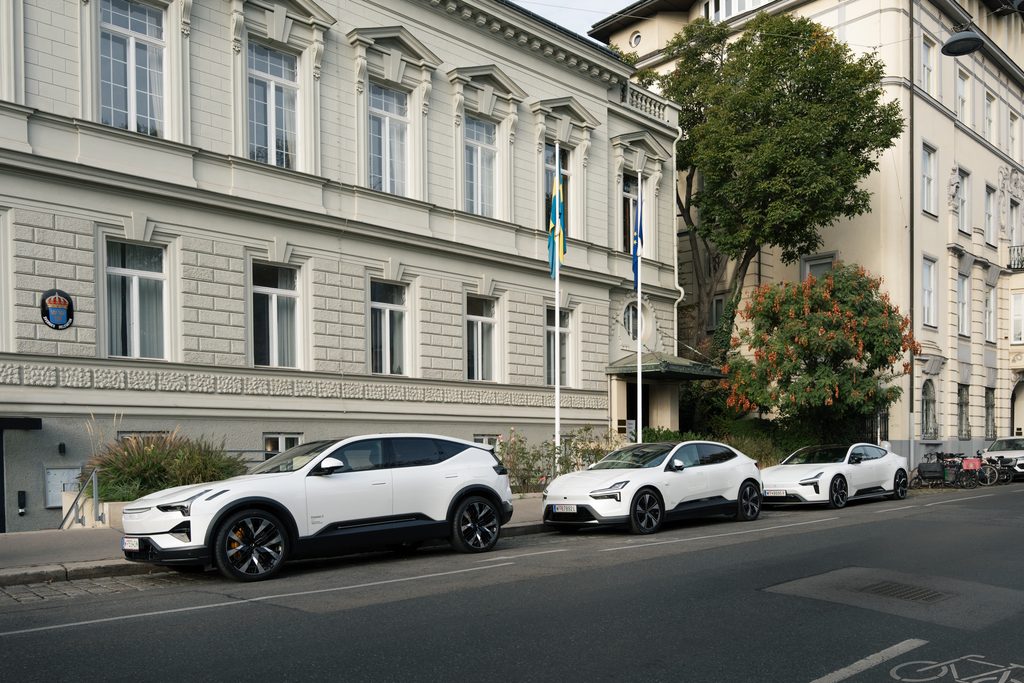
Drei weiße Polestar vor der schwedischen Botschaft in Wien-Alsergrund, drinnen die schwedische Fahne: Polestar Österreich hat sein fünfjähriges Bestehen im Schwedenhaus gefeiert. Managing Director Matthias Schabetsberger erklärte im Gespräch mit brutkasten, warum sich die Marke als Challenger der Autoindustrie versteht, was skandinavischer Minimalismus mit “Quiet Luxury” zu tun hat und wie Polestar mit Startups zusammenarbeitet.
/artikel/fuenf-jahre-polestar-in-oesterreich
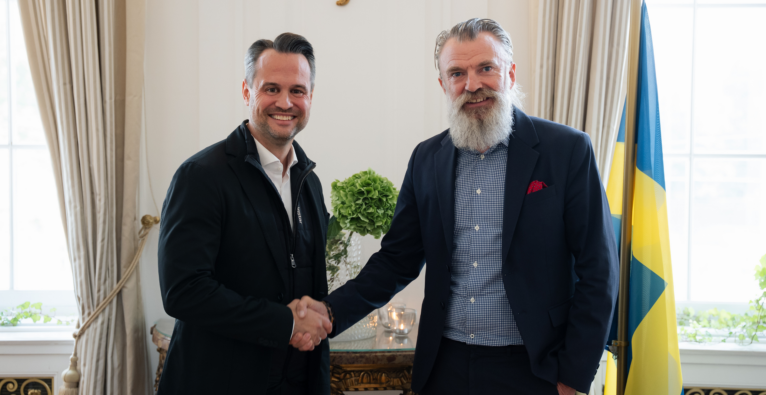
v.l. Matthias Schabetsberger, Managing Director Polestar Österreich, mit dem stellvertretenden schwedischen Botschafter Anders Lindgren. | © René Lueger

Der Ort war kein Zufall. „Wir sind eine schwedische Marke”, sagte Schabetsberger vor den Gästen in der schwedischen Botschaft, wo Polestar in Kooperation mit der schwedischen Handelskammer seit Jahren regelmäßig zu Gast ist. Neben Design, Performance und Nachhaltigkeit zahlten die Markenwerte stark auf gesellschaftliche Werte ein, die in Skandinavien hoch gelebt würden: Inklusion, Vielfalt, Gender Equality.

Wie schwedisch das Unternehmen ist, machte er an Zahlen fest: Von den etwas mehr als 2.000 Mitarbeitern arbeiten mehr als zwei Drittel in Schweden. Entwickelt, abgestimmt und designt wird in Schweden, wo die Verbindung zur Schwestermarke Volvo nach wie vor eng ist. Entstanden ist Polestar vor rund zehn Jahren aus einem schwedischen Rennteam, mit einem klaren Bekenntnis zum reinen Elektroantrieb. “So wollen wir als kleine schwedische reine Elektroauto-Marke der Challenger sein für die große Automobilindustrie”, so Schabetsberger.

Der stellvertretende schwedische Botschafter Anders Lindgren nannte Polestar ein gutes Beispiel dafür, wie Innovation den Übergang zur Elektromobilität in praktische Lösungen übersetzt. Die Erfahrung Schwedens zeige, dass Nachhaltigkeit und Wettbewerbsfähigkeit einander verstärken.

Fünf Jahre Polestar in Österreich: Jubiläumsempfang in der schwedischen Botschaft im 9. Wiener Bezirk. | © René Lueger

“Wir waren ein Startup und sind jetzt ein Scaleup”

Im Gespräch mit brutkasten zog Schabetsberger eine Parallele zur Gründerszene. Polestar sei ein junges Unternehmen: “Wir waren ein Startup und sind jetzt ein Scaleup.” Diese Dynamik habe man bewusst gewählt, ebenso den Anspruch, Dinge anders zu denken als klassische Mitbewerber. Einen typischen Polestar-Fahrer gebe es nicht, die Marke sei über alle Altersklassen hinweg beliebt, mit einem relativ ausgeglichenen Anteil männlicher und weiblicher Kunden. Was sie verbinde: die Einstellung zur Elektromobilität und zu gesellschaftlichen Werten. Als skandinavische Marke sei Polestar Europas einzige rein elektrische Automarke.

Polestar ist darüber hinaus eng mit dem schwedischen Innovationsökosystem verbunden. In Göteborg ist Polestar Partner von MobilityXlab, einem Innovationshub am Lindholmen Science Park, der Tech-Startups mit Unternehmen wie Ericsson, Volvo Group und Zenseact zusammenbringt. Ursprünglich auf Mobilität und Konnektivität fokussiert, öffnet sich die Plattform seit September 2026 auch für weitere Industrien. Ausgewählte Startups arbeiten eng mit Polestar an Proofs of Concept, etwa für digitale Customer Journeys und das Erlebnis im Fahrzeug.

Quiet Luxury statt noch mehr Touchscreens

Auf die Frage nach dem Design antwortete Schabetsberger mit einem Begriff aus der Mode: Quiet Luxury. Für Polestar heiße das: “wir brauchen aus unserer Sicht nicht mehr, sondern besser”. Während viele Premiumhersteller im Innenraum mit Holz, Alu, Leder, vielen Lichtvarianten und immer mehr Bildschirmen arbeiten, gehe Polestar einen anderen Weg: klare Linien, reduziertes, funktionales Design. “Wir finden immer mehr Kunden, die in einer aufgeregten Welt mit ständig neuen Produkten und ständiger Veränderung genau dieses reduzierte Design, diesen Quiet Luxury schätzen.” Das Prinzip gelte auch für den Auftritt der Marke: “Man muss jetzt nicht unbedingt immer laut schreien, um gehört zu werden.”

Der Polestar 5 vor der schwedischen Botschaft in Wien: Der vollelektrische Grand Tourer ist das neue Flaggschiff der schwedischen Marke und leistet in der Performance-Version bis zu 650 kW. | © René Lueger

Weniger Bildschirme heißt dabei nicht weniger Technologie. Beim neuen Polestar 4 SUV zieht mit Google built-in der KI-Assistent Google Gemini ins Auto ein. Dank der engen Partnerschaft mit Google ist dieser sukzessive auch in weiteren Modellen verfügbar. Funktionen wie Vehicle-to-Load und ein Camping Mode kommen per Software-Update. Die Transparenz, die Schabetsberger betont, hat eine Zahl: Für den Polestar 4 SUV weist Polestar den CO2-Fußabdruck bis zum Werkstor aus, 20,2 Tonnen CO2-Äquivalent bei der Rear-Motor-Variante. Bis 2030 will Polestar die Treibhausgasemissionen pro verkauftem Fahrzeug halbieren, bis 2040 in der gesamten Wertschöpfungskette klimaneutral sein. Und Polestar Charge bündelt mehr als 1,25 Millionen Ladepunkte in Europa über ein Konto, inklusive Tesla Supercharger.

Von drei auf 13 Standorte

Gestartet ist Polestar in Österreich mit einem Direct-to-Consumer-Modell und einem Polestar Space in der Wiener Herrengasse, später kamen Graz und Linz dazu. Im Vorjahr wurde das Modell erweitert: Online bestellen geht weiterhin, zusätzlich können Kunden bei regionalen Partnern in einem Agentursystem Probe fahren, kaufen und das Fahrzeug ausgeliefert bekommen. Die Zahl der Standorte wuchs von drei auf 13, von Dornbirn bis Wien.

Dahinter steht eine Marktbeobachtung: Traditionell seien Flottenkunden die Early Adopter gewesen, in den vergangenen zwölf bis 24 Monaten komme das Wachstum aber vor allem von Privatkunden und Kleinunternehmen. Um sie in Vorarlberg, Tirol oder Salzburg zu erreichen, brauche es regionale Partner. Fünf Jahre nach dem ersten Polestar Space blickt Schabetsberger nach vorne, auf “weitere Jahrzehnte in enger Kooperation”.

Toll dass du so interessiert bist!
Hinterlasse uns bitte ein Feedback über den Button am linken Bildschirmrand.
Und klicke hier um die ganze Welt von der brutkasten zu entdecken.

brutkasten Newsletter

Aktuelle Nachrichten zu Startups, den neuesten Innovationen und politischen Entscheidungen zur Digitalisierung direkt in dein Postfach. Wähle aus unserer breiten Palette an Newslettern den passenden für dich.

Montag, Mittwoch und Freitag

AI Summaries

Corporate Edupreneurship as a driver of innovation

  • In times like these, both companies and the education sector face new challenges.
  • It is essential now to react more and more flexibly and agilely to new developments.
  • At the moment we all feel how fast our environment is changing and how quickly we have to react to it in order to survive.
  • Educational cooperations within the framework of „Corporate Edupreneurship“ help us to do so.
  • The concept of „Corporate Edupreneurship“ is also the core of the EU project Corship, in which co-innovation between established companies and start-ups is supported with innovative training formats.
  • Another example of Edupreneurship in which Styrian companies and FH JOANNEUM have joined forces to develop a new learning format is TECC.
  • The TACC programme, on the other hand, imparts the knowledge necessary to set up a company in the automotive sector.

AI Kontextualisierung

Welche gesellschaftspolitischen Auswirkungen hat der Inhalt dieses Artikels?

Leider hat die AI für diese Frage in diesem Artikel keine Antwort …

Corporate Edupreneurship as a driver of innovation

  • In times like these, both companies and the education sector face new challenges.
  • It is essential now to react more and more flexibly and agilely to new developments.
  • At the moment we all feel how fast our environment is changing and how quickly we have to react to it in order to survive.
  • Educational cooperations within the framework of „Corporate Edupreneurship“ help us to do so.
  • The concept of „Corporate Edupreneurship“ is also the core of the EU project Corship, in which co-innovation between established companies and start-ups is supported with innovative training formats.
  • Another example of Edupreneurship in which Styrian companies and FH JOANNEUM have joined forces to develop a new learning format is TECC.
  • The TACC programme, on the other hand, imparts the knowledge necessary to set up a company in the automotive sector.

AI Kontextualisierung

Welche wirtschaftlichen Auswirkungen hat der Inhalt dieses Artikels?

Leider hat die AI für diese Frage in diesem Artikel keine Antwort …

Corporate Edupreneurship as a driver of innovation

  • In times like these, both companies and the education sector face new challenges.
  • It is essential now to react more and more flexibly and agilely to new developments.
  • At the moment we all feel how fast our environment is changing and how quickly we have to react to it in order to survive.
  • Educational cooperations within the framework of „Corporate Edupreneurship“ help us to do so.
  • The concept of „Corporate Edupreneurship“ is also the core of the EU project Corship, in which co-innovation between established companies and start-ups is supported with innovative training formats.
  • Another example of Edupreneurship in which Styrian companies and FH JOANNEUM have joined forces to develop a new learning format is TECC.
  • The TACC programme, on the other hand, imparts the knowledge necessary to set up a company in the automotive sector.

AI Kontextualisierung

Welche Relevanz hat der Inhalt dieses Artikels für mich als Innovationsmanager:in?

Leider hat die AI für diese Frage in diesem Artikel keine Antwort …

Corporate Edupreneurship as a driver of innovation

  • In times like these, both companies and the education sector face new challenges.
  • It is essential now to react more and more flexibly and agilely to new developments.
  • At the moment we all feel how fast our environment is changing and how quickly we have to react to it in order to survive.
  • Educational cooperations within the framework of „Corporate Edupreneurship“ help us to do so.
  • The concept of „Corporate Edupreneurship“ is also the core of the EU project Corship, in which co-innovation between established companies and start-ups is supported with innovative training formats.
  • Another example of Edupreneurship in which Styrian companies and FH JOANNEUM have joined forces to develop a new learning format is TECC.
  • The TACC programme, on the other hand, imparts the knowledge necessary to set up a company in the automotive sector.

AI Kontextualisierung

Welche Relevanz hat der Inhalt dieses Artikels für mich als Investor:in?

Leider hat die AI für diese Frage in diesem Artikel keine Antwort …

Corporate Edupreneurship as a driver of innovation

  • In times like these, both companies and the education sector face new challenges.
  • It is essential now to react more and more flexibly and agilely to new developments.
  • At the moment we all feel how fast our environment is changing and how quickly we have to react to it in order to survive.
  • Educational cooperations within the framework of „Corporate Edupreneurship“ help us to do so.
  • The concept of „Corporate Edupreneurship“ is also the core of the EU project Corship, in which co-innovation between established companies and start-ups is supported with innovative training formats.
  • Another example of Edupreneurship in which Styrian companies and FH JOANNEUM have joined forces to develop a new learning format is TECC.
  • The TACC programme, on the other hand, imparts the knowledge necessary to set up a company in the automotive sector.

AI Kontextualisierung

Welche Relevanz hat der Inhalt dieses Artikels für mich als Politiker:in?

Leider hat die AI für diese Frage in diesem Artikel keine Antwort …

Corporate Edupreneurship as a driver of innovation

  • In times like these, both companies and the education sector face new challenges.
  • It is essential now to react more and more flexibly and agilely to new developments.
  • At the moment we all feel how fast our environment is changing and how quickly we have to react to it in order to survive.
  • Educational cooperations within the framework of „Corporate Edupreneurship“ help us to do so.
  • The concept of „Corporate Edupreneurship“ is also the core of the EU project Corship, in which co-innovation between established companies and start-ups is supported with innovative training formats.
  • Another example of Edupreneurship in which Styrian companies and FH JOANNEUM have joined forces to develop a new learning format is TECC.
  • The TACC programme, on the other hand, imparts the knowledge necessary to set up a company in the automotive sector.

AI Kontextualisierung

Was könnte das Bigger Picture von den Inhalten dieses Artikels sein?

Leider hat die AI für diese Frage in diesem Artikel keine Antwort …

Corporate Edupreneurship as a driver of innovation

  • In times like these, both companies and the education sector face new challenges.
  • It is essential now to react more and more flexibly and agilely to new developments.
  • At the moment we all feel how fast our environment is changing and how quickly we have to react to it in order to survive.
  • Educational cooperations within the framework of „Corporate Edupreneurship“ help us to do so.
  • The concept of „Corporate Edupreneurship“ is also the core of the EU project Corship, in which co-innovation between established companies and start-ups is supported with innovative training formats.
  • Another example of Edupreneurship in which Styrian companies and FH JOANNEUM have joined forces to develop a new learning format is TECC.
  • The TACC programme, on the other hand, imparts the knowledge necessary to set up a company in the automotive sector.

AI Kontextualisierung

Wer sind die relevantesten Personen in diesem Artikel?

Leider hat die AI für diese Frage in diesem Artikel keine Antwort …

Corporate Edupreneurship as a driver of innovation

  • In times like these, both companies and the education sector face new challenges.
  • It is essential now to react more and more flexibly and agilely to new developments.
  • At the moment we all feel how fast our environment is changing and how quickly we have to react to it in order to survive.
  • Educational cooperations within the framework of „Corporate Edupreneurship“ help us to do so.
  • The concept of „Corporate Edupreneurship“ is also the core of the EU project Corship, in which co-innovation between established companies and start-ups is supported with innovative training formats.
  • Another example of Edupreneurship in which Styrian companies and FH JOANNEUM have joined forces to develop a new learning format is TECC.
  • The TACC programme, on the other hand, imparts the knowledge necessary to set up a company in the automotive sector.

AI Kontextualisierung

Wer sind die relevantesten Organisationen in diesem Artikel?

Leider hat die AI für diese Frage in diesem Artikel keine Antwort …

Corporate Edupreneurship as a driver of innovation

  • In times like these, both companies and the education sector face new challenges.
  • It is essential now to react more and more flexibly and agilely to new developments.
  • At the moment we all feel how fast our environment is changing and how quickly we have to react to it in order to survive.
  • Educational cooperations within the framework of „Corporate Edupreneurship“ help us to do so.
  • The concept of „Corporate Edupreneurship“ is also the core of the EU project Corship, in which co-innovation between established companies and start-ups is supported with innovative training formats.
  • Another example of Edupreneurship in which Styrian companies and FH JOANNEUM have joined forces to develop a new learning format is TECC.
  • The TACC programme, on the other hand, imparts the knowledge necessary to set up a company in the automotive sector.