20.03.2020

Autonomous vehicles: AVL optimizes object recognition in AI

The future of driving is autonomous… But until vehicles reach human-level driving capabilities, AI still has to learn a few things. The Graz-based company AVL is tackling some of these challenges together with the Silicon Valley based technology provider Deepen.AI.
/artikel/deepen-ai-avl
AVL trainiert die AI mit Deepen AI
(c) Adobe Stock / Monopoly919
sponsored

Simply leaning back instead of having to pay attention to traffic: That is the vision of autonomous driving. This is intended not only to make traveling more pleasant for the passengers, but also to make it safer than having one person at the steering wheel, when distractions and human errors are the leading cause of fatalities. Clearly, in order to successfully tackle the driving task, Autonomous Driving  Systems (ADS) must be able to recognize objects, assess situations correctly, and master driving skills.

+++How software helps to reduce human driving errors+++

This process takes place in several stages. In the first phase, the object detection must determine where an object is located at all. In the second step, a detected object is then classified: It is determined whether it is, for example, a vehicle, an adult, a child or an animal – because a child behaves differently from an adult, for example. Finally, the system must carry out the so-called „tracking“. This involves analyzing where the object was in the past and where it is now – in order to draw conclusions about where the object will probably be next.

Separating the data wheat from the data chaff

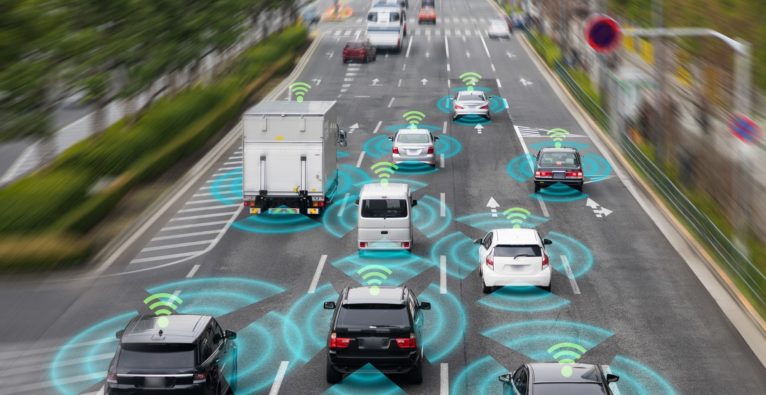
Self-driving cars use data from various sensors installed in the vehicle – such as cameras or LiDAR sensors, which measure the distance between the objects and the car. These sensors produce countless amounts of data – and it is precisely this data that must be correctly classified so that the AI can identify which part of it is relevant to safety and which is not.

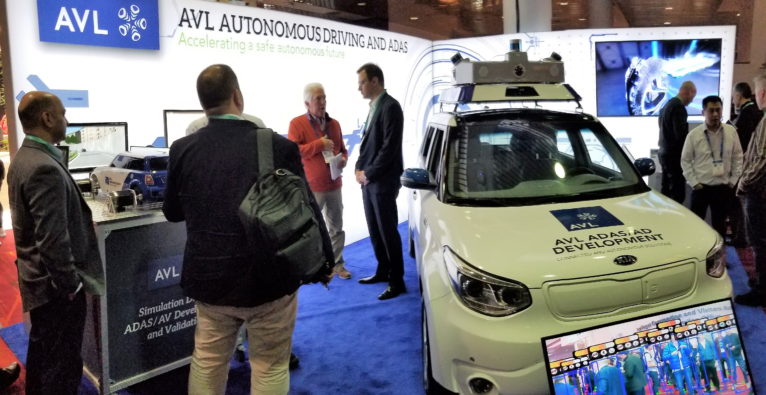
This is where the Silicon-Valley company Deepen.AI comes into play. Deepen has developed technology for better detection and segmentation of object data in road traffic in cooperation with AVL, based in Graz. First results of this cooperation were presented at the CES 2020 in Las Vegas.

PoC with AVL for the future of autonomous driving

Deepen.AI, founded by three former Google employees, is about the aforementioned challenge of providing ADSs a correct understanding of the world surrounding them. To achieve this, AI needs some human help in order to be effectively trained to make correct inferences. That’s why, in addition to its 17 full-time employees, Deepen.AI works with around 250 people in India who clean up the data collected by the sensors and teach AI to recognize things: For example, they mark when the AI has overlooked a side mirror on a car or misclassified objects. „These data analysts clear up doubts that the AI has about some objects,“ explains Mohammad Musa, Co-Founder and CEO of Deepen.AI: „They help with classification and calibration.”

This very deep focus on data integrity is also the context of the PoC developed jointly with AVL. „It is important for AVL to have correctly annotated data at pixel and point level,“ explains Thomas Schlömicher, Research Engineer ADAS at AVL. Ideally, the cooperation should result in a complete „Data Intelligence Pipeline“, which will be used by AVL’s numerous B2B customers to annotate their data and thus jointly shape the future capabilities of autonomous driving.

 „Safety Pool“ as next step after PoC

„Together“ is also the keyword behind the joint goal that the partners want to pursue after the successful PoC. One big challenge affecting the industry is that the various car manufacturers are currently pursuing different paths, each one using its own proprietary approach. „But the industry needs standards,“ says Musa: “That is the basis for everyone to trust the safety of the systems.”

Therefore, „Safety Pool™, (www.safetypool.ai) a project led by Deepen and the World Economic Forum, has the goal to define quantified benchmarks and uniform descriptions of driving situations, which will then serve not only as standards for the industry, but also as a solid backbone to derive consensus-driven safety assessments and frame regulations. This will bring society one significant step closer to benefitting from the revolutionary capabilities of automated driving technologies.

Video-Talk with AVL and Deepen AI
==> Deepen AI

==> AVL Creators Expedition

Redaktionstipps
Deine ungelesenen Artikel:
28.05.2026

RBI Global FinTech Scouts: 5 globale Trends in der Finanzbranche

Mit dem Global FinTech-Scouts Program bringt die Raiffeisen Bank International (RBI) die wichtigsten globalen FinTech-Trends nach Wien. Fünf internationale Expert:innen teilten mit brutkasten ihre aktuellen Top-Themen.
/artikel/rbi-global-fintech-scouts-5-globale-trends-in-der-finanzbranche
28.05.2026

RBI Global FinTech Scouts: 5 globale Trends in der Finanzbranche

Mit dem Global FinTech-Scouts Program bringt die Raiffeisen Bank International (RBI) die wichtigsten globalen FinTech-Trends nach Wien. Fünf internationale Expert:innen teilten mit brutkasten ihre aktuellen Top-Themen.
/artikel/rbi-global-fintech-scouts-5-globale-trends-in-der-finanzbranche
Fünf der RBI Global FinTech Scouts gaben uns Einblicke in die aktuellen globalen FinTech-Trends (vl.): Vel Vasic, Aditi Subbarao, Ken Thomas, Scarlett Sieber und Nnanna Ijezie | (c) brutkasten / Dervisevic

„Die große Stärke des Programms ist Neugier. Es geht darum, das Beste aus der ganzen Welt zusammenzutragen und dann zu nutzen“, sagt Aditi Subbarao, Enterprise Account Director beim US-AI-Data-Cloud-Anbieter Snowflake, im Gespräch mit brutkasten. Sie spricht über das Global FinTech-Scouts Program der Raiffeisen Bank International (RBI), für das sie seit dem Start vergangenes Jahr als Expertin fungiert. Ziel ist es, die wichtigsten Erkenntnisse im FinTech-Bereich von globalen Top-Expert:innen zusammenzutragen und für die gesamte RBI-Gruppe – und damit im ganzen CEE-Raum – nutzbar zu machen.

Im Mai holte die RBI ihre „Scouts“ wieder nach Wien. Brutkasten war vor Ort und bat fünf der Expert:innen, darunter auch Subbarao um ihre Einschätzung zu den aktuell wichtigsten FinTech-Trends.

1. KI-Agenten und die notwendige Datenstrategie

KI-Agenten seien aktuell wenig überraschend das dominierende Thema in den Führungsetagen der Finanzwelt, erklärt Aditi Subbarao. Dabei gehe es um die effiziente und sichere Umsetzung. Und diese sei an strenge technologische Voraussetzungen geknüpft: „Ohne eine solide Datenstrategie gibt es keine KI-Strategie. Unternehmen werden von KI-Agenten nicht profitieren, solange ihre zugrunde liegenden Daten nicht robust und KI-fähig sind“.

Zusätzlich zur Datenqualität sei die Sicherheit der Systeme entscheidend. Subbarao warnt vor unregulierten Modellen: „Selbst bei einer optimalen Datenbasis können ohne sichere, regulierte KI-Agenten mit angemessenen Leitplanken nicht die zuverlässigen und richtlinienkonformen Ergebnisse erzielt werden, die man für seine Kunden will“.

2. Web3 und Payments wachsen zusammen

Ein grundlegender Wandel vollzieht sich auch in der Infrastruktur digitaler Transaktionen, erklärt Vel Vasic, CEO des in Singapur ansässigen FinTech-Venture-Studios OTLRS. Er beobachtet eine zunehmende Verschmelzung etablierter Systeme: „Wir erleben derzeit, wie der traditionelle Zahlungsverkehr und Web3, die früher völlig getrennte Welten waren, konvergieren“.

Die Integration gehe dabei in beide Richtungen. „Zahlreiche Anbieter digitaler Vermögenswerte betrachten den Zahlungsverkehr mittlerweile als zentralen Bestandteil der Customer Journey“, führt Vasic aus. Er prognostiziert für die Branche eine weitreichende Veränderung: „In den kommenden zehn Jahren wird sich dies in Kombination mit künstlicher Intelligenz zu einem nahtlosen Omnichannel-Erlebnis für digitale Zahlungen entwickeln“.

3. Identitätsprüfung im Zeitalter von KI-Betrug

Die schnelle Verbreitung von künstlicher Intelligenz bringt auch neue Herausforderungen im Bereich der Cybersicherheit mit sich. Für Scarlett Sieber, Chief Strategy and Growth Officer beim New Yorker FinTech-Konferenzveranstalter Money20/20, rücken defensive Strategien in den Fokus. „Mein Hauptinteresse gilt der Rolle von Betrug und Identitätsprüfung im Kontext von künstlicher Intelligenz“, erklärt Sieber.

Sie sieht dabei einen direkten Zusammenhang zwischen technologischer Entwicklung und Cyber-Kriminalität: „Mit dem Aufstieg der KI verzeichnen wir einen deutlichen Anstieg von Betrugsfällen. Infolgedessen spielt die eindeutige Identitätsfeststellung eine wichtigere Rolle als jemals zuvor“.

4. Hyperpersonalisierung durch „Context Pulling“

Im Bereich der Kundenbindung verändert sich die Art und Weise, wie Finanzprodukte angeboten werden, erklärt Ken Thomas, Principal beim Londoner VC BackFuture. Er identifiziert einen Wandel in der Kundenansprache: „Der übergreifende Trend, den ich derzeit beobachte, ist die Hyperpersonalisierung und deren Wechselwirkung mit Banking“.

Die Strategie wandelt sich von traditionellen Marketingmethoden hin zu einer situativen Ansprache: „Wir nennen das ‚Context Pulling‘ anstelle von ‚Product Push‘. Anstatt eine statische Menge an Rewards anzubieten, geht es nun vielmehr darum, den Kunden die richtigen Rewards zur exakt richtigen Zeit zukommen zu lassen, um so die Interaktion und das Engagement zu steigern“.

5. Besserer Zugang zum US-Dollar

Nnanna Ijezie, Product Manager bei Booking.com in Amsterdam, sieht eine starke Nachfrage im Fremdwährungsbereich: „Wir beobachten weltweit einen wachsenden Zugang zum US-Dollar“.
Dieser Trend wird maßgeblich von neuen Marktteilnehmern getrieben. „Startups, FinTechs und Banken arbeiten daran, immer mehr Menschen einen einfacheren, schnelleren und kostengünstigeren Zugang zu dieser Währung zu ermöglichen“, so Ijezie.

Dabei kommen auch neue Technologien zum Einsatz: „Eine der populärsten Methoden, über die derzeit alle sprechen, sind Stablecoins, doch das zugrunde liegende Bedürfnis bleibt, der breiten Masse einen effizienteren Zugang zum US-Dollar zu verschaffen“.

Toll dass du so interessiert bist!
Hinterlasse uns bitte ein Feedback über den Button am linken Bildschirmrand.
Und klicke hier um die ganze Welt von der brutkasten zu entdecken.

brutkasten Newsletter

Aktuelle Nachrichten zu Startups, den neuesten Innovationen und politischen Entscheidungen zur Digitalisierung direkt in dein Postfach. Wähle aus unserer breiten Palette an Newslettern den passenden für dich.

Montag, Mittwoch und Freitag

AI Summaries

Autonomous vehicles: AVL optimizes object recognition in AI

  • Clearly, in order to successfully tackle the driving task, Autonomous Driving  Systems (ADS) must be able to recognize objects, assess situations correctly, and master driving skills.
  • Self-driving cars use data from various sensors installed in the vehicle – such as cameras or LiDAR sensors, which measure the distance between the objects and the car.
  • Deepen has developed technology for better detection and segmentation of object data in road traffic in cooperation with AVL, based in Graz.
  • „It is important for AVL to have correctly annotated data at pixel and point level,“ explains Thomas Schlömicher, Research Engineer ADAS at AVL.
  • Ideally, the cooperation should result in a complete „Data Intelligence Pipeline“, which will be used by AVL’s numerous B2B customers to annotate their data and thus jointly shape the future capabilities of autonomous driving.

AI Kontextualisierung

Welche gesellschaftspolitischen Auswirkungen hat der Inhalt dieses Artikels?

Leider hat die AI für diese Frage in diesem Artikel keine Antwort …

Autonomous vehicles: AVL optimizes object recognition in AI

  • Clearly, in order to successfully tackle the driving task, Autonomous Driving  Systems (ADS) must be able to recognize objects, assess situations correctly, and master driving skills.
  • Self-driving cars use data from various sensors installed in the vehicle – such as cameras or LiDAR sensors, which measure the distance between the objects and the car.
  • Deepen has developed technology for better detection and segmentation of object data in road traffic in cooperation with AVL, based in Graz.
  • „It is important for AVL to have correctly annotated data at pixel and point level,“ explains Thomas Schlömicher, Research Engineer ADAS at AVL.
  • Ideally, the cooperation should result in a complete „Data Intelligence Pipeline“, which will be used by AVL’s numerous B2B customers to annotate their data and thus jointly shape the future capabilities of autonomous driving.

AI Kontextualisierung

Welche wirtschaftlichen Auswirkungen hat der Inhalt dieses Artikels?

Leider hat die AI für diese Frage in diesem Artikel keine Antwort …

Autonomous vehicles: AVL optimizes object recognition in AI

  • Clearly, in order to successfully tackle the driving task, Autonomous Driving  Systems (ADS) must be able to recognize objects, assess situations correctly, and master driving skills.
  • Self-driving cars use data from various sensors installed in the vehicle – such as cameras or LiDAR sensors, which measure the distance between the objects and the car.
  • Deepen has developed technology for better detection and segmentation of object data in road traffic in cooperation with AVL, based in Graz.
  • „It is important for AVL to have correctly annotated data at pixel and point level,“ explains Thomas Schlömicher, Research Engineer ADAS at AVL.
  • Ideally, the cooperation should result in a complete „Data Intelligence Pipeline“, which will be used by AVL’s numerous B2B customers to annotate their data and thus jointly shape the future capabilities of autonomous driving.

AI Kontextualisierung

Welche Relevanz hat der Inhalt dieses Artikels für mich als Innovationsmanager:in?

Leider hat die AI für diese Frage in diesem Artikel keine Antwort …

Autonomous vehicles: AVL optimizes object recognition in AI

  • Clearly, in order to successfully tackle the driving task, Autonomous Driving  Systems (ADS) must be able to recognize objects, assess situations correctly, and master driving skills.
  • Self-driving cars use data from various sensors installed in the vehicle – such as cameras or LiDAR sensors, which measure the distance between the objects and the car.
  • Deepen has developed technology for better detection and segmentation of object data in road traffic in cooperation with AVL, based in Graz.
  • „It is important for AVL to have correctly annotated data at pixel and point level,“ explains Thomas Schlömicher, Research Engineer ADAS at AVL.
  • Ideally, the cooperation should result in a complete „Data Intelligence Pipeline“, which will be used by AVL’s numerous B2B customers to annotate their data and thus jointly shape the future capabilities of autonomous driving.

AI Kontextualisierung

Welche Relevanz hat der Inhalt dieses Artikels für mich als Investor:in?

Leider hat die AI für diese Frage in diesem Artikel keine Antwort …

Autonomous vehicles: AVL optimizes object recognition in AI

  • Clearly, in order to successfully tackle the driving task, Autonomous Driving  Systems (ADS) must be able to recognize objects, assess situations correctly, and master driving skills.
  • Self-driving cars use data from various sensors installed in the vehicle – such as cameras or LiDAR sensors, which measure the distance between the objects and the car.
  • Deepen has developed technology for better detection and segmentation of object data in road traffic in cooperation with AVL, based in Graz.
  • „It is important for AVL to have correctly annotated data at pixel and point level,“ explains Thomas Schlömicher, Research Engineer ADAS at AVL.
  • Ideally, the cooperation should result in a complete „Data Intelligence Pipeline“, which will be used by AVL’s numerous B2B customers to annotate their data and thus jointly shape the future capabilities of autonomous driving.

AI Kontextualisierung

Welche Relevanz hat der Inhalt dieses Artikels für mich als Politiker:in?

Leider hat die AI für diese Frage in diesem Artikel keine Antwort …

Autonomous vehicles: AVL optimizes object recognition in AI

  • Clearly, in order to successfully tackle the driving task, Autonomous Driving  Systems (ADS) must be able to recognize objects, assess situations correctly, and master driving skills.
  • Self-driving cars use data from various sensors installed in the vehicle – such as cameras or LiDAR sensors, which measure the distance between the objects and the car.
  • Deepen has developed technology for better detection and segmentation of object data in road traffic in cooperation with AVL, based in Graz.
  • „It is important for AVL to have correctly annotated data at pixel and point level,“ explains Thomas Schlömicher, Research Engineer ADAS at AVL.
  • Ideally, the cooperation should result in a complete „Data Intelligence Pipeline“, which will be used by AVL’s numerous B2B customers to annotate their data and thus jointly shape the future capabilities of autonomous driving.

AI Kontextualisierung

Was könnte das Bigger Picture von den Inhalten dieses Artikels sein?

Leider hat die AI für diese Frage in diesem Artikel keine Antwort …

Autonomous vehicles: AVL optimizes object recognition in AI

  • Clearly, in order to successfully tackle the driving task, Autonomous Driving  Systems (ADS) must be able to recognize objects, assess situations correctly, and master driving skills.
  • Self-driving cars use data from various sensors installed in the vehicle – such as cameras or LiDAR sensors, which measure the distance between the objects and the car.
  • Deepen has developed technology for better detection and segmentation of object data in road traffic in cooperation with AVL, based in Graz.
  • „It is important for AVL to have correctly annotated data at pixel and point level,“ explains Thomas Schlömicher, Research Engineer ADAS at AVL.
  • Ideally, the cooperation should result in a complete „Data Intelligence Pipeline“, which will be used by AVL’s numerous B2B customers to annotate their data and thus jointly shape the future capabilities of autonomous driving.

AI Kontextualisierung

Wer sind die relevantesten Personen in diesem Artikel?

Leider hat die AI für diese Frage in diesem Artikel keine Antwort …

Autonomous vehicles: AVL optimizes object recognition in AI

  • Clearly, in order to successfully tackle the driving task, Autonomous Driving  Systems (ADS) must be able to recognize objects, assess situations correctly, and master driving skills.
  • Self-driving cars use data from various sensors installed in the vehicle – such as cameras or LiDAR sensors, which measure the distance between the objects and the car.
  • Deepen has developed technology for better detection and segmentation of object data in road traffic in cooperation with AVL, based in Graz.
  • „It is important for AVL to have correctly annotated data at pixel and point level,“ explains Thomas Schlömicher, Research Engineer ADAS at AVL.
  • Ideally, the cooperation should result in a complete „Data Intelligence Pipeline“, which will be used by AVL’s numerous B2B customers to annotate their data and thus jointly shape the future capabilities of autonomous driving.

AI Kontextualisierung

Wer sind die relevantesten Organisationen in diesem Artikel?

Leider hat die AI für diese Frage in diesem Artikel keine Antwort …

Autonomous vehicles: AVL optimizes object recognition in AI

  • Clearly, in order to successfully tackle the driving task, Autonomous Driving  Systems (ADS) must be able to recognize objects, assess situations correctly, and master driving skills.
  • Self-driving cars use data from various sensors installed in the vehicle – such as cameras or LiDAR sensors, which measure the distance between the objects and the car.
  • Deepen has developed technology for better detection and segmentation of object data in road traffic in cooperation with AVL, based in Graz.
  • „It is important for AVL to have correctly annotated data at pixel and point level,“ explains Thomas Schlömicher, Research Engineer ADAS at AVL.
  • Ideally, the cooperation should result in a complete „Data Intelligence Pipeline“, which will be used by AVL’s numerous B2B customers to annotate their data and thus jointly shape the future capabilities of autonomous driving.