10.12.2025
SPONSORED

Climate Tech from Austria Meets Behavioral AI from Japan: How infrared.city and Godot Joined Forces

The Austrian startup infrared.city and the Japanese startup Godot met during a Global Incubator Network Austria (GIN) program in Osaka and quickly realized their technologies were a perfect match. We spoke with the two founders — Angelos Chronis from infrared.city and Ken Moriyama from Godot — about how this chance meeting turned into a partnership.
/artikel/infrared-city-and-godot-joined-forces
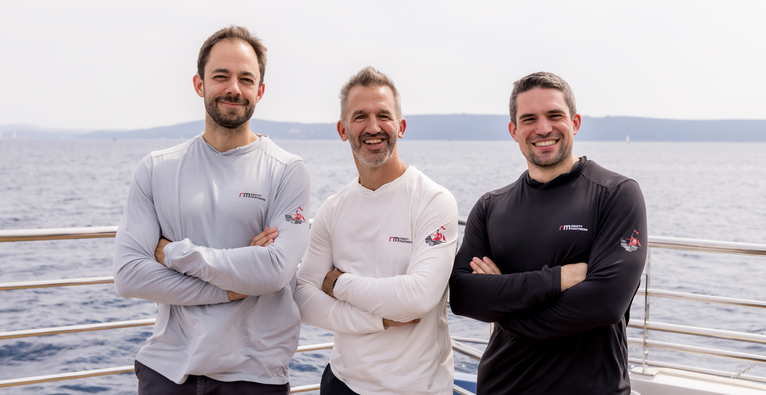
Angelos Chronis (infrared.city) and Ken Moriyama (Godot Inc.) | (c) infrared.city / Godot Inc.

Sometimes the most interesting startup stories begin by chance. This is exactly what happened when the Japanese behavioral-AI startup Godot Inc. and the Viennese Urban Climate Tech company infrared.city met during the GO ASIA program of the Global Incubator Network Austria (GIN) in Osaka. What started as a simple introduction quickly became the beginning of a long-term partnership. Today, the two companies are already working on their second joint project in the Smart City field. Both founders say the same thing: without GIN, this would never have happened. The initiative is a joint program by Austria Wirtschaftsservice (aws) and the Austrian Research Promotion Agency (FFG).

Understanding Human Behavior Through AI

Godot and infrared.city come from very different backgrounds, but their technologies fit together in a surprising and powerful way. Godot is a research-driven company that builds AI systems to understand how people behave and make decisions. The team works with partners such as the World Health Organization, the Government of Osaka and research groups across Europe, Japan and the United States. Their goal is to understand why people make certain choices — for example, why some citizens get vaccinated and others do not, or why some people avoid cancer screenings even when they are free.
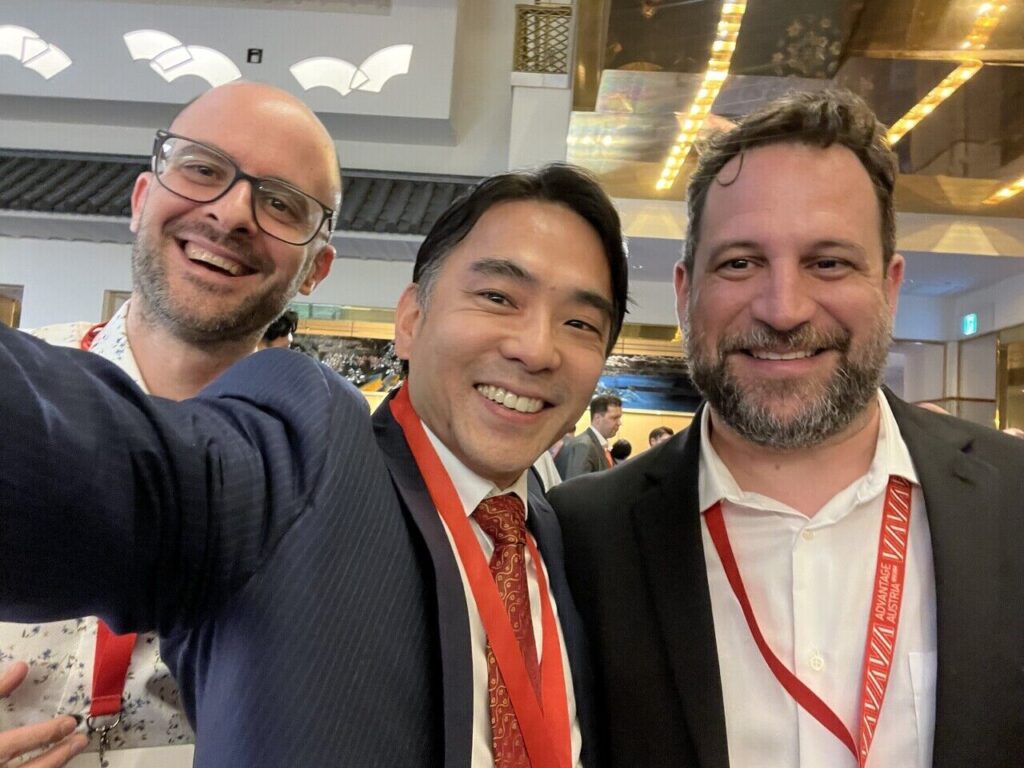
Ken Moriyama (center) and Angelos Chronis (right) in Osaka | (c) GoDot / infrared.city

“We are a research-driven startup focused on understanding human behavior,” explains Godot Co-Founder and CEO Ken Moriyama. “These questions matter because they help governments and organizations build better services.”

Godot’s technology can simulate thousands of possible future scenarios and show how decisions shape outcomes. This allows organizations to make smarter choices in public health, communication, and even crisis management.

Simulating Urban Climate and Environment

Infrared.city, on the other hand, simulates the physical world of cities. The startup began as a research project at the City Intelligence Lab of the Austrian Institute of Technology (AIT). Today, it offers a software platform that allows architects, urban planners and cities to model microclimate conditions such as heat, wind, shade and thermal comfort in real time. This information helps build cooler, safer and more comfortable public spaces — especially during heatwaves and changing climate conditions.

“We simulate how the climate behaves,” says infrared.city CEO Angelos Chronis. “Microclimate, thermal comfort, shade and wind — everything that affects how people experience the city.”

Their tool makes complex climate simulations easy to use, helping planners make better decisions much earlier in the design process.

The Moment They Met: A GIN Event in Osaka

The two founders first met in May 2025 in Osaka, where Iinfrared.city was part of the Austrian delegation attending the GO ASIA program. Advantage Austria organized a Smart City event during the trip, and Godot was invited as one of the speakers. Chronis and Moriyama were introduced and immediately realized that their work touched two different but highly connected layers of city life.
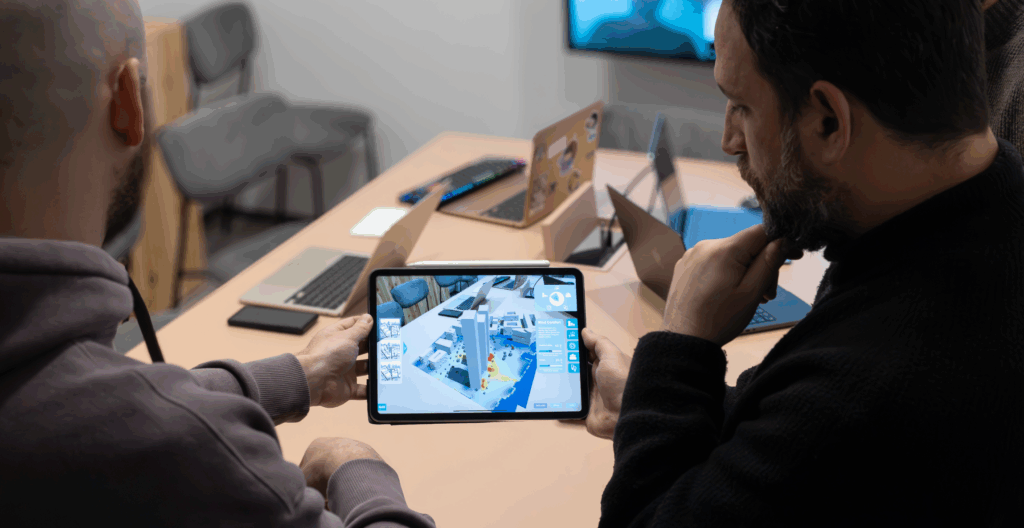
(c) infrared.city

“It became clear very quickly that our technologies complement each other,” Chronis recalls. “We simulate the physical environment. They simulate human behavior. Naturally, we started thinking about how these two worlds could be combined.”

Moriyama describes the moment in the same way: “infrared.city provides the physical layer. We provide the behavioral layer. Together we can simulate how humans interact with their environment.”

First Joint Project: A Marathon Simulator with Asics

Shortly after returning from Japan, the two startups began working together on concrete projects. The first project is directly connected to Godot’s long-term collaboration with Asics, the global running and sports brand based in Kobe. Asics invested in Godot after following their technology for two years.
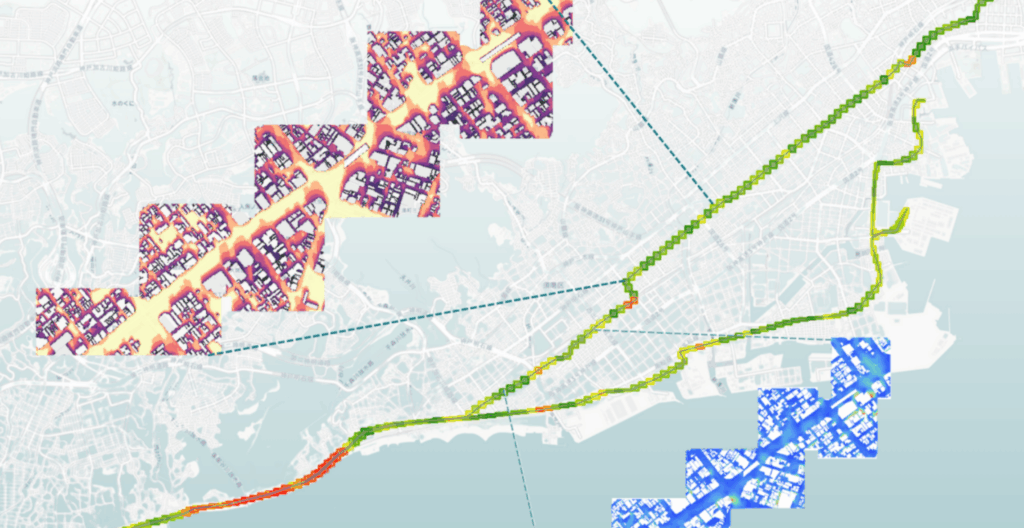
marathon simulations and performance impact score | (c) infrared.city

Together, they began developing an AI-based marathon simulator that lets runners test pacing strategies without running the full distance. Users can explore various performance profiles and race scenarios before entering real competitions.

With infrared.city on board, the simulator can also include environmental conditions such as heat, wind, shadows or humidity. “You can test multiple versions of yourself under different conditions,” Moriyama explains. “And with infrared.city, we can also include environmental factors that strongly influence performance.”

Second Joint Project: A Digital Twin for a Japanese Municipality

The second project reaches even deeper into the Smart City world. Godot and infrared.city are working with Yomitan Village, a municipality in Japan with around 40,000 inhabitants, to build a digital twin of the entire region.

This digital model combines behavior simulation and climate simulation. It helps the local government understand how residents might react to heat waves, heavy rain, new bus routes or public policies. It also helps identify areas where tourists face heat stress or where elderly residents might need more support during extreme weather.
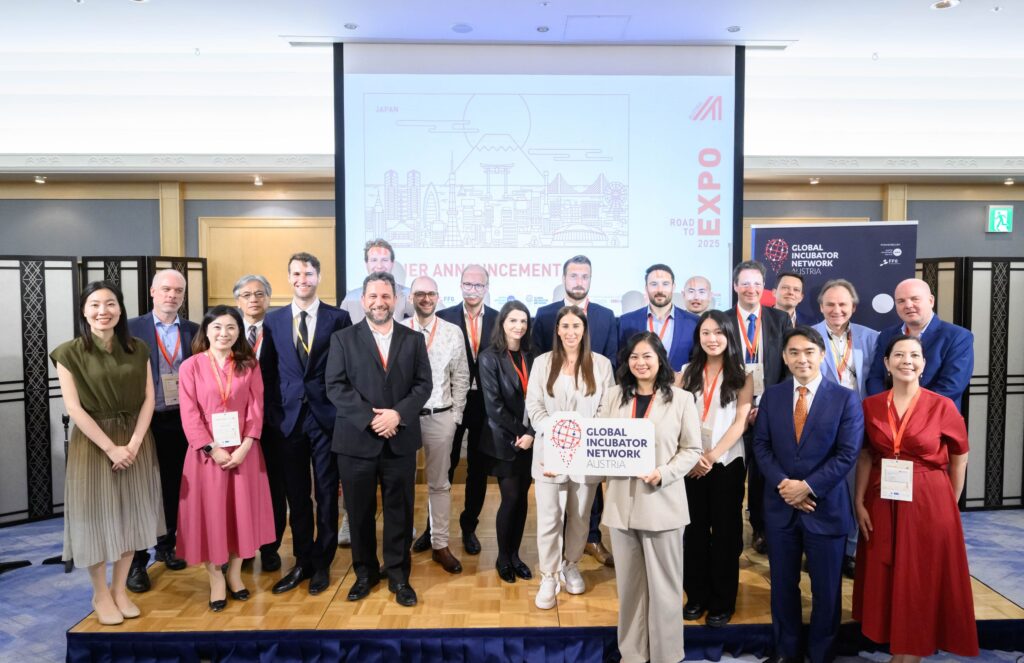
GO EXPO OSAKA 2025 | (c) Advantage Austria

“This is where our technologies come together perfectly,” says Chronis. “We can understand not only how the climate changes, but also how people change their behavior in response.”

Interest in this combined approach is already coming from other parts of the world, including Malaysia and Abu Dhabi, where climate adaptation is becoming increasingly urgent.

Why GIN Matters: Building Bridges Between Asia and Austria

For both startups, their partnership is more than a simple cooperation. It is also proof of how effective the GO ASIA and GO AUSTRIA programs can be.

Moriyama believes Austria is the ideal place for Godot’s European expansion because of its strong focus on responsible AI and governance. After taking part in GO AUSTRIA, Godot decided to establish its European subsidiary in Vienna. Chronis shares a similar view about GO ASIA and calls it one of the best internationalization programs his company has joined.

The story of Godot and infrared.city shows what happens when the right people meet in the right place at the right time. It is exactly the type of collaboration that GIN Austria aims to create: meaningful partnerships between Asian and Austrian innovators, built on trust, shared interests and strong technological alignment. And for both startups, this is only the beginning.


Disclaimer: This article was produced in cooperation with Austria Wirtschaftsservice (aws).

Deine ungelesenen Artikel:
31.07.2026

Sonnnig: Wie das Energy-Sharing-Startup seine Endkund:innen-Plattform für Energieversorger weiterentwickelt

Das Wiener Startup sonnnig baut eine White-Label-Lösung zur Verwaltung von Energiegemeinschaften. Nach dem Erfolg bei Privatabnehmer:innen will das zwei Jahre alte Unternehmen nun Energieversorgern unter die Arme greifen. Mit einer neuen aws-Seedfinancing-Förderung im Rücken sucht das Team Partnerunternehmen.
/artikel/sonnnig-wie-das-energy-sharing-startup-seine-endkundinnen-plattform-fuer-energieversorger-weiterentwickelt
31.07.2026

Sonnnig: Wie das Energy-Sharing-Startup seine Endkund:innen-Plattform für Energieversorger weiterentwickelt

Das Wiener Startup sonnnig baut eine White-Label-Lösung zur Verwaltung von Energiegemeinschaften. Nach dem Erfolg bei Privatabnehmer:innen will das zwei Jahre alte Unternehmen nun Energieversorgern unter die Arme greifen. Mit einer neuen aws-Seedfinancing-Förderung im Rücken sucht das Team Partnerunternehmen.
/artikel/sonnnig-wie-das-energy-sharing-startup-seine-endkundinnen-plattform-fuer-energieversorger-weiterentwickelt
Das sonnnig-Gründerteam: Roman Öfferlbauer, Jonathan Buchinger und Lukas Hückel © sonnnig

Dort, wo Technik und Unternehmertum zusammenkommen, kann Großes entstehen. So auch an der TU Wien im „Extended Study on Innovation“-Programm, wo sich das Gründer-Trio, bestehend aus Roman Öfferlbauer, Lukas Hückel und Jonathan Buchinger, zum ersten Mal begegnete. Parallel dazu gründete Öfferlbauer 2023 in seinem Heimatort in Niederösterreich eine Energiegemeinschaft, zu einem Zeitpunkt, an dem das Thema noch jung und „technisch schwierig abzuwickeln“ war, so Öfferlbauer.

Aus improvisierten Tools und selbst geschriebenen Mini-Scripts für den Eigenbedarf wurde ein Jahr später sonnnig. Eine White-Label-Lösung für Abrechnung, Mitgliedermanagement und Datenanalyse von mittlerweile 30 Energiegemeinschaften in ganz Österreich.

Wenn Strom aus der Nachbarschaft kommt

„Unser Blick war eigentlich immer auf Endverbraucher und Verbraucherinnen fokussiert. Also Privatpersonen, Unternehmen, Gemeinden“, erklärt Öfferlbauer im Interview. Eine Mission, die über die letzten zwei Jahre tausende Haushalte in ganz Österreich erreicht hat. Mittlerweile kann man über sonnnig den generierten Strom auch als Mitarbeiter:innen-Benefit oder Spende abgeben. „Im letzten halben Jahr hat sich da aber auch ziemlich viel auf der anderen Seite, also bei den Energieversorgungsunternehmen, getan“, verrät der Co-Founder.

Energieversorgungsunternehmen stünden zunehmend vor einem Einkaufs- und Prognoseproblem. In der Regel verbraucht die Kundschaft ihren Strom nach einem Standardprofil, mit dem der jeweilige Versorger seine Stromeinkäufe prognostiziert. Sind die Abnehmer:innen aber Teil einer Energiegemeinschaft, verschiebt sich dieses Profil radikal: Ein großer Teil des Energiebedarfs wird jetzt von der Energiegemeinschaft gedeckt und nur noch die Restmengen werden durch den Energieversorger geliefert. „Der Energieversorger hat die Energiemenge aber schon im Vorhinein eingekauft“ – und müsse sie kurzfristig wieder verkaufen, erklärt Öfferlbauer. Ein teures Ausgleichsenergie-Problem, das mit wachsendem Energy-Sharing-Anteil immer größer wird.

Sonnnig als potenzieller Partner für Energieversorger

Genau hier setzt das neue Produkt an, für das sonnnig gerade die dritte Förderung der Austria Wirtschaftsservice (aws) erhalten hat: eine White-Label-Lösung zum Energy Sharing, die Energieversorger direkt in ihr eigenes Kund:innenportal einbinden können. Im Hintergrund liefert sonnnig die Restlastprognose auf 15-Minuten-Basis, damit Versorger gezielter am Großhandel einkaufen können.

Möglich macht das die Prognosefähigkeit, die sonnnig über Jahre mit echten Energiegemeinschaften aufgebaut hat. Ziel ist es, Versorgern einen besseren Einblick in ihre Stromverläufe zu geben und ihnen zu helfen, selbst ein Geschäftsmodell rund um Energy Sharing aufzubauen, auch als Beitrag zur Kund:innenbindung, erklärt Öfferlbauer. Am Markt kommt das gut an: „Energieversorgungsunternehmen spüren das Problem und sind zunehmend auf der Suche nach Lösungen und neuen Geschäftsmodellen im Energy-Sharing-Bereich, deshalb reden sie auf einmal mit uns“, sagt der Co-Founder. Davor sei die Beziehung eher einseitig gewesen. Zwei Pilotbetriebe hat sonnnig für das geförderte Projekt bereits akquiriert und zeigt sich offen für weitere Kooperationen.

Von First bis Seed: Der aws-Weg

Möglich wurde diese Entwicklung durch drei aufeinanderfolgende aws-Förderungen. Mit aws First Incubator, einem Programm für sehr junge Teams, teils noch vor der Firmengründung, kam das Startup zu ersten Beratungsleistungen und Mentoring. Mit aws Preseed – Innovative Solutions wurde zunächst die inhaltliche und wirtschaftliche Machbarkeit des Vorhabens überprüft und der Proof of Concept entwickelt. Darauf aufbauend unterstützt aws Seedfinancing – Innovative Solutions die Weiterentwicklung bis zum Markteintritt sowie die ersten Skalierungsschritte. In diesem Rahmen werden nun der Aufbau und der Launch des neuen B2B-Produkts finanziert.

Erwarteter Boom durch neues Elektrizitätswirtschaftsgesetz

Als besondere Meilensteine nennt Öfferlbauer Referenzprojekte mit bekannten Unternehmen wie Hartl Haus, der Nationalbank-Tochter IG Immobilien oder der Volkshilfe Wien sowie die wiederholte Verdopplung des Jahresumsatzes. Im ersten Halbjahr 2026 hat sich die geteilte Energiemenge, die über sonnnig abgewickelt wurde, laut eigenen Angaben gegenüber dem Vorjahr mehr als verdoppelt. Investor:innen hat das fünfköpfige Team bislang bewusst keine an Bord geholt, da laufende Umsätze und eine halbe Million Euro an lukrierten Entwicklungsförderungen das Team organisch tragen.

Rückenwind kommt bald auch auf politischer Ebene: Im Oktober tritt das neue Elektrizitätswirtschaftsgesetz (ElWG) in Kraft, das Energy Sharing über bilaterale Peer-to-Peer-Verträge statt über eine juristische dritte Instanz wie einen Verein oder eine GmbH erlaubt. Für sonnnig eine freudige Entwicklung: „Das baut natürlich extrem viele Hürden ab. Und deswegen erwarten wir auch einen ziemlichen Boom an neuen Mitgliedern und das nehmen auch Energieversorgungsunternehmen wahr.“


Disclaimer: Der Artikel entstand in Kooperation mit der Austria Wirtschaftsservice (aws).

Toll dass du so interessiert bist!
Hinterlasse uns bitte ein Feedback über den Button am linken Bildschirmrand.
Und klicke hier um die ganze Welt von der brutkasten zu entdecken.

brutkasten Newsletter

Aktuelle Nachrichten zu Startups, den neuesten Innovationen und politischen Entscheidungen zur Digitalisierung direkt in dein Postfach. Wähle aus unserer breiten Palette an Newslettern den passenden für dich.

Montag, Mittwoch und Freitag

AI Summaries

Climate Tech from Austria Meets Behavioral AI from Japan: How infrared.city and Godot Joined Forces

AI Kontextualisierung

Welche gesellschaftspolitischen Auswirkungen hat der Inhalt dieses Artikels?

Leider hat die AI für diese Frage in diesem Artikel keine Antwort …

Climate Tech from Austria Meets Behavioral AI from Japan: How infrared.city and Godot Joined Forces

AI Kontextualisierung

Welche wirtschaftlichen Auswirkungen hat der Inhalt dieses Artikels?

Leider hat die AI für diese Frage in diesem Artikel keine Antwort …

Climate Tech from Austria Meets Behavioral AI from Japan: How infrared.city and Godot Joined Forces

AI Kontextualisierung

Welche Relevanz hat der Inhalt dieses Artikels für mich als Innovationsmanager:in?

Leider hat die AI für diese Frage in diesem Artikel keine Antwort …

Climate Tech from Austria Meets Behavioral AI from Japan: How infrared.city and Godot Joined Forces

AI Kontextualisierung

Welche Relevanz hat der Inhalt dieses Artikels für mich als Investor:in?

Leider hat die AI für diese Frage in diesem Artikel keine Antwort …

Climate Tech from Austria Meets Behavioral AI from Japan: How infrared.city and Godot Joined Forces

AI Kontextualisierung

Welche Relevanz hat der Inhalt dieses Artikels für mich als Politiker:in?

Leider hat die AI für diese Frage in diesem Artikel keine Antwort …

Climate Tech from Austria Meets Behavioral AI from Japan: How infrared.city and Godot Joined Forces

AI Kontextualisierung

Was könnte das Bigger Picture von den Inhalten dieses Artikels sein?

Leider hat die AI für diese Frage in diesem Artikel keine Antwort …

Climate Tech from Austria Meets Behavioral AI from Japan: How infrared.city and Godot Joined Forces

AI Kontextualisierung

Wer sind die relevantesten Personen in diesem Artikel?

Leider hat die AI für diese Frage in diesem Artikel keine Antwort …

Climate Tech from Austria Meets Behavioral AI from Japan: How infrared.city and Godot Joined Forces

AI Kontextualisierung

Wer sind die relevantesten Organisationen in diesem Artikel?

Leider hat die AI für diese Frage in diesem Artikel keine Antwort …

Climate Tech from Austria Meets Behavioral AI from Japan: How infrared.city and Godot Joined Forces