29.01.2022

Butchershop-Gründer Trevor Hubbard: Fundraising 2.0: How to get buy-in from your investor(s)?

Trevor Hubbard is the founder of Butchershop and has worked with over 700 startups and seen 30 of them rise to become Unicorns. His creative agency is based in San Francisco, but has had a branch in Vienna since last year. The Californian is an advocate of the "beat-failure" method, thinks little of the "fail-fast" philosophy and prefers a "pre-mortem" approach in which failure is addressed openly.
/artikel/butschershop-gruender-trevor-hubbard-fundraising-2-0-how-to-get-buy-in-from-your-investors
Trevor Hubbard, Beat Faulure, WIe man Investoren bekommt, Investorensuche, wie finde ich Investoren, Fundraising, Investment, Vienna
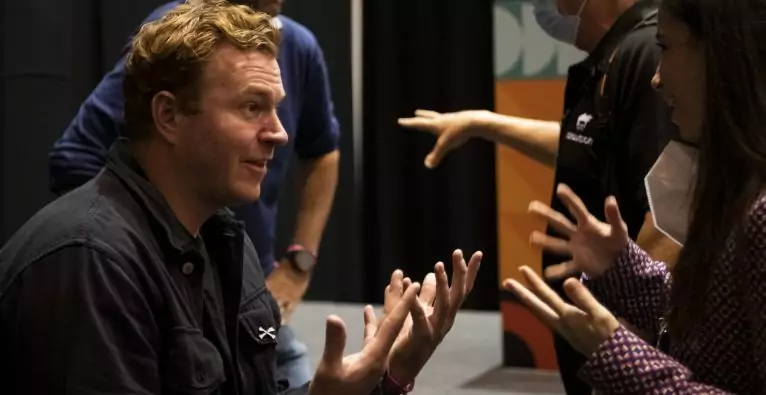
(c) Butchershop - Trevor Hubbard, Founder Butchershop.

Pre-money Valuation, Due Diligence und Risk Assessment based on Strategic Failure Management

Anyone who has worked towards achieving buy-in from preferred investors knows that the process is not simple. Between the negotiations and bargaining, both founders and investors are tasked with the difficult challenge of balancing the deal. But for investors, this process is a part of their daily routines – the same cannot be said for founders. So how can entrepreneurs appeal to preferred investors and get the buy-in they’re looking for?

The secret will help you and your team become more proactive and less reactive by addressing failure at its core. We call it the Beat Failure methodology. All you have to do is explore one simple question: what would cause you to fail?

Let’s look at four stages of the investor/founder relationship in which addressing potential failures can help you as an entrepreneur lead conversations, generate trust and alignment and ultimately gain the confidence and certainty you need to attract investors.

I Pre-money Valuation

Pre-money valuation prior to investment conversations is one important element in the investment process that can help startups experience rapid growth. The formula is easy: the higher your pre-money valuation, the easier your conversations with a new round of investors will be. Higher estimates will not only attract larger sums of investment money, but it will also attract more experienced investors to your startup. But how can you leverage communication to influence the pre-money valuation process?

This is where failure comes in. One way to discuss how much equity should be issued in return for an investment in your company is by exploring what potential failures investors anticipate and what you can do to preemptively prevent such pitfalls from occurring. The art of predicting potential failure points and managing your company from a failure prevention standpoint (rather than solidly based on KPIs and vision) sends a strong message and effect to your pre-money valuation. As a result, your critical pre-money valuation is not entirely in the hands of potential investors but rather shaped by your proactive failure planning approach.

II Investor Pitch Deck

Don’t let all of this failure planning happen just behind the scenes – include a potential failure slide in your investor pitch deck. Business plans, product USPs, market entry and expansion strategies and competitor briefings are essential to any good pitch – but one extra minute of failure planning will add tremendous value to your deck.

After addressing the risk assessment needs of your potential investor, add one last slide displaying any potential points of failure and contrast them with the precise measures you plan to implement to counteract such pitfalls. This extra step has been found to help increase trust between investors and founders to a great extent. One extra slide on your pitch deck gaining disproportionately more trust is a no-brainer if you ask us.

III Due Diligence from the Founder’s Perspective

Risk assessment and due diligence are key parts of any investment round. In order to assess which investor suits your portfolio, you want to make sure to define the experience and network you’ll need to maximize growth. This is where failure comes in again – focusing on failure can help you understand which investors are the best fit for you and your company. Set up a table with a column collecting your possible failure items and add a column for each investor you’re having conversations with and start vetting them via this matrix of failures. It is important to remember that you are evaluating these investments as well. Without having a clear vision of your criteria, it is easy to get flattered into a detrimental partnership.

Ask yourself: which investor will help you combat such failures? And choose accordingly.

IV Risk Assessment + Relationship Building Together with your Investors

You’ve come a long way after initiating your next investment round. Now is the time when a handful of investors remain and the round is about to close. In order to finally achieve buy-in from your preferred investor(s), let strategic failure management be your last push towards success.

Get your potential cap table or 2-3 competing investors for your next round to the table and invite them proactively (again) to a holistic and joint due diligence by sharing openly what you think would cause your company to fail. This final exercise and fourth use case of the Beat Failure methodology allows you as a founder to compare everyone’s concerns and assess them by directly comparing the suitability of your investors at the table.

Secondly, conversations like this allow you to mitigate risks. Ideally, you already conducted a ‘what would cause us to fail’ due diligence internally and identified measures to be taken in order to prevent failure from happening. In this final get-together you can showcase your strength of having anticipated failure and impress investors one last time. As a cherry on top, you can also add emotional intelligence (EQ) based due diligence to the fact-based due diligence in order to build a strong relationship with your future stakeholder(s).

Beating Failure with strategy

Conclusion: Beat Failure methodology offers both sides in the due diligence process the opportunity to anticipate failure, identify concrete strategies for failure items and communicate mutual expectations. As a confidence-building measure, the approach established in Silicon Valley has brought many startups and investors together in the right combination, producing clear action items to prevent failure from happening. Don’t fail fast, fail often, but make failure a tool by making ‚Strategic Failure Management‘ part of your conversations – in the due diligence and risk assessment process with your investors and startups. Because you can actually Beat Failure.

Deine ungelesenen Artikel:
25.09.2026

Auf Enterprise-Level: fonio.ai geht Partnerschaft mit T-Systems Austria ein

Kunden von T-Systems Austria können in Zukunft die KI-Telefonie von fonio.ai nutzen. Für das Wiener Startup ist es der erste Schritt auf Enterprise-Level.
/artikel/auf-enterprise-level-fonio-ai-geht-partnerschaft-mit-t-systems-austria-ein
25.09.2026

Auf Enterprise-Level: fonio.ai geht Partnerschaft mit T-Systems Austria ein

Kunden von T-Systems Austria können in Zukunft die KI-Telefonie von fonio.ai nutzen. Für das Wiener Startup ist es der erste Schritt auf Enterprise-Level.
/artikel/auf-enterprise-level-fonio-ai-geht-partnerschaft-mit-t-systems-austria-ein
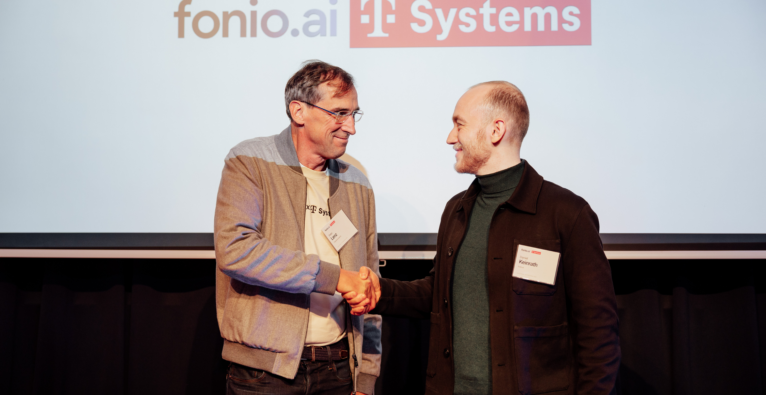
(v.l.) Managing Director bei T-Systems Austria Peter Lenz und fonio.ai-Co-Founder Daniel Keinrath | © Nick Rainer

Um fonio.ai wird es nicht still. Laut eigenen Angaben gehört das Startup zu den am schnellsten wachsenden in ganz Europa, im August knackte es die 10-Millionen-Dollar-ARR-Marke, wie brutkasten berichtete. Jetzt hebt das Unternehmen seine KI-gestützte Kundenkommunikation auf das nächste Level. Über die Plattform „T operated by fonio.ai“ von T-Systems, einer IT-Tochter der Deutschen Telekom, werden die Dienste von fonio.ai nun auch für Großkunden angeboten.

„KI-gestützte Telefonie entwickelt sich gerade zum Standard für jede Organisation, die dauerhaft erreichbar und damit wettbewerbsfähig bleiben möchte“, sagt Daniel Keinrath, CEO und Mitgründer von fonio.ai. Auf der Kundenliste von T-Systems finden sich Unternehmen wie die ÖBB oder Uniqa. Rege Nachfrage zeige sich aus Branchen wie Gesundheitswesen, Manufacturing und Bankwesen.

Die Voice-AI-Cluster von fonio.ai laufen dabei über die T Cloud der Deutschen Telekom, die verschiedene Cloud-Infrastrukturen und IT-Services bündelt. Alle fonio.ai-Kunden sollen somit in Zukunft von Zero Data Retention profitieren, einem Sicherheitsstandard, der bisher Enterprise-Umgebungen vorbehalten war.

„Einfach hinsetzen und einen lustigen Prompt schreiben, funktioniert nicht“

„Die aktuelle Challenge bei den größten Unternehmen ist, diese Unternehmen wirklich tief zu verstehen. Einfach hinsetzen und einen lustigen Prompt schreiben, funktioniert auf einem Enterprise-Level nicht mehr. Da haben wir auch gemerkt, dass es unbedingt einen Partner wie T-Systems braucht. Es macht einfach einen riesigen Unterschied, wenn man tief in die Systeme reingeht, ein ERP oder CRM tiefgründig connected, und der KI wirklich weitreichende Fähigkeiten gibt“, sagt Keinrath. Als eine der zentralen Herausforderungen beschreibt er, dass Großkunden höhere Anforderungen an die Security und Prozesse haben.

Datenschutz als zentrales Thema

„Wir haben uns für fonio.ai entschieden, weil das Produkt hochinteressant und gut ausgereift ist. Da ist einfach viel Know-how dahinter. Außerdem haben wir ein Verständnis für den europäischen Rechtsraum und daher selber ein Interesse, hier eben DSGVO-konform zu sein, die Normen einzuhalten“, sagt Peter Lenz, Chairman von T-Systems Austria, im brutkasten-Gespräch. Er erklärt: „Große Unternehmen wollen wissen: Wo liegen denn meine Daten? Ist das alles souverän? Befindet sich das in Europa, idealerweise auch in Österreich? Da haben wir jetzt eine gute Antwort drauf.“ T-Systems betreibt zwei Rechenzentren in Österreich.

Keinrath ergänzt: „Was OpenAI etc. machen: Sie lernen bei jedem Gespräch. Wir machen das nicht. Wenn 80, 90 Prozent der Kommunikation von Unternehmen über KI laufen, dann muss das von einem europäischen Player sein.“ Die KI von fonio.ai lerne durch Informationen, die Unternehmen der KI bewusst geben. AustrianStartups-Chefin Hannah Wundsam betont, dass Firmen in Europa durch die DSGVO und den EU AI Act sehr klare Regeln haben.

Toll dass du so interessiert bist!
Hinterlasse uns bitte ein Feedback über den Button am linken Bildschirmrand.
Und klicke hier um die ganze Welt von der brutkasten zu entdecken.

brutkasten Newsletter

Aktuelle Nachrichten zu Startups, den neuesten Innovationen und politischen Entscheidungen zur Digitalisierung direkt in dein Postfach. Wähle aus unserer breiten Palette an Newslettern den passenden für dich.

Montag, Mittwoch und Freitag

AI Summaries

Butchershop-Gründer Trevor Hubbard: Fundraising 2.0: How to get buy-in from your investor(s)?

AI Kontextualisierung

Welche gesellschaftspolitischen Auswirkungen hat der Inhalt dieses Artikels?

Leider hat die AI für diese Frage in diesem Artikel keine Antwort …

Butchershop-Gründer Trevor Hubbard: Fundraising 2.0: How to get buy-in from your investor(s)?

AI Kontextualisierung

Welche wirtschaftlichen Auswirkungen hat der Inhalt dieses Artikels?

Leider hat die AI für diese Frage in diesem Artikel keine Antwort …

Butchershop-Gründer Trevor Hubbard: Fundraising 2.0: How to get buy-in from your investor(s)?

AI Kontextualisierung

Welche Relevanz hat der Inhalt dieses Artikels für mich als Innovationsmanager:in?

Leider hat die AI für diese Frage in diesem Artikel keine Antwort …

Butchershop-Gründer Trevor Hubbard: Fundraising 2.0: How to get buy-in from your investor(s)?

AI Kontextualisierung

Welche Relevanz hat der Inhalt dieses Artikels für mich als Investor:in?

Leider hat die AI für diese Frage in diesem Artikel keine Antwort …

Butchershop-Gründer Trevor Hubbard: Fundraising 2.0: How to get buy-in from your investor(s)?

AI Kontextualisierung

Welche Relevanz hat der Inhalt dieses Artikels für mich als Politiker:in?

Leider hat die AI für diese Frage in diesem Artikel keine Antwort …

Butchershop-Gründer Trevor Hubbard: Fundraising 2.0: How to get buy-in from your investor(s)?

AI Kontextualisierung

Was könnte das Bigger Picture von den Inhalten dieses Artikels sein?

Leider hat die AI für diese Frage in diesem Artikel keine Antwort …

Butchershop-Gründer Trevor Hubbard: Fundraising 2.0: How to get buy-in from your investor(s)?

AI Kontextualisierung

Wer sind die relevantesten Personen in diesem Artikel?

Leider hat die AI für diese Frage in diesem Artikel keine Antwort …

Butchershop-Gründer Trevor Hubbard: Fundraising 2.0: How to get buy-in from your investor(s)?

AI Kontextualisierung

Wer sind die relevantesten Organisationen in diesem Artikel?

Leider hat die AI für diese Frage in diesem Artikel keine Antwort …

Butchershop-Gründer Trevor Hubbard: Fundraising 2.0: How to get buy-in from your investor(s)?