30.04.2018

RBI Elevator Lab: New startup search fields for the second batch

The group-wide application phase for the second batch of the RBI Elevator Lab will start on May 1st. Startups can apply in six categories. Topics like Blockchain were newly added.
/artikel/rbi-elevator-lab-new-startup-search-fields-second-batch
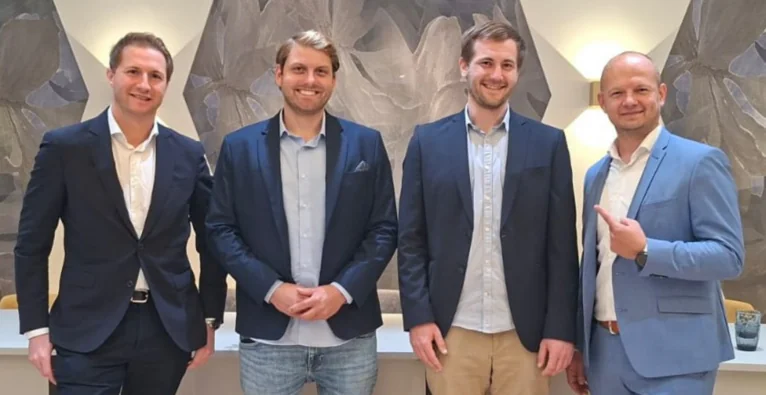
Max Schausberger, Program Lead RBI Elevator Lab
(c) Haris Dervisevic: Max Schausberger, Program Lead RBI Elevator Lab
sponsored

„We are looking for startups that can create value together with RBI. We want to test their solutions, develop them further and apply them in our markets,“ says Max Schausberger. He is Program Lead at RBI Elevator Lab, the FinTech Accelerator of Raiffeisen Bank International. The Elevator Lab runs as a „Virtual Program“ for most of the time. The startups don’t have to be constantly present throughout the duration of 4 months. „Once a month we have three intense days here in Vienna,“ explains Mister Schausberger. Then the startups will work directly with the relevant RBI business units on joint pilot projects. „They have the chance to demonstrate that cooperation is worthwhile“. In addition external experts from a wide range of fields will provide mentoring sessions to the startups.

+++ Deutsche Version +++

„Looking beyond the boundaries of our industry“

The applicant startups do not necessarily have to be FinTechs. „Of course, this is the area closest to banks. It is becoming more relevant for us to look beyond the boundaries of our industry though. So, I can only encourage any startup that sees a chance for a beneficial cooperation to apply to the RBI Elevator Lab“, says the Program Lead. Thereby he emphasizes the potential in the large market of RBI. The Austrian bank has subsidiary banks throughout the entire CEE region – eight of which have their own regional challenges as part of the Elevator Lab program. The regional winners will receive a „wildcard“ for the group-wide program. „The growth forecasts for these markets are well above the European average. This is a huge opportunity for our cooperation projects with the startups,“ explains Schausberger.

Video Interview: Max Schausberger about the second batch of RBI Elevator Lab

Successful „Learning Journey“

Last year, more than 300 startups from over 50 countries had applied for the Elevator Lab. Five startups eventually joined the accelerator and are now working on the implementation of their cooperation projects. Despite the great success, there were a lot of lessons learned for RBI throughout the first round, which lead to some changes, says Schausberger. „As part of this learning journey we have adapted our internal processes to startup cooperation. It’s a new kind of partnership we did not have before.“

„The banking industry changes every month“

For instance, there are some evident changes in the categories for which startups can apply. „The banking industry changes almost every month,“ says the Program Lead. The suggestions for the new search fields had come directly from the individual business units. „Our close interaction with the departments is absolutely essential to the program – from the definition of the challenges via the selection of the startups to the implementation of the pilot projects.“ One of the novelties in the second call is the explicit search for startups in the field of distributed ledger technologies, such as the blockchain. „The technology is still in a very early phase. But there are already many pilot projects throughout the industry and we are now ready to work on the topic in a structured way,“ says Schausberger. Within the past few months, RBI became the first Austrian bank to join the R3 Blockchain Consortium and the international Blockchain Research Institute. „We are nevertheless convinced that there are startups out there that bring in additional beneficial concepts they can test together with us.“

Six categories at the RBI Elevator Lab

Six search fields have been defined for the second round of the RBI Elevator Lab. The field „Open Banking“ has also been added this year, in line with the implementation of the PSD2 regulation. These are the six categories:

  • Advanced Analytics, including Artificial Intelligence, predictive analytics, client and trading data analytics, client interaction analytics as well as augmented credit scoring and SME lending.
  • Corporate Banking, including blockchain-based trade finance solutions, corporate prizing solutions, eDocument and optical character recognition as well as robotic FX trading advice.
  • Investing & TradingTech, including blockchain-based investment banking solutions, smart contract certificates, automated document generation and hybrid or digital advice.
  • New Branch Experience, including automated branch digitization, augmented or virtual reality, PoS solutions, remote advice and voice banking.
  • Open Banking, including third party provider products and services, fund brokerage platforms and corporate multibank data aggregation.
  • RegTech, including cyber security, blockchain-based AML, KYC, customer authentication and digital ID solutions, data protection and management as well as text mining.

Startups can apply until June 24th 2018. After a pre-selection of the semi-finalists, there will be Skype pitches from September 5th to 7th to determine the finalists.

⇒ Official page with application link

Video Wrap-Up

The Elevator Lab starts Batch #2

The Application for the Raiffeisen Bank International AG Elevator Lab is open again! Here's what you should know about the second batch of the FinTech accelerator.

Gepostet von DerBrutkasten am Montag, 30. April 2018


Deine ungelesenen Artikel:
18.06.2026

Die nächste Finanzinfrastruktur wird gerade gebaut – die Frage ist nur, von wem

In seiner Kolumne zum „Proof of Talk“-Event in Paris zeigt Dejan Jovicevic: Blockchain wird zur neuen Finanzinfrastruktur. Europa muss jetzt handeln, um seine digitale Souveränität zu sichern.
/artikel/die-naechste-finanzinfrastruktur-wird-gerade-gebaut-die-frage-ist-nur-von-wem
18.06.2026

Die nächste Finanzinfrastruktur wird gerade gebaut – die Frage ist nur, von wem

In seiner Kolumne zum „Proof of Talk“-Event in Paris zeigt Dejan Jovicevic: Blockchain wird zur neuen Finanzinfrastruktur. Europa muss jetzt handeln, um seine digitale Souveränität zu sichern.
/artikel/die-naechste-finanzinfrastruktur-wird-gerade-gebaut-die-frage-ist-nur-von-wem
© brutkasten

Wer Blockchain hört, denkt oft noch immer an Kryptowährungen, Kursentwicklungen und die Spekulationsexzesse der vergangenen Jahre. Dieses Bild greift jedoch zunehmend zu kurz. Nach zwei Tagen beim Proof of Talk in Paris, einem der relevantesten europäischen Treffen für Web3, digitale Assets und Finanzinnovation, ist mein Eindruck vor allem einer: Die Diskussion hat sich fundamental verändert.

Bemerkenswert war dabei weniger die Technologie selbst als die Zusammensetzung der Teilnehmerinnen und Teilnehmer. Neben Gründer:innen und Technologieunternehmen waren Banken, Asset Manager, institutionelle Investoren, Zahlungsdienstleister und Regulatoren präsent. Viele der Gespräche drehten sich nicht mehr um die Frage, ob Blockchain-Technologien künftig eine Rolle spielen werden, sondern darum, wo und wie sie konkret eingesetzt werden können. Die Debatte hat die Nische verlassen und ist in der Mitte des Finanzsystems angekommen.

Genau darin liegt auch die eigentliche Relevanz der Entwicklung. Im Kern geht es längst nicht mehr um Kryptowährungen. Es geht um die Infrastruktur der Finanzwelt von morgen. Diskutiert wurden Themen wie Tokenisierung, Stablecoins, digitale Identitäten, neue Kapitalmarktmodelle und die Frage, wie Finanztransaktionen künftig abgewickelt werden. Viele dieser Entwicklungen stehen noch am Anfang. Dennoch entsteht zunehmend der Eindruck, dass sich hier grundlegende Bausteine einer neuen Finanzarchitektur herausbilden.

Besonders häufig fiel in Paris das Schlagwort Tokenisierung. Die dahinterstehende Idee ist, reale Vermögenswerte digital abzubilden und damit einfacher handelbar, teilbar und zugänglich zu machen. Befürworter sehen darin die Chance auf effizientere Kapitalmärkte und einen leichteren Zugang zu Investitionen. Ob sich diese Vision in vollem Umfang verwirklichen wird, bleibt abzuwarten. Unübersehbar ist jedoch, dass erhebliche Ressourcen und Aufmerksamkeit in diese Richtung fließen.

Für Europa stellt sich dabei eine weit größere Frage als jene nach einzelnen Technologien oder Geschäftsmodellen, nämlich die Wettbewerbsfähigkeit. In den vergangenen Jahren wurde intensiv darüber diskutiert, wie Europa bei künstlicher Intelligenz, Cloud-Infrastruktur oder Halbleitern eine stärkere Rolle einnehmen kann. Weniger Aufmerksamkeit erhält bislang die Frage, wer die Finanzinfrastruktur des digitalen Zeitalters gestaltet.

Dabei sind die Parallelen offensichtlich. Wer die Standards definiert, die Plattformen betreibt und die Infrastruktur kontrolliert, verfügt über einen erheblichen strategischen Vorteil. Wenn Europa digitale Souveränität ernst meint, sollte diese Debatte daher nicht bei KI oder Cloud-Lösungen enden. Sie muss auch den Finanzsektor umfassen.

Die Voraussetzungen dafür wären grundsätzlich vorhanden. Europa verfügt über starke Universitäten, technologisches Know-how, hohe Sparquoten und etablierte Finanzinstitutionen. Gleichzeitig zeigt sich seit Jahren ein wiederkehrendes Muster: Innovationen entstehen häufig in Europa, werden aber anderswo skaliert. Genau deshalb wird es entscheidend sein, Forschung, Unternehmertum, Kapital und Regulierung stärker zusammenzuführen und die Umsetzungsgeschwindigkeit zu erhöhen.

Proof of Talk hat mir vor allem eines vor Augen geführt: Die Diskussion befindet sich an einem anderen Punkt als noch vor wenigen Jahren. Die Frage lautet nicht mehr, ob Blockchain-Technologien jemals relevant werden könnten. Die Frage lautet zunehmend, welche konkreten Anwendungen sich durchsetzen und welche Regionen von dieser Entwicklung profitieren werden.

Ob Blockchain tatsächlich die Finanzwelt grundlegend verändern wird, kann heute niemand mit Sicherheit beantworten. Sicher ist jedoch, dass Banken, Investoren, Unternehmen und Regulatoren diese Möglichkeit mittlerweile ernsthaft diskutieren. Allein das unterscheidet die aktuelle Situation grundlegend von jener vor einigen Jahren.

Gerade deshalb lohnt es sich, die Entwicklungen aufmerksam zu verfolgen. Nicht, weil jede technologische Vision Realität wird. Sondern weil in solchen Phasen oft die Grundlagen jener Infrastrukturen entstehen, die Wirtschaft und Gesellschaft über Jahrzehnte prägen. Die nächste Finanzinfrastruktur wird möglicherweise genau jetzt gebaut. Die entscheidende Frage für Europa lautet daher nicht, ob sie kommt, sondern welche Rolle wir dabei spielen werden.

Toll dass du so interessiert bist!
Hinterlasse uns bitte ein Feedback über den Button am linken Bildschirmrand.
Und klicke hier um die ganze Welt von der brutkasten zu entdecken.

brutkasten Newsletter

Aktuelle Nachrichten zu Startups, den neuesten Innovationen und politischen Entscheidungen zur Digitalisierung direkt in dein Postfach. Wähle aus unserer breiten Palette an Newslettern den passenden für dich.

Montag, Mittwoch und Freitag

AI Summaries

RBI Elevator Lab: New startup search fields for the second batch

AI Kontextualisierung

Welche gesellschaftspolitischen Auswirkungen hat der Inhalt dieses Artikels?

Leider hat die AI für diese Frage in diesem Artikel keine Antwort …

RBI Elevator Lab: New startup search fields for the second batch

AI Kontextualisierung

Welche wirtschaftlichen Auswirkungen hat der Inhalt dieses Artikels?

Leider hat die AI für diese Frage in diesem Artikel keine Antwort …

RBI Elevator Lab: New startup search fields for the second batch

AI Kontextualisierung

Welche Relevanz hat der Inhalt dieses Artikels für mich als Innovationsmanager:in?

Leider hat die AI für diese Frage in diesem Artikel keine Antwort …

RBI Elevator Lab: New startup search fields for the second batch

AI Kontextualisierung

Welche Relevanz hat der Inhalt dieses Artikels für mich als Investor:in?

Leider hat die AI für diese Frage in diesem Artikel keine Antwort …

RBI Elevator Lab: New startup search fields for the second batch

AI Kontextualisierung

Welche Relevanz hat der Inhalt dieses Artikels für mich als Politiker:in?

Leider hat die AI für diese Frage in diesem Artikel keine Antwort …

RBI Elevator Lab: New startup search fields for the second batch

AI Kontextualisierung

Was könnte das Bigger Picture von den Inhalten dieses Artikels sein?

Leider hat die AI für diese Frage in diesem Artikel keine Antwort …

RBI Elevator Lab: New startup search fields for the second batch

AI Kontextualisierung

Wer sind die relevantesten Personen in diesem Artikel?

Leider hat die AI für diese Frage in diesem Artikel keine Antwort …

RBI Elevator Lab: New startup search fields for the second batch

AI Kontextualisierung

Wer sind die relevantesten Organisationen in diesem Artikel?

Leider hat die AI für diese Frage in diesem Artikel keine Antwort …

RBI Elevator Lab: New startup search fields for the second batch