04.10.2022

Nothing Special, and yet it still burns inside

Malgorzata Mierzynska is a journalist and full-time contributor to Forbes Women. In her article for #growrespect, Malgorzata writes about her experiences with sexual harassment in the workplace and her regrets about learning to respond to sexual harassment late in life.
/artikel/nothing-special-and-yet-it-still-burns-inside
"More than 20 years have passed, and I am constantly shivering as I remember the unwanted hands". © Darek Iwański

I am sitting in front of the computer and finishing my article at the editorial office at one of my first jobs in Warsaw. Colleagues are walking behind my back. Suddenly I feel hands on my neck. – Relax. You look stressed – says a colleague and starts to massage and stroke my back around the neck. As if nothing had happened, and I don’t jump up and push the guy away with anger – even though it is what he deserves. I sit paralyzed for a long moment. I remain choked and chilled. Only after a while do I turn around and ask him to stop. I don’t remember exactly, but I might have even done it with a smile – after all, here at the editorial office everyone is fun and nice. We all like each other. He didn’t insist, he wasn’t pushy, but he didn’t apologize either. He had no such reflection. He just walked away without a word, a little grumpy that I dismissed him, and I went back to the article as if it was an incident without meaning to me. But it wasn’t.

Before I could concentrate on writing again, I had to overcome the restlessness and discomfort I suddenly felt in an environment that I previously considered perfectly safe. I was confused. I was seething with anger that somebody I thought was a nice buddy dared to do something like that, and at the same time I felt humiliated that I let it happen – even if only for a brief moment.

When I think about it today, I think I made a mistake. I should have raised the topic loudly and expressed my objection to such behavior at the office.

„Girls decide to remain silent or turn uncomfortable situations into a joke“

More than 20 years have passed, and I am constantly shivering as I remember the unwanted hands on my neck. Someone might say girl, don’t make a scene, you’re exaggerating, nothing happened. However, I am invoking this incident from years ago with full premeditation, because in most cases this is the case. Drastic situations of sexual harrasment, when publicized, are universally condemned. Minor, everyday incidents of overstepping borders, which affect almost all of us on many levels – in the family and in public space, are usually treated lightly or with a pinch of salt. For girls who do not agree to them, the environment – yes, yes, not only men, but also female colleagues from work, familiar and unfamiliar women – suggests various ailments – from lack of a sense of humor, through oversensitivity, to hysteria.

So we usually don’t even talk about them. We do not want to be pointed with the fingers, we are afraid of stigmatization and ridicule. Madwoman, feminist (!), mythomaniac – the media scene will brand you so.  And since it is a rather closed environment, everyone knows everyone and everything, in “less glaring” cases, such as the one I have experienced, the girls decide to remain silent or turn uncomfortable situations into a joke. Has it ever happened to you?

Direct suggestions or questions that violate intimacy

It happened to me more than once. When I entered my adult life, I didn’t know yet that some of them could be easily classified as classic sexual harassment cases. This term was not yet widely known in Poland, and in my home such situations were referred to as „inappropriate“ or „boorish“. But since there were no witnesses and one-offs, the perpetrators most often got away with impunity and the incidents most probably disappeared from their minds.

„The patterns of toxic masculinity instilled in successive generations will not be easily eradicated“

However, they stayed with me to this day. I remember suggestions made more or less directly, sloppy jokes, allusions, insinuations or questions that violate my intimacy. Their authors were my close and more distant colleagues from media, they happened tête-á-tête, at meetings, during integration events. I turned them into a joke, pretended not to hear, and avoided certain people and situations. Sometimes I made it clear that I did not want this behavior. But only in private, because getting attention in public usually ended in dismissive: „I was kidding, you imagined too much.“ „Why so touchy? I didn’t mean anything like that.“ This was and still a common tactic of „colleagues“.

„Protest clearly and loudly when someone violates your physical or mental comfort zone“

I feel sorry for myself that I learned to respond to sexual harassment so late. Today I understand that if we want to end the social consent to cross our borders, we must guard them more and react decisively. Protest clearly and loudly when someone violates our physical or mental comfort zone and not be afraid that it will only “worsen” the situation. It is very important also when we are accidental witnesses of such a practice. And let’s not have any doubts – change will not happen by itself. The patterns of toxic masculinity instilled in successive generations will not be easily eradicated.

Today, in the second decade of the 21st century, although even teenagers are familiar with such words as sexism, patriarchy, sexual harassment and understand what they mean, the scale of the problem is still shocking – according to a study published in September this year in Poland, sexual harassment affects 84 percent of all women.

Deine ungelesenen Artikel:
09.11.2026

Duramea: Wie ein TU-Graz-Spinoff grünen Wasserstoff günstiger macht

Das TU-Graz-Spinoff Duramea entwickelt und produziert Membran-Elektroden-Einheiten (MEAs) für die Herstellung von grünem Wasserstoff mittels Wasserelektrolyse. Mit einer neuartigen Elektrodenstruktur will das Unternehmen die Energieeffizienz der Wasserstoffproduktion erhöhen und gleichzeitig den Einsatz teurer Rohstoffe reduzieren. Erste internationale Kunden haben bereits Produkte des Grazer Deep-Tech-Unternehmens bestellt. Wir sprachen mit Co-Founder und CTO Sebastian Rohde.
/artikel/duramea-wie-ein-tu-graz-spinoff-gruenen-wasserstoff-guenstiger-macht
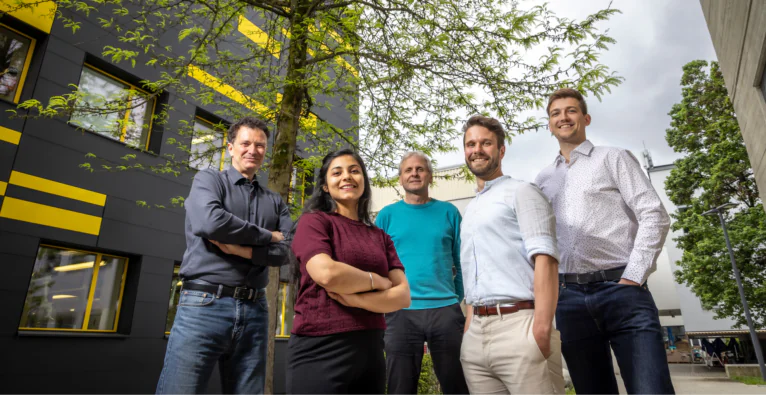
Das Duramea-Gründer:innen-Team v.l.: Rene Maiberg, Chetna Madan, Viktor Hacker, Maximilian Grandi und Sebastian Rohde | (c) Duramea

Grüner Wasserstoff gilt bekanntlich als Energieträger der Zukunft für Industrie und Schwerverkehr. Tatsächlich wird der Großteil des aktuell weltweit genutzten Wasserstoffs nach wie vor aus fossilen Energieträgern hergestellt, ist also nicht grün. Ein Grund dafür, dass viele grüne Wasserstoffprojekte noch nicht über die Pilotphase hinauskommen, ist die Effizienz und die damit verbundene Wirtschaftlichkeit in der Erzeugung durch Elektrolyse. Hier setzt das TU-Graz-Spinoff Duramea mit seiner Membran-Elektroden-Einheit-Technologie an.

Wirkungsgrad von 75 auf 81 Prozent erhöht

„In der Theorie kann man aus einer Kilowattstunde Strom maximal eine Kilowattstunde Wasserstoff bekommen. In der Praxis haben aktuelle Technologien einen Wirkungsgrad von rund 75 Prozent, der Rest ist Abwärme. Mit unserer zum Patent angemeldeten Nanostrukturierung von Elektroden erhöhen wir den Wirkungsgrad auf etwa 81 Prozent – da Stromkosten einen wesentlichen Teil der Kosten von grünem Wasserstoff ausmachen, ist das ein wirtschaftlich sehr relevanter Fortschritt“, erklärt Duramea-Co-Founder und CTO Sebastian Rohde im Gespräch mit brutkasten.

Deutlich günstigere Rohstoffe als bei aktueller Spitzentechnologie

Bei der Wasserelektrolyse sind derzeit vor allem zwei Technologien etabliert: die klassische alkalische Elektrolyse und die PEM-Elektrolyse. Während die alkalische Technologie auf vergleichsweise kostengünstige Materialien zurückgreifen kann, ermöglicht die PEM-Technologie hohe Leistungsdichten und einen dynamischen Betrieb, benötigt jedoch teure Edelmetallkatalysatoren wie Iridium und Platin. „Die AEM-Elektrolyse hat das Potenzial, wesentliche Vorteile beider Technologien zu kombinieren“, erklärt Rohde.

Konkret kommt die AEM-Technologie (Anionen-Austausch-Membran-Elektrolyse) von Duramea mit deutlich günstigeren Eisen- und Nickel-Katalysatoren aus, ähnlich wie die alkalische Methode. „Sie hat aber eine Membran und damit Vorteile wie eine hohe Leistungsdichte und sauberes Gas“, so Rohde.

Erste internationale Kunden gewonnen

Dass man damit auch am Markt auf Interesse stößt, beweist das momentan zwölf Personen starke Spinoff schon jetzt. Es macht mit seiner Membran-Technologie bereits Umsätze, aktuell aber noch im kleineren Maßstab mit Kunden, die damit selbst Forschung und Entwicklung betreiben. Duramea liefert dabei die Membran-Elektroden-Einheit. Rohde zieht einen Vergleich: „Sie bauen den Motor, wir liefern den Kolben, also ein zentrales Bauteil, das für die Leistung, Effizienz und Haltbarkeit der gesamten Maschine ausschlaggebend ist.“

Nächste Ausbaustufe mit größerem Uni-Drucker

Später will man mit ebendiesem Bauteil zum Lieferanten für Elektrolyseur-Hersteller im industriellen Maßstab werden. Um in diese nächste Phase zu gelangen, braucht es für Duramea nicht nur das Feedback von den aktuellen Pilotkunden aus Forschung und Entwicklung. „Mit unseren Laborgeräten können wir die Einheiten momentan etwa in der Größe eines A4-Blatts mit einer Leistung im Kilowatt-Bereich herstellen. Die TU Graz, wo wir Laborequipment mieten, schafft aber einen Drucker an, mit dem wir große Einheiten im Megawatt-Bereich herstellen können. Dann wird es erstmals spannend für industrielle Kunden“, so Rohde.

Duramea-Co-Founderin Chetna Madan und Mitarbeiter Jean Claude Koffi mit der Membran-Elektroden-Einheit | (c) Duramea

Investoren für die Skalierung

Gleichzeitig sei aber klar: „Das ist eine Uni und keine Produktionsstätte.“ Es stellt sich also auch die Frage der Finanzierung, um die Produktion skalieren zu können. Noch sei man, abgesehen von den ersten Umsätzen, überwiegend förderfinanziert, sagt Rohde. Jetzt sehe man sich erstmals auch nach Investoren um. Denn die Prognose ist klar: „Die Zahl der Elektrolyse-Anlagen wird in den kommenden Jahren steigen, auch in unserer direkten Umgebung.“ Für eine entsprechende Nachfrage sollte also gesorgt sein.


Disclaimer: Duramea gewann den brutkasten-Sonderpreis beim S&B Award 2026. Dieser Beitrag entstand mit dem gewonnenen Medienvolumen.

Toll dass du so interessiert bist!
Hinterlasse uns bitte ein Feedback über den Button am linken Bildschirmrand.
Und klicke hier um die ganze Welt von der brutkasten zu entdecken.

brutkasten Newsletter

Aktuelle Nachrichten zu Startups, den neuesten Innovationen und politischen Entscheidungen zur Digitalisierung direkt in dein Postfach. Wähle aus unserer breiten Palette an Newslettern den passenden für dich.

Montag, Mittwoch und Freitag

AI Summaries

Nothing Special, and yet it still burns inside

AI Kontextualisierung

Welche gesellschaftspolitischen Auswirkungen hat der Inhalt dieses Artikels?

Leider hat die AI für diese Frage in diesem Artikel keine Antwort …

Nothing Special, and yet it still burns inside

AI Kontextualisierung

Welche wirtschaftlichen Auswirkungen hat der Inhalt dieses Artikels?

Leider hat die AI für diese Frage in diesem Artikel keine Antwort …

Nothing Special, and yet it still burns inside

AI Kontextualisierung

Welche Relevanz hat der Inhalt dieses Artikels für mich als Innovationsmanager:in?

Leider hat die AI für diese Frage in diesem Artikel keine Antwort …

Nothing Special, and yet it still burns inside

AI Kontextualisierung

Welche Relevanz hat der Inhalt dieses Artikels für mich als Investor:in?

Leider hat die AI für diese Frage in diesem Artikel keine Antwort …

Nothing Special, and yet it still burns inside

AI Kontextualisierung

Welche Relevanz hat der Inhalt dieses Artikels für mich als Politiker:in?

Leider hat die AI für diese Frage in diesem Artikel keine Antwort …

Nothing Special, and yet it still burns inside

AI Kontextualisierung

Was könnte das Bigger Picture von den Inhalten dieses Artikels sein?

Leider hat die AI für diese Frage in diesem Artikel keine Antwort …

Nothing Special, and yet it still burns inside

AI Kontextualisierung

Wer sind die relevantesten Personen in diesem Artikel?

Leider hat die AI für diese Frage in diesem Artikel keine Antwort …

Nothing Special, and yet it still burns inside

AI Kontextualisierung

Wer sind die relevantesten Organisationen in diesem Artikel?

Leider hat die AI für diese Frage in diesem Artikel keine Antwort …

Nothing Special, and yet it still burns inside