04.10.2022

Nothing Special, and yet it still burns inside

Malgorzata Mierzynska is a journalist and full-time contributor to Forbes Women. In her article for #growrespect, Malgorzata writes about her experiences with sexual harassment in the workplace and her regrets about learning to respond to sexual harassment late in life.
/artikel/nothing-special-and-yet-it-still-burns-inside
"More than 20 years have passed, and I am constantly shivering as I remember the unwanted hands". © Darek Iwański

I am sitting in front of the computer and finishing my article at the editorial office at one of my first jobs in Warsaw. Colleagues are walking behind my back. Suddenly I feel hands on my neck. – Relax. You look stressed – says a colleague and starts to massage and stroke my back around the neck. As if nothing had happened, and I don’t jump up and push the guy away with anger – even though it is what he deserves. I sit paralyzed for a long moment. I remain choked and chilled. Only after a while do I turn around and ask him to stop. I don’t remember exactly, but I might have even done it with a smile – after all, here at the editorial office everyone is fun and nice. We all like each other. He didn’t insist, he wasn’t pushy, but he didn’t apologize either. He had no such reflection. He just walked away without a word, a little grumpy that I dismissed him, and I went back to the article as if it was an incident without meaning to me. But it wasn’t.

Before I could concentrate on writing again, I had to overcome the restlessness and discomfort I suddenly felt in an environment that I previously considered perfectly safe. I was confused. I was seething with anger that somebody I thought was a nice buddy dared to do something like that, and at the same time I felt humiliated that I let it happen – even if only for a brief moment.

When I think about it today, I think I made a mistake. I should have raised the topic loudly and expressed my objection to such behavior at the office.

„Girls decide to remain silent or turn uncomfortable situations into a joke“

More than 20 years have passed, and I am constantly shivering as I remember the unwanted hands on my neck. Someone might say girl, don’t make a scene, you’re exaggerating, nothing happened. However, I am invoking this incident from years ago with full premeditation, because in most cases this is the case. Drastic situations of sexual harrasment, when publicized, are universally condemned. Minor, everyday incidents of overstepping borders, which affect almost all of us on many levels – in the family and in public space, are usually treated lightly or with a pinch of salt. For girls who do not agree to them, the environment – yes, yes, not only men, but also female colleagues from work, familiar and unfamiliar women – suggests various ailments – from lack of a sense of humor, through oversensitivity, to hysteria.

So we usually don’t even talk about them. We do not want to be pointed with the fingers, we are afraid of stigmatization and ridicule. Madwoman, feminist (!), mythomaniac – the media scene will brand you so.  And since it is a rather closed environment, everyone knows everyone and everything, in “less glaring” cases, such as the one I have experienced, the girls decide to remain silent or turn uncomfortable situations into a joke. Has it ever happened to you?

Direct suggestions or questions that violate intimacy

It happened to me more than once. When I entered my adult life, I didn’t know yet that some of them could be easily classified as classic sexual harassment cases. This term was not yet widely known in Poland, and in my home such situations were referred to as „inappropriate“ or „boorish“. But since there were no witnesses and one-offs, the perpetrators most often got away with impunity and the incidents most probably disappeared from their minds.

„The patterns of toxic masculinity instilled in successive generations will not be easily eradicated“

However, they stayed with me to this day. I remember suggestions made more or less directly, sloppy jokes, allusions, insinuations or questions that violate my intimacy. Their authors were my close and more distant colleagues from media, they happened tête-á-tête, at meetings, during integration events. I turned them into a joke, pretended not to hear, and avoided certain people and situations. Sometimes I made it clear that I did not want this behavior. But only in private, because getting attention in public usually ended in dismissive: „I was kidding, you imagined too much.“ „Why so touchy? I didn’t mean anything like that.“ This was and still a common tactic of „colleagues“.

„Protest clearly and loudly when someone violates your physical or mental comfort zone“

I feel sorry for myself that I learned to respond to sexual harassment so late. Today I understand that if we want to end the social consent to cross our borders, we must guard them more and react decisively. Protest clearly and loudly when someone violates our physical or mental comfort zone and not be afraid that it will only “worsen” the situation. It is very important also when we are accidental witnesses of such a practice. And let’s not have any doubts – change will not happen by itself. The patterns of toxic masculinity instilled in successive generations will not be easily eradicated.

Today, in the second decade of the 21st century, although even teenagers are familiar with such words as sexism, patriarchy, sexual harassment and understand what they mean, the scale of the problem is still shocking – according to a study published in September this year in Poland, sexual harassment affects 84 percent of all women.

Deine ungelesenen Artikel:
09.09.2026

580.000 Euro FFG-Förderprojekt: Wiener Therapie-Startup Theradocx entwickelt seine KI weiter

Die KI-Anwendung von Theradocx soll Psychotherapeut:innen und Psycholog:innen bei administrativen Aufgaben unterstützen. Das Startup sicherte sich zuletzt ein FFG-Förderprojekt mit Gesamtprojektkosten in der Höhe von 580.000 Euro und eine Kooperation mit der Sigmund Freud Privatuniversität. Co-Founderin Selin Matun möchte die KI durch das Projekt qualitativ verbessern.
/artikel/580-000-euro-ffg-foerderprojekt-wiener-therapie-startup-theradocx-entwickelt-seine-ki-weiter
09.09.2026

580.000 Euro FFG-Förderprojekt: Wiener Therapie-Startup Theradocx entwickelt seine KI weiter

Die KI-Anwendung von Theradocx soll Psychotherapeut:innen und Psycholog:innen bei administrativen Aufgaben unterstützen. Das Startup sicherte sich zuletzt ein FFG-Förderprojekt mit Gesamtprojektkosten in der Höhe von 580.000 Euro und eine Kooperation mit der Sigmund Freud Privatuniversität. Co-Founderin Selin Matun möchte die KI durch das Projekt qualitativ verbessern.
/artikel/580-000-euro-ffg-foerderprojekt-wiener-therapie-startup-theradocx-entwickelt-seine-ki-weiter
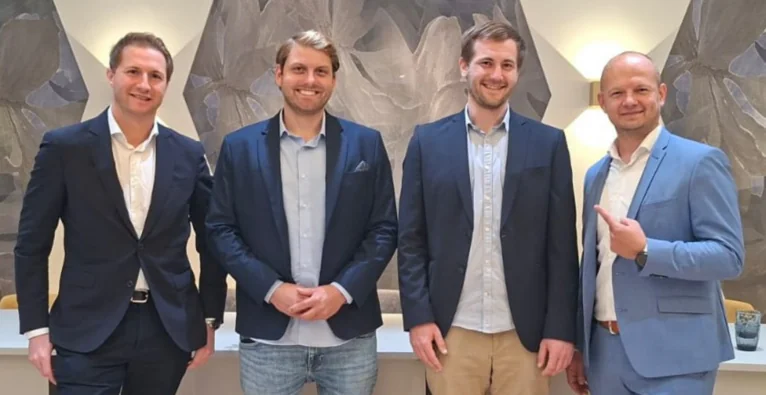
Das Gründerteam von Theradocx. (v.l.) Petronel Liciu, Selin Matun, Jan Hoppel | © Theradocx

Theradocx möchte den Arbeitsalltag von Psycholog:innen und Psychotherapeut:innen erleichtern. Eine eigens entwickelte KI-Anwendung erstellt Protokolle und Zusammenfassungen, indem sie Sitzungen aufnimmt und analysiert, wie brutkasten berichtete. Kürzlich erhielt Theradocx ein FFG-Förderprojekt mit einem Projektvolumen von 580.000 Euro.

Verbesserung der KI

Im Zuge dieses Projekts will das 2025 gegründete Unternehmen seine KI weiterentwickeln. Das heißt: Die Transkription soll präziser werden, unterschiedliche Sprecher besser erkannt und die Erstellung von Protokollen sowie thematischen und emotionalen Analysen verbessert werden. „Ein großer Teil der Projektmittel fließt in den Ausbau unseres Entwicklungs- und Forschungsteams und damit direkt in die technologische Weiterentwicklung von Theradocx“, erklärt Co-Founderin Selin Matun.

Zudem wird laut Matun die Plattform auch rechtlich und regulatorisch weiterentwickelt. Stichwort: Datenschutz und EU AI Act.

Kooperation mit Sigmund Freud Privatuniversität

Im Zuge des geförderten Projekts ging Theradocx eine Kooperation mit der Sigmund Freud Privatuniversität ein, durch die seine KI-Systeme validiert werden sollen. Ein Schwerpunkt liegt auf der Spracherkennung. Unterschiedliche Dialekte, Sprecher:innen und akustische Bedingungen sollen getestet werden, wodurch Schwachstellen identifiziert werden können. Zudem sollen die psychotherapeutischen Dokumentationen und Analysen durch Fachpersonal der Sigmund Freud Privatuniversität verbessert werden.

„Für uns ist diese Kooperation besonders wichtig, weil wir nicht nur technisch leistungsfähige KI entwickeln möchten. Wir wollen auch wissenschaftlich überprüfen, ob die Ergebnisse psychotherapeutischen Qualitätsstandards entsprechen und in der Praxis tatsächlich einen Mehrwert schaffen“, sagt Matun und ergänzt: „Gemeinsam möchten wir einen wissenschaftlich fundierten Evaluationsprozess etablieren, durch den die Qualität unserer KI-Ergebnisse nicht nur technisch, sondern auch anhand psychotherapeutischer Kriterien beurteilt und kontinuierlich verbessert werden kann.“

Etablierung im DACH-Raum

Neben der qualitativen Verbesserung der KI möchte Theradocx in Zukunft weiter skalieren und sich noch stärker im DACH-Raum festigen. Das Ziel sei laut Matun, zu einer „zentralen digitalen Arbeitsplattform für Psychotherapeut:innen“ zu werden. Anschließend möchte das Startup weitere europäische Märkte erschließen.

Brigitte-Hamann-Preis 2026

Kürzlich wurde das Projekt mit dem  Brigitte-Hamann-Preis 2026 in der Kategorie „Startup“ ausgezeichnet. Der mit 5.000 Euro dotierte Preis würdigt herausragende Leistungen von Studierenden und Absolvent:innen österreichischer Privatuniversitäten in den Bereichen Forschung, Startups und Kunst. Eine Fachjury zeichnet pro Kategorie eine Person aus.

Toll dass du so interessiert bist!
Hinterlasse uns bitte ein Feedback über den Button am linken Bildschirmrand.
Und klicke hier um die ganze Welt von der brutkasten zu entdecken.

brutkasten Newsletter

Aktuelle Nachrichten zu Startups, den neuesten Innovationen und politischen Entscheidungen zur Digitalisierung direkt in dein Postfach. Wähle aus unserer breiten Palette an Newslettern den passenden für dich.

Montag, Mittwoch und Freitag

AI Summaries

Nothing Special, and yet it still burns inside

AI Kontextualisierung

Welche gesellschaftspolitischen Auswirkungen hat der Inhalt dieses Artikels?

Leider hat die AI für diese Frage in diesem Artikel keine Antwort …

Nothing Special, and yet it still burns inside

AI Kontextualisierung

Welche wirtschaftlichen Auswirkungen hat der Inhalt dieses Artikels?

Leider hat die AI für diese Frage in diesem Artikel keine Antwort …

Nothing Special, and yet it still burns inside

AI Kontextualisierung

Welche Relevanz hat der Inhalt dieses Artikels für mich als Innovationsmanager:in?

Leider hat die AI für diese Frage in diesem Artikel keine Antwort …

Nothing Special, and yet it still burns inside

AI Kontextualisierung

Welche Relevanz hat der Inhalt dieses Artikels für mich als Investor:in?

Leider hat die AI für diese Frage in diesem Artikel keine Antwort …

Nothing Special, and yet it still burns inside

AI Kontextualisierung

Welche Relevanz hat der Inhalt dieses Artikels für mich als Politiker:in?

Leider hat die AI für diese Frage in diesem Artikel keine Antwort …

Nothing Special, and yet it still burns inside

AI Kontextualisierung

Was könnte das Bigger Picture von den Inhalten dieses Artikels sein?

Leider hat die AI für diese Frage in diesem Artikel keine Antwort …

Nothing Special, and yet it still burns inside

AI Kontextualisierung

Wer sind die relevantesten Personen in diesem Artikel?

Leider hat die AI für diese Frage in diesem Artikel keine Antwort …

Nothing Special, and yet it still burns inside

AI Kontextualisierung

Wer sind die relevantesten Organisationen in diesem Artikel?

Leider hat die AI für diese Frage in diesem Artikel keine Antwort …

Nothing Special, and yet it still burns inside
