08.02.2021

From Gamestop to “Gamestop” – 3 outcomes

Ting Wasner-Lian tackles in her brutkasten columne the importance of community fighting against inequality in the current financial system and defines three outcomes. In addition she analyzes why GME accelerates the process of adopting Bitcoin.
/artikel/from-gamestop-to-gamestop-3-outcomes
Gamestop
brutkasten columnist Ting Wasner-Lian

For people that don’t know what’s happening, if you try to read Gamestop via mainstream media, you will find, there is only one voice: the young retail investors are wrong, they are trying to manipulate the market and need to be punished. One should ask for the motivations behind this one-sided view.

I will let you view this story from a different perspective, taking social, technological and psychological motivations into account, as well as offer you an outlook to where this whole movement might lead to.

Before I start I want to point out that what the mainstream media calls “retail investors vs .wall street” is rather a “long short game”, driven by institutional investors. Here’s an example out of many pieces of evidence from last week.

Everything happens for a reason so we need to ask the “why” first 

Let’s start with the problem. The financial system was designed a long time ago, and until today it has been very constant. In the designed system, the main players are institutions, hedge funds, big shorts. Retail investors are rather small players. Small in this context means they are the weak side of the game. In China people say “10 people trade stocks, 7 will lose, 2 will be balanced and only 1 will win.” This is the game and the rules for ages, everybody was happy up until now. 

So what has changed? 

First, it’s social behavior and community. With the development of the internet many people, especially the younger generation, Millennials and Generation Z, grew up with social media. There are lots of communities on different platforms catering to different interests. This is a chicken and egg question, because startups see the rising demands of internet communities so they built different platforms.

From the earliest such as Facebook, YouTube and Instagram up until TikTok, and most recently clubhouse. Platforms come in written form, like Reddit and Quora, video like YouTube and TikTok and voice like clubhouse. If you are using all of these platforms, you surely can identify and feel something has changed: Social media influencers are rising and become individual players (of course there are companies behind them like MCN, which are the incubators for influencers). 

Emotional component of Gamestop

This brings me to my second point, the emotional component. What has this to do with Reddit meme stocks? Many people in WSB grew up with Gamestop and simply don’t want it to go bankrupt. This emotional component many boomers won’t understand.

I just need to take myself as an example: I’m a millennial who grew up with console games like Super Mario. If you tell me the console game industry is dying, and Nintendo will be bankrupt, what would I say? NO WAY I WILL LET THIS HAPPEN!

I would post on social forums and communities, gather people to buy their products and stocks and save the company. This is what happened in reddit WSB about Gamestop for the majority of the early retail investors who were buying Gamestop stocks. It was just in the second step that many people joined (within a few days WSB grew from 2M to 8M degenerates) and they have their own intention: speculate, defeat shorty, make money, be part of the movement, etc. 

What’s changing in the financial market

A coin has two sides, and you shouldn’t just see one side and neglect the other side, especially when we put this into a disruptive innovation atmosphere. Before I start this part, I would like to share my observations and what’s changing in the financial market.

Last year retail investors and ark invest outperformed all the institutions and hedge funds. Because they believed in Tesla, disruptive innovation and bitcoin. The consequences then are rising young and new rich and ark cathie woods becomes the female warren buffett, more like more people including institutional investors are following ark invest. Besides her believe in disruptive innovation – what’s so different? She changed the game that wall street is always playing, from under the table to transparency! 

You can see which stocks ARK is buying and selling on a daily, weekly and monthly basis. No longer retail investors have to do exactly the opposite of what institutions are saying in their research notes in order to make money, but more a trust building with ark. The WSB community on Reddit is working in the same way: transparency and open discussions. 

And what’s interesting is CNBC interviewed Chamath Palihapitiya and questioned him why he supports WSB. The original interview is about one hour and CNBC cut it to two minutes, and has nothing about Chamath’s opinion. You can’t find it anywhere on youtube, but I can find it on Chinese sites with Chinese subtitles, ironic isn’t it?

Truth won’t be buried, as the people are watching. Both Elon Musk and Chamath Palihapitiya support it, and both of them have lots of supporters in younger generations like millennials and Generation Z and even my 7-year-old son believes in Elon Musk about the boring company and going to Mars. What I want to say is: do not ignore the younger generation, because they are the future, and try to understand why they are sending the message, what has to be changed and adapted to the current system, this is how social movement drives innovation. If this sounds far-fetched just look at environmental advocate Greta Thunberg and the global movement she has reignited. 

What’s happening with the traditional investing market?

If you have read this far you may ask what’s happening to the traditional investing market? Why are there so many young people nowadays? Social behavior changed the financial industry and Fintech is changing the game as such!

You can see the rising fintech IPOs in the US recently. Fintech has changed the retail market by getting more people into investment and spending. It’s about money, either you spend, save or invest. Spend your future’s money, what’s different from traditional credit cards is that fintech companies like affirm, ant finance they allow people that are not customers by credit cards companies to spend tomorrow’s money, basically it’s taking the market share of the credit card companies they don’t have.

For investment broker apps, there are robinhood and etoro, which let young people trade without paying commissions of none CFD trades. This is disruptive, and changing the traditional game into one for a younger generation, basically everybody’s game. But this type of disruption has a good and bad impact, if you want, next time I will write about what’s happened to alibaba’s ant finance and the social impact. 

Broker apps encourage social communities

Now comes the ironic part. All these broker apps encourage social communities and free discussions. Up until last week, when out of a sudden trades are being halted, and users are restricted which stocks to buy.

All users? No, these limitations did not apply to institutions. It’s these double standards which made lots of ordinary people angry, including the retail investors, who were just watching the show then later joined this movement.

Unlike occupying wall street and BLM, this time is middle class to middle higher class young people or their teenager kids vs. wall street. Many people may say, it’s wall street, it’s their game, they will win, why fight? If young people see this inequality and don’t fight, I see no hope for the future, but now young people team up and fight for their future and our future, I am happy to see this development.

We see the stock prices are falling tremendously, because they halted buying, but the return of the retail investors is expected. They demand more information, transparency and no-longer see the need for an intermediary who should make financial decisions on their behalf. Decentralized finance and blockchain are the endgame, until then the open community approach is one possible way towards that future. 

The movement (transparency and inequality) has just started, I somehow think in the end Gamestop will be game stop. It’s like playing games, you need to train a lot before you can win. Everything is a process. During this process, you can see institutions disguised as reddit WSB to have fake news about the silver squeeze, try to move them away from Gamestop, and hide their manipulations. At the beginning I didn’t believe in the silver squeeze. Good thing is WSB has its own analytics of tickers, out of their own data, they can immediately identify what is true and what is fake. 

From Gamestop to “Gamestop” | The three outcomes

In the near-term the current movement will lead to three outcomes:

  1. The majority will still stick to the current system, invest in stocks, stick to their current broker apps and banks like nothing has happened. 
  2. Many young people, either directly involved in the movement or just supporters, will be divided into two parts: Change broker apps or perhaps even go back to traditional banks. 
  3. The most progressive investors will go for decentralized investments like cryptocurrencies and bitcoin. 

How does this fit into the big picture?

There are many high profile investors and silicon valley entrepreneurs, who see WSB as another step for decentralization and unbundling of intermediaries. History rarely repeats but it rhymes, it is therefore worth taking a look back in the history of digitalization.

It started with shopping and commerce in the late 90s, when Amazon put retail online. Many people expected Amazon to fail and traditional intermediaries like Walmart become the eventual winners. About 10 years later, Web 2.0 with its decentralized and real-time information flow put heavy pressure on traditional media, which up until that time were the only authority to publish news. Nowadays the media is often relegated to only comment on events they no longer actively shape.

With recent moves by Andressen Horowitz to become a media entity by themselves this development is just accelerating. It’s therefore not a stretch to think that what we currently see in WSB are just the roots of decentralization and unbundling in finance, starting with the frontend.

If you like my article follow me on Twitter, LinkedIn and clubhouse.


About the columnist: Ting Wasner-Lian, MBA

Ting founded her first company, a real estate portal, in China right after graduation. She then worked in the real estate and architecture business in many roles such as strategy and business development. In 2007 she joined an Austrian consulting firm where she was responsible for building up the Asian business operations. She holds an MBA degree in Entrepreneurship & Innovation from WU Vienna and has lived and worked in China, Japan and Austria for 12 years. In 2018 she founded SE Incubator and became an independent consultant with a strong focus on Chinese innovation and market trends. She is also a co-organizer of the Asian Innovation Meetup Vienna.

(c) Ting Wasner-Lian
Deine ungelesenen Artikel:
27.05.2026

Cyclops: US-Stablecoin-Startup errichtet EU-Headquarter in Wien – Austro-Amerikaner als Gründer

Alex Wilson, in den USA geboren und mit einer Mutter aus Innsbruck aufgewachsen, baut mit Cyclops.io eine Stablecoin-Infrastruktur exklusiv für die Payments-Industrie. Wien wird neben Miami der einzige zweite Standort des US-Unternehmens weltweit – und zugleich das EU-Headquarter. Im brutkasten-Interview erklärt der Co-Founder und Co-CEO, warum die Wahl auf Österreich fiel.
/artikel/cyclops-us-stablecoin-startup-errichtet-eu-headquarter-in-wien
27.05.2026

Cyclops: US-Stablecoin-Startup errichtet EU-Headquarter in Wien – Austro-Amerikaner als Gründer

Alex Wilson, in den USA geboren und mit einer Mutter aus Innsbruck aufgewachsen, baut mit Cyclops.io eine Stablecoin-Infrastruktur exklusiv für die Payments-Industrie. Wien wird neben Miami der einzige zweite Standort des US-Unternehmens weltweit – und zugleich das EU-Headquarter. Im brutkasten-Interview erklärt der Co-Founder und Co-CEO, warum die Wahl auf Österreich fiel.
/artikel/cyclops-us-stablecoin-startup-errichtet-eu-headquarter-in-wien
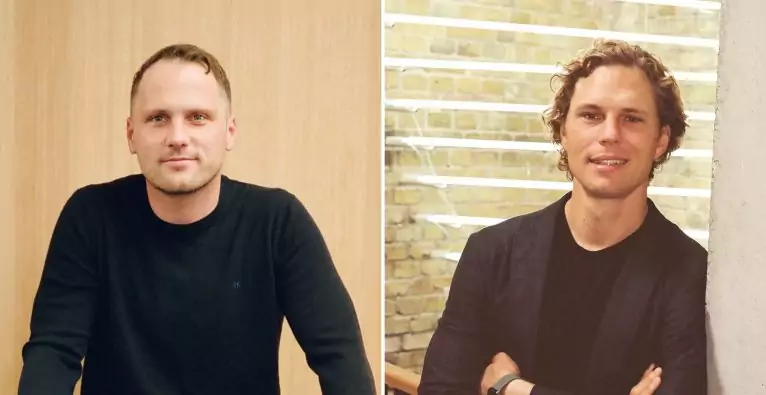
Jonas Jünger (Managing Director, Cyclops Europe) und Alex Wilson | (c) Martin Pacher

Es ist eine Art Homecoming: Alex Wilson, Co-Founder und Co-CEO des US-Stablecoin-Startups Cyclops, wuchs in den USA mit zwei Sprachen und zwei Kulturen auf. Mit seinem Vater sprach er nur Englisch, mit seiner Mutter – einer Tirolerin aus Innsbruck – ausschließlich Deutsch. Die Sommerferien verbrachte er bei den Großeltern in Österreich, Weihnachten ging es zum Skifahren nach Kitzbühel. „Ich hatte das Glück, sozusagen mit zwei Heimatländern aufzuwachsen“, erzählt Wilson im brutkasten-Gespräch.

Jetzt kehrt der Austro-Amerikaner mit seinem aktuellen Unternehmen nach Wien zurück. Vergangene Woche eröffnete Cyclops.io seinen neuen Standort in der Bundeshauptstadt – das EU-Headquarter und gleichzeitig die einzige weitere Niederlassung neben dem Hauptsitz in Miami.

Repeat Founder: Von Giving Block zu Shift4 zu Cyclops

Wilson ist kein Newcomer. Gemeinsam mit seinen Mitgründern Pat Duffy und David Johnson startete er bereits 2018 das Krypto-Startup The Giving Block, eine Plattform, über die Non-Profit-Organisationen Krypto-Spenden entgegennehmen können. „2018 hat man uns angeschaut, als wären wir verrückt“, erinnert sich Wilson. „Aber wir sind dabeigeblieben.“ Das Unternehmen wurde 2022 an den börsennotierten US-Zahlungsdienstleister Shift4 verkauft. Wilson übernahm dort die Verantwortung als Head of Crypto und Head of Stablecoin – und sammelte über drei Jahre lang Erfahrung an der Schnittstelle von Krypto und traditionellem Payments-Business.

Genau diese Jahre wurden zum Ausgangspunkt für Cyclops. „Wir haben bei Shift4 Produkte für Pay-with-Crypto, Stablecoin-Settlement und Stablecoin-Payouts gebaut – mit einem Flickenteppich an bestehenden Lösungen. Es war viel schwieriger, als es hätte sein müssen“, so Wilson. Auf dem Markt habe es zwar viele Krypto-Infrastruktur-Anbieter gegeben, aber keiner sei wirklich auf die Payments-Branche spezialisiert gewesen: „Auf den Websites stand vielleicht: ‚Wir bedienen zehn Industrien, eine davon ist Payments.‘ Aber wenn man unter die Haube schaut, war das Produkt für eine Bank, einen Broker oder einen Payments-Anbieter identisch.“

Cyclops will diese Lücke schließen und fokussiert sich ausschließlich auf Zahlungsdienstleister (PSPs) – ein Hyperfokus, den die Gründer bereits bei The Giving Block (nur Non-Profits) verfolgt hatten. „Wir sind sehr B2B“, betont Wilson. Cyclops ist also keine Kryptobörse für Endkund:innen, sondern eine Infrastruktur-Plattform für Payments-Unternehmen, die ihren Händler-Kund:innen Krypto- und Stablecoin-Funktionalitäten anbieten wollen – ohne selbst zum Krypto-Unternehmen werden zu müssen.

Alex Wilson im Gespräch mit brutkasten-Chefredakteur | brutkasten

Warum Wien? FMA, Bitpanda – und der Talent-Pool

Bei der Standortwahl in Europa habe man einen umfassenden Prozess durchlaufen, betont Wilson: „Wir haben uns Deutschland, Irland, Malta und andere Länder angesehen.“ Ausschlaggebend für Österreich sei am Ende der MiCA-Pfad der Finanzmarktaufsicht (FMA) gewesen: „Die FMA hat einen der klarsten Wege zur Lizenz aufgezeigt. Es gibt viele Länder, die zwar ein MiCA-Framework haben, aber bisher kaum Lizenzen vergeben haben.“

Wilson nennt explizit auch Bitpanda als wichtigen Faktor: „Bitpanda hat hier großartige Vorarbeit geleistet. Danach sind KuCoin, Bybit, Bitget und viele andere gekommen. Das hat eine Community aufgebaut und uns die Tür geöffnet.“

Hinzu komme der Talent-Pool: „Wien ist ein Hub für große Finanzdienstleister. Das ist genau das Profil, das wir für Compliance-, Legal- und Regulatory-Rollen brauchen.“ Die meisten lokalen Hires sollen aus diesen Bereichen kommen, während Vertrieb und Marketing eher remote organisiert werden.

Der persönliche Bezug habe geholfen, sei aber nicht der Hauptgrund gewesen: „Wir hätten Österreich nicht gewählt, wenn die Rahmenbedingungen nicht gepasst hätten.“

Zehn Mitarbeiter:innen bis Jahresende, MiCA-Lizenz erwartet

Aktuell beschäftigt Cyclops weltweit rund 30 Mitarbeiter:innen, das lokale Team in Wien startet in kleiner Besetzung. Bis Ende 2026 soll der Wiener Standort auf rund zehn Mitarbeiter:innen wachsen. Geleitet wird das Büro von Managing Director Jonas Jünger, dazu wurden bereits ein MLRO und ein Deputy MLRO eingestellt – beides regulatorisch verpflichtende Compliance-Funktionen. Die MiCA-Lizenz selbst erwartet Wilson „hoffentlich bis Ende des Jahres“.

Damit reiht sich Cyclops in eine wachsende Liste internationaler Krypto-Unternehmen ein, die Österreich als Tor zum europäischen Markt wählen. Nach Bitpanda, Bybit, KuCoin, Cryptonow und 21bitcoin geht das nächste Unternehmen den MiCA-Lizenzweg über die FMA – mit dem Unterschied, dass es sich bei Cyclops nicht um eine Kryptobörse handelt.

Funding: Acht Millionen im Rücken – und mehr in Vorbereitung

Bereits im Oktober 2025 schloss Cyclops eine Finanzierungsrunde über acht Millionen US-Dollar ab, öffentlich kommuniziert wurde sie aber erst Anfang März 2026 – zeitgleich mit dem Stealth-Launch. Investoren waren Castle Island Ventures, F-Prime sowie strategisch Shift4 Payments selbst – also der ehemalige Arbeitgeber, der nun gleichzeitig Anchor-Kunde des Startups ist.

Im brutkasten-Interview bestätigt Wilson, dass aktuell eine weitere strategische Runde über zehn Millionen US-Dollar von Payments-Unternehmen geschlossen wird – noch vor einer formellen Series A, die im kommenden Jahr angepeilt wird. „Wir hatten gar nicht geplant, jetzt zu fundraisen“, so Wilson. „Aber nach dem Stealth-Launch im März waren wir überwältigt vom Inbound – von Kunden, Partnern, aber auch Investoren. Das hat unseren Zeitplan nach vorne gezogen.“

Zu den ersten Kunden zählen unter anderem Blue Origin – wer ein Ticket für einen Weltraumflug des Jeff-Bezos-Unternehmens kaufen möchte, kann die Zahlung über Cyclops in Krypto abwickeln – sowie der New Yorker Helikopter-Service Blade.

EU einfacher als USA – aber Mindset-Frage in Österreich

Wilson, der den US-Lizenzprozess parallel durchläuft, sieht in der EU-weiten MiCA-Regulierung einen klaren Vorteil gegenüber dem US-System: „In den USA brauchen wir Money-Transmitter-Lizenzen in rund 50 Bundesstaaten. In Europa ist es eine hohe Mauer statt 50 kleinen – aber dafür ein einheitlicher Ansatz.“

Kritischer äußert sich der Co-Founder zum unternehmerischen Klima in Österreich und der EU: „Man denkt bei Österreich nicht automatisch an Entrepreneurship. In den USA verbindet man Startup mit Hustle, Silicon Valley. Hier gibt es viele bürokratische Hürden – beim Firmen-Setup, beim Office-Lease, bei den Papier-Anforderungen.“ Es brauche aber nicht nur Vereinfachung der Prozesse, sondern auch einen kulturellen Wandel: „Wenn du wirklich ein Startup-Hub sein willst, musst du in der Schule anfangen, Unternehmertum zu vermitteln. Du musst Risikobereitschaft fördern.“

Gleichzeitig sieht Wilson Chancen in der europäischen Souveränitäts-Debatte: „Wenn man Innovation wie Stablecoins und Blockchain richtig nutzt, kann man digitale Souveränität tatsächlich neu denken – Wallets, Private Keys, alles lässt sich anders organisieren als im traditionellen System.“

Ausblick: B2B-Stablecoins und Agentic Payments

Für 2026 und 2027 erwartet Wilson, dass sich der Stablecoin-Markt primär im B2B-Segment entwickelt – konkret bei der Abwicklung von Merchant-Settlements: „Statt Wire Transfer oder SEPA werden Payments-Unternehmen zunehmend in USDC oder EURC abrechnen. Sieben Tage die Woche, auch an Wochenenden und Feiertagen. Das modernisiert Treasury-Prozesse, gerade für global agierende Unternehmen.“

Zum Hype-Thema Agentic Payments – also KI-gestützte, automatisierte Zahlungen – äußert sich Wilson zurückhaltend, aber überzeugt: „Das ist das Buzzword des Jahres, aber es steckt etwas Echtes dahinter. Wir bauen AI-first, weil wir glauben, dass die Welt dort hingeht. Ob das in einem, zwei, fünf oder zehn Jahren wirklich skaliert – wir müssen bereit sein.“

Toll dass du so interessiert bist!
Hinterlasse uns bitte ein Feedback über den Button am linken Bildschirmrand.
Und klicke hier um die ganze Welt von der brutkasten zu entdecken.

brutkasten Newsletter

Aktuelle Nachrichten zu Startups, den neuesten Innovationen und politischen Entscheidungen zur Digitalisierung direkt in dein Postfach. Wähle aus unserer breiten Palette an Newslettern den passenden für dich.

Montag, Mittwoch und Freitag

AI Summaries

From Gamestop to “Gamestop” – 3 outcomes

AI Kontextualisierung

Welche gesellschaftspolitischen Auswirkungen hat der Inhalt dieses Artikels?

Leider hat die AI für diese Frage in diesem Artikel keine Antwort …

From Gamestop to “Gamestop” – 3 outcomes

AI Kontextualisierung

Welche wirtschaftlichen Auswirkungen hat der Inhalt dieses Artikels?

Leider hat die AI für diese Frage in diesem Artikel keine Antwort …

From Gamestop to “Gamestop” – 3 outcomes

AI Kontextualisierung

Welche Relevanz hat der Inhalt dieses Artikels für mich als Innovationsmanager:in?

Leider hat die AI für diese Frage in diesem Artikel keine Antwort …

From Gamestop to “Gamestop” – 3 outcomes

AI Kontextualisierung

Welche Relevanz hat der Inhalt dieses Artikels für mich als Investor:in?

Leider hat die AI für diese Frage in diesem Artikel keine Antwort …

From Gamestop to “Gamestop” – 3 outcomes

AI Kontextualisierung

Welche Relevanz hat der Inhalt dieses Artikels für mich als Politiker:in?

Leider hat die AI für diese Frage in diesem Artikel keine Antwort …

From Gamestop to “Gamestop” – 3 outcomes

AI Kontextualisierung

Was könnte das Bigger Picture von den Inhalten dieses Artikels sein?

Leider hat die AI für diese Frage in diesem Artikel keine Antwort …

From Gamestop to “Gamestop” – 3 outcomes

AI Kontextualisierung

Wer sind die relevantesten Personen in diesem Artikel?

Leider hat die AI für diese Frage in diesem Artikel keine Antwort …

From Gamestop to “Gamestop” – 3 outcomes

AI Kontextualisierung

Wer sind die relevantesten Organisationen in diesem Artikel?

Leider hat die AI für diese Frage in diesem Artikel keine Antwort …

From Gamestop to “Gamestop” – 3 outcomes