
12.12.2017

FounderTalks.org: „The event we would’ve wanted for ourselves“

The next FounderTalks.org event will take place in Vienna on February 16th, 2018. We talked to co-creators Andreas Klinger and Michael Ströck about the Austrian startup ecosystem and their current endeavors.
/artikel/foundertalks-org-we-offer-founders-what-we-wouldve-wanted-ourselves
foundertalks.org - Andreas Klinger and Michael Ströck
(c) foundertalks.org - Andreas Klinger and Michael Ströck
kooperation

FounderTalks.org started in 2014 in Vienna by Audrey Kim (formerly YCombinator, Google, United Nations, Cruise Automation), Andreas Klinger (Co-Founder diesocialisten.at, now Product Hunt) and Michael Ströck (Co.Founder Kochabo.at and Gustav). Klinger and Ströck bring in a lot of experience from starting and exiting their own companies, and as angel investors. Their main inspiration for FounderTalks.org was to offer founders and investors what they would’ve wanted for themselves and their portfolio companies when they were getting started.

+++ FounderTalks.org: A private session with Silicon Valley founders in Vienna +++

Klinger’s company Product Hunt was acquired by AngelList last year, and Ströck participated in the YCombinator program with his HR startup Gustav this past summer. Der Brutkasten talked to them about their current activities and the Austrian startup ecosystem.

FounderTalks.org is accepting applications for the upcoming event. The invitations are given on a rolling basis and the event is limited to 100 participants in order to keep the small mentoring session ratio. The event focuses on curated advice, exclusive content, personal relations and networking. Open applications are accepted from founders, investors, accelerator/innovation leaders, and those interested in entrepreneurship (85 percent of the invitations are reserved for startup founders. The rest goes to investors, innovation managers, corporates and accelerators).

⇒ Apply for the event here


Andreas, you were one of Austrias Startup Pioneers. How do you see the Austrian Startup ecosystem today? What are its biggest challenges from your point of view?

The austrian ecosystem matured a lot in the last 10 years. I can go on and on how amazing several of the players in our ecosystem are and how great many recent exits were. But let’s not waste time on this – You know who you are! So let’s dive into the biggest challenges. From my point of view Austrian entrepreneurs mainly face two issues:

First, there are what I call „beginner issues“. It’s essentially inefficiencies, complexities and inexperience about how to start a company.
There’s lots of progress and sure lots to do. But more and more founders have experience and the government tries to work together and help.

Secondly, there are „European problems“. Basically all problems founders in Austria face that I didn’t just mention  are actually European problems. Startups in the US aren’t more successful because they hustle harder or have smarter founders. They are more successful because they have a bigger and more unified market, concerning consumers, media, networks and legal affairs. If you launch something in Los Angeles it might go viral in Boston or New York and you start taking off. You can do everything wrong as American founder. If the market shows slight interest it will be enough to keep you going in the beginning.

In Europe in comparison, if you launch in Portugal people in Romania won’t notice. If you launch in Germany, even your neighbor France won’t care. If you need to expand to other markets in Europe you pretty much need to start from scratch every time. It gets to the point that if you already expanding to other European countries it’s almost easier to instantly go to the US then doing another european country. In my opinion any real approach to help startups in Austria has to be done on European level. A good start would be a European-wide legal entity that is meant for small companies and equity investment.

Other topic: Did your daily work at product hunt change since the acquisition through AngelList?

Not that much – AngelList acts in small units – Product Hunt is now one of them. Their culture and values are really close to the ones we already had before acquisition. Actually everyone was surprised how smooth the acquisition went.

Is founding another company an option for you?

Yes definitely. At Product Hunt /AngelList I want to focus on projects that move Europe forward, even when this is done from San Francisco. In the long term I want to start something in this space as well, but for now Product Hunt/AngelList is the best place to make this happen.

Michael, you recently attended YCombinator with your Startup Gustav. Tell us about it.

To be honest, we never thought this would even be possibility. YC opened their late applications, we took a chance, spent a few hours on writing the application, applied. Then we were interviewed and were accepted on our first application. Joining YCombinator is really big for us, considering we came from Austria where it’s much harder to do business than it is in the U.S. We really enjoyed the time during YC. It basically gave us a whole new perspective on our own business and it’s truly an honor to be among companies like Airbnb, Dropbox or Stripe.

You also got a funding there. What are you using the money for?

We actually haven’t announced any funding besides YC yet, but stay tuned for some news late in the year (laughs). Right now, we’re focussing on launching version 2.0 of our platform.

What are your next steps with Gustav?

Continue building what our users love and create a really meaningful company which will change the entire staffing industry for the better.

+++ Firstbird, Gustav, hokify, myVeeta, PreScreen und whatchado starten HR-Tech Hub +++


⇒ Apply for the event here

Deine ungelesenen Artikel:
08.10.2026

Neue Plattform von A1 und IBM: Sichere und digital souveräne KI-Agenten für Unternehmen

A1 und Exoscale machen die IBM-KI-Plattform watsonx ihren Unternehmenskunden zugänglich - und nutzen sie auch selbst. A1-CCO Martin Resel und IBM-Österreich-Chef Marco Porak erklärten die Hintergründe.
/artikel/neue-plattform-von-a1-und-ibm-sichere-und-digital-souveraene-ki-agenten-fuer-unternehmen
08.10.2026

Neue Plattform von A1 und IBM: Sichere und digital souveräne KI-Agenten für Unternehmen

A1 und Exoscale machen die IBM-KI-Plattform watsonx ihren Unternehmenskunden zugänglich - und nutzen sie auch selbst. A1-CCO Martin Resel und IBM-Österreich-Chef Marco Porak erklärten die Hintergründe.
/artikel/neue-plattform-von-a1-und-ibm-sichere-und-digital-souveraene-ki-agenten-fuer-unternehmen
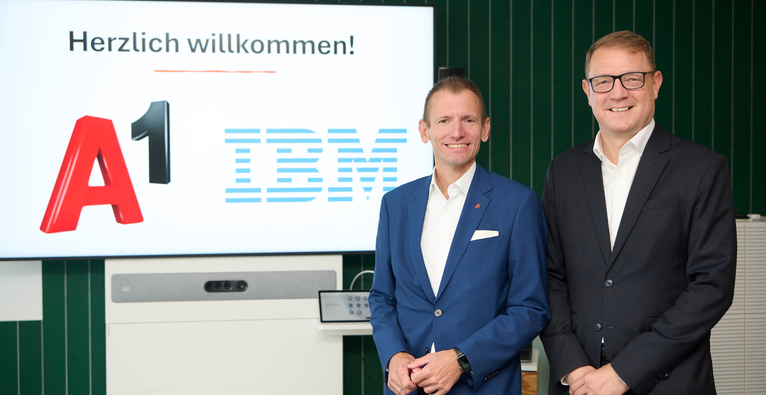
Vl. A1-CCO Martin Resel und IBM-Österreich-Chef Marco Porak | © A1/APA/Hörmandinger

Dass für Unternehmen kein Weg mehr an Agentic AI vorbeiführt, ist mittlerweile ein Gemeinplatz. Dass eine sichere und konforme Umsetzung davon nicht so einfach ist, ebenfalls. „Für KI im Unternehmenskontext gelten andere Spielregeln als im privaten Bereich. Ich spreche hier besonders von souveräner KI“, sagt Marco Porak, Generaldirektor von IBM Österreich, bei einem gemeinsamen Pressetermin mit A1 und dessen Cloud-Tochter Exoscale. Mit einer gemeinsamen Plattform, die IBM watsonx auf A1 Exoscale bringt, will man Unternehmenskunden gemeinsam eine sichere und digital souveräne Lösung bieten.

„Wir sind Teil der kritischen Infrastruktur“

Denn Schatten-KI, also die Nutzung privater bzw. vom Unternehmen nicht genehmigter KI-Anwendungen durch Mitarbeiter:innen, sei ein echtes Sicherheitsrisiko, betont Martin Resel, stv. Vorstandsvorsitzender von A1 und CCO Enterprise. „Unternehmen können es sich nicht leisten, KI nicht zu nutzen. Da geht es um Wettbewerbsfähigkeit. Alles muss effizienter werden, etwa auch in der Verwaltung. Wenn man dann aber Daten global findet, die eigentlich nicht global gespeichert werden sollten, ist das ein Problem“, sagt Resel.

Für viele A1-Unternehmenskunden und auch für A1 selbst sei das besonders relevant. „Wir sind Teil der kritischen Infrastruktur. Viele hochsensible Daten laufen auf unseren Netzen. Wir haben nicht nur Unternehmen aller Größen als Kunden, sondern zum Beispiel auch Ministerien“, sagt der A1-CCO. Gerade in der aktuellen geopolitischen Situation müssten sich Österreich und ganz Europa daher souverän aufstellen.

Orchestrierte KI-Agenten mit klaren Regeln und voller Transparenz

Und wie macht das die gemeinsame Plattform? „Ich bin mir bewusst, dass ich Repräsentant eines amerikanischen Unternehmens bin“, räumt Marco Porak ein. IBM habe aber nach nicht weniger als 98 Jahren am österreichischen Markt ein anderes Standing, als etwa die US-Hyperscaler. Warum? „IBM hat seit jeher das Prinzip, dass Kundendaten Kundendaten sind und die Architektur vom Kunden bestimmt wird“, so Porak. Und: „Globale Innovation und lokale Kontrolle widersprechen einander nicht.“ Genau so sei es auch bei watsonx. Kunden können dort entscheiden, welche KI-Modelle genutzt werden und wo die Daten liegen. Die Bandbreite geht dabei von lokal gehosteten On-Premise-Lösungen über europäische bzw. Open-Source-Modelle auf europäischen Servern bis zu Frontier-Modellen in Datencentern der US-Hyperscaler.

Konkret greift das System auf eine Vielzahl an Large Language Models (LLMs) und Agentic-Modelle zurück und orchestriert KI-Agenten, um Tasks zu erfüllen. Die dazugehörige Governance-Plattform ermöglicht nicht nur das Festlegen der Regeln dafür, sondern bietet auch jederzeit komplette Transparenz, um jeden Arbeitsschritt und die dafür genutzten Modelle nachvollziehen zu können. Für Martin Resel ist dabei ebenfalls klar: „Dass alles, was aus Asien oder Amerika kommt böse ist, sehen wir nicht so. Wichtig ist die Wahlfreiheit.“ Die Plattform sei daher offen für sämtliche Modelle.

„Wir folgen einer sehr strikten Datenklassifizierung – selber und auch für unsere Kunden“

Je nach Usecase und dem damit verbundenen Sicherheits-Level der Daten seien unterschiedliche LLMs und Speicherorte sinnvoll. „Wir folgen einer sehr strikten Datenklassifizierung – selber und auch für unsere Kunden“, sagt Resel. Nach dieser erfolge die Entscheidung, welche Modelle genutzt werden können. Gleichzeitig optimiere die Plattform durch die passende Modell-Auswahl auch den Token-Verbrauch. „Das kann sonst bekanntlich schnell teuer werden“, sagt der A1-CCO.

A1 bietet seinen Enterprise-Kunden nicht nur Zugang zur Plattform, sondern auch begleitende Services, um diese aufzusetzen. Mit den europäischen Datencentern der Tochter Exoscale kommt noch das Angebot der souveränen Cloud im eigenen Land hinzu.

Wie watsonx für A1 und seine Kunden konkret funktioniert, zeigt Exoscale-KI-Experte Christos Kapodistrias beim Pressetermin vor. In seinem Beispiel arbeiteten nicht weniger als 14 KI-Agenten orchestriert zusammen, um eine optimale Vorbereitung auf ein Kundengespräch zu erstellen. „Diesen Usecase nutzen wir auch selber“, erklärt der Experte und zeigt die verschiedenen Sicherheits- und Kontrollmechanismen ebenso wie die Nachvollziehbarkeit über die Governance-Plattform. Marco Porak merkt dazu an: „Man sieht, es gibt mehrere Checkpoints im Prozess, der ‚Human in the Loop‘ bleibt erhalten.“ Denn es gehe eben darum, Menschen bei ihrer Arbeit zu unterstützen.

Toll dass du so interessiert bist!
Hinterlasse uns bitte ein Feedback über den Button am linken Bildschirmrand.
Und klicke hier um die ganze Welt von der brutkasten zu entdecken.

brutkasten Newsletter

Aktuelle Nachrichten zu Startups, den neuesten Innovationen und politischen Entscheidungen zur Digitalisierung direkt in dein Postfach. Wähle aus unserer breiten Palette an Newslettern den passenden für dich.

Montag, Mittwoch und Freitag

AI Summaries

FounderTalks.org: „The event we would’ve wanted for ourselves“

AI Kontextualisierung

Welche gesellschaftspolitischen Auswirkungen hat der Inhalt dieses Artikels?

Leider hat die AI für diese Frage in diesem Artikel keine Antwort …

FounderTalks.org: „The event we would’ve wanted for ourselves“

AI Kontextualisierung

Welche wirtschaftlichen Auswirkungen hat der Inhalt dieses Artikels?

Leider hat die AI für diese Frage in diesem Artikel keine Antwort …

FounderTalks.org: „The event we would’ve wanted for ourselves“

AI Kontextualisierung

Welche Relevanz hat der Inhalt dieses Artikels für mich als Innovationsmanager:in?

Leider hat die AI für diese Frage in diesem Artikel keine Antwort …

FounderTalks.org: „The event we would’ve wanted for ourselves“

AI Kontextualisierung

Welche Relevanz hat der Inhalt dieses Artikels für mich als Investor:in?

Leider hat die AI für diese Frage in diesem Artikel keine Antwort …

FounderTalks.org: „The event we would’ve wanted for ourselves“

AI Kontextualisierung

Welche Relevanz hat der Inhalt dieses Artikels für mich als Politiker:in?

Leider hat die AI für diese Frage in diesem Artikel keine Antwort …

FounderTalks.org: „The event we would’ve wanted for ourselves“

AI Kontextualisierung

Was könnte das Bigger Picture von den Inhalten dieses Artikels sein?

Leider hat die AI für diese Frage in diesem Artikel keine Antwort …

FounderTalks.org: „The event we would’ve wanted for ourselves“

AI Kontextualisierung

Wer sind die relevantesten Personen in diesem Artikel?

Leider hat die AI für diese Frage in diesem Artikel keine Antwort …

FounderTalks.org: „The event we would’ve wanted for ourselves“

AI Kontextualisierung

Wer sind die relevantesten Organisationen in diesem Artikel?

Leider hat die AI für diese Frage in diesem Artikel keine Antwort …

FounderTalks.org: „The event we would’ve wanted for ourselves“