01.04.2025
SPONSORED

Call for international innovators: Turn your business idea into reality with aws First Incubator

The new program year for aws First Incubator has started! The first call is open until April 3rd and has a special focus on securing international founders, providing financial support, mentoring, and valuable networking opportunities to help new businesses thrive. Success stories like the startups "RacePace" or "nexus. Group AI" prove just how impactful the aws First Incubator program is for new businesses.
/artikel/call-for-international-innovators-turn-your-business-idea-into-reality-with-aws-first-incubator
The founders of © nexus. Group AI (left): Orion Forowycz and Andrei Cursaru; founder-team of © RacePace (right): Guillermo Alamán Requena, Lee Barad and Ido Dassa.

Are you in the early stages of founding your company or do you have an innovative business idea? All you need now is a project description, an application video, and a budget plan to apply for the aws First Incubator. The application deadline for the first call is open until April 3rd at 12 noon – apply here! This call is specifically looking for international individuals or teams.

Austria Wirtschaftsservice (aws) is starting with its annual First Incubator program once again. They are looking for innovative minds with an entrepreneurial spirit who are either planning to start a business or have recently founded one and are still in the early stages. The program helps participants take their first steps into the market – from developing a business model to gaining the necessary know-how. brutkasten spoke with two best practice examples that are currently part of the First Incubator program.

Funding up to €55,000 possible

The aws First Incubator offers coaching and mentoring from experienced experts and founders. The funding program also includes a wide range of workshops on startup-related topics, team-specific mentoring, training sessions on business model development, and coaching sessions. Its goal is to help participants develop their business idea and make it market-ready within one to two years.

In addition, aws supports participants financially, including personnel cost subsidies, a project budget, and access to a coworking space. They also gain access to a valuable network of innovators, founders, and entrepreneurs. Projects can receive up to €55,000 in funding – click here for more details. These resources ensure that startups receive not only financial support but also strategic and operational guidance.

Selected projects are invited to the „First Startup Camp“ by aws. There, a jury of experts will decide which teams will be accepted into the First Incubator program.

Success Story: DeepTech-Startup nexus. Group AI

One of the startups currently participating in the aws First Incubator program is nexus. Group AI. The funding-program was a „game-changing moment for us, as we scale our operations and continue the development“, said the CEO. Founded by Andrei I. Cursaru (CEO) and Orion Forowycz (CTO), this DeepTech-startup develops cutting-edge AI solutions designed to strengthen societal resilience. Its flagship product, IRIS, is an AI-powered risk intelligence platform that helps governments, organizations, and enterprises navigate an increasingly complex digital landscape by providing the intelligence needed to reduce risks and enhance security.

The founders Andrei Cursaru and Orion Forowycz announced their participation at the aws First Incubator. © Screenshot/LinkedIn Andrei I. Cursaru

“Joining aws First Incubator is a dream come true“, said Cursaru. “This support will allow us to stay focused on our mission“. The funding helped nexus. Group AI on the operational and technical level, allowing them to further develop their AI system. Besides the workshops and the financial support, the founders especially praise the mentorship. “It was great to have a mentor with experience in AI startups. The mentorship is very personal.” Since then, the startup has been able to scale its product, Iris, further, and the founders have gained new entrepreneurship knowledge. The startup recently announced the launch of its pre-seed funding round.

Fitness-Startup RacePace: „For us it was a dream“

Another startup that has already achieved big results with the support of the aws First Incubator is RacePace. The Viennese startup was founded in 2024 by Ido Dassa, Guillermo Alamán Requena and Lee Barad. It offers an all-in-one race day solution, providing personalized insights on pacing, nutrition, and training. The platform tracks your fitness and running route, creating a customized training plan tailored to your needs.

Back when the RacePace team applied for the aws First Incubator, they only had the idea for the platform. „For us it was a dream. We get financial support and expert guidance. And I think for us it sounded like: of course, we need to apply for it because why not? We literally have nothing to lose“, said Barad.

Advantages for foreign founders

In an interview with brutkasten, Barad pointed out how important the First Incubator is for foreign founders. “Sometimes when you’re in a new country and don’t speak the language, you can feel lost. For us, it was pretty obvious that if we wanted to continue here, we must get some kind of support and help. Also as a foreigner, you’re often not familiar with the laws in Austria. On top of that, this is our first startup, so of course it’s scary, and a lot of things can go wrong. What’s amazing is that the aws mentorship covers so many topics“, Barad said. „That is the thing that is super valuable, what’s so different in the aws First Incubator is that we actually get one-on-one support“.

Since joining the First Incubator, a lot has happened for the startup. “We really felt that someone believes in us,” said the co-founder. They launched the platform and now have hundreds of users helping them further develop the product.

Advice for applicants

Asked for one piece of advice to applicants for the aws First Incubator, Cursaru says: “Think big and act efficiently. The judges really want a startup that solves a real problem and has the potential to grow into a successful company in Austria“. Barad also has a similar advice: “First of all, don’t hesitate. Just do it. If you have an idea and a passion for building something, try to really solve a problem and do your research beforehand. I think it’s important to do your homework“.

Key requirements

To join the aws First Incubator program, applicants must meet a few key requirements. Here are the most important ones:

  • Who can apply?
    • Individuals and companies registered in Austria
    • Companies must be no more than 6 months old
  • Revenue must not exceed €10,000
  • Team size: 1 to 4 members
  • Residence status:
    • Valid residence permit with work authorization in Austria (from June 2025 to at least August 2026)
    • Applicant must have lived in Austria for no more than 5 years at the time of application
  • Nationality:
    • As an individual applicant, you must be a non-Austrian citizen
    • In a team, at least some members must be Austrian citizens
  • With a few exceptions, startups from all sectors are welcome. You can find the full eligibility criteria here.
  • By the way, additional points are awarded for projects with women in key leadership positions and projects that address socio-political challenges (SDGs).
Deine ungelesenen Artikel:
24.09.2026

Apollo: Sprachmodell von ÖAW und Mistral schließt Lücken in 2.000 Jahre alten Texten

"Apollo" ergänzt fehlende Inhalte in fragmentarischen antiken Texten und gilt eigenen Angaben nach als weltweit erstes LLM für Altgriechisch.
/artikel/apollo-sprachmodell-von-oeaw-und-mistral-schliesst-luecken-in-2-000-jahre-alten-texten
24.09.2026

Apollo: Sprachmodell von ÖAW und Mistral schließt Lücken in 2.000 Jahre alten Texten

"Apollo" ergänzt fehlende Inhalte in fragmentarischen antiken Texten und gilt eigenen Angaben nach als weltweit erstes LLM für Altgriechisch.
/artikel/apollo-sprachmodell-von-oeaw-und-mistral-schliesst-luecken-in-2-000-jahre-alten-texten
Apollo, KI, Altgiechisch, Mistral
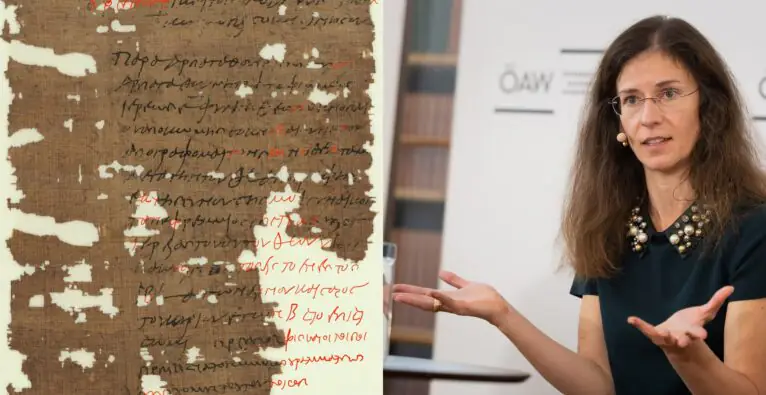
© Österreichische Nationalbibliothek/ÖAW/Daniel Hinterramskogler - Papyrus aus der römischen Kaiserzeit mit einer griechischen Geburtsanzeige, von Apollo rekonstruiert (Römisches Ägypten, 149 n. Chr.) und Anna Dolganov, Forscherin am Österreichischen Archäologischen Institut der ÖAW.

In Museen und Bibliotheken weltweit lagern hunderttausende Inschriften und über eine Million Papyrusfragmente aus der Antike. Der Großteil des Materials ist fragmentarisch und schwer lesbar. „92 Prozent der Papyri warten bis heute auf ihre Entzifferung. Ein gigantischer, unerschlossener Schatz der Geschichte“, heißt es per Aussendung der Österreichischen Akademie der Wissenschaften (ÖAW). Genau hier möchte Apollo ansetzen.

Apollo: „Neues Fenster zu unserem gemeinsamen kulturellen Erbe“

Entwickelt wurde das Large Language Model (LLM) in einer Kooperation zwischen der ÖAW und den europäischen KI-Unternehmen Mistral AI und SAIL Reply. Am gestrigen Mittwoch präsentierten die Forschungspartner die erste Stufe des Apollo-KI-Systems, das ab sofort der Wissenschaft und der Öffentlichkeit zur Verfügung steht.

„Apollo zeigt, was europäische Zusammenarbeit leisten kann, wenn KI, die gezielt an wissenschaftliche Anforderungen angepasst werden kann, auf jahrhundertealtes wissenschaftliches Wissen trifft“, sagt Guillaume Lample, Co-Founder und Chief Scientist von Mistral. „Indem Mistrals Technologie dabei hilft, Texte wiederherzustellen, die seit zweitausend Jahren nur fragmentarisch überliefert sind, eröffnet sie ein neues Fenster zu unserem gemeinsamen kulturellen Erbe – und das ist erst der Anfang.“

600 Millionen Wörter

Die meisten Texte der Antike sind nur unvollständig überliefert und es fehlen einzelne Wörter oder sogar ganze Textpassagen. Das Sprachmodell Apollo könne fehlende Inhalte von Fragmenten eigenständig ergänzen und dabei helfen, das Verständnis und die historische Einordnung eines Schriftstückes zu verbessern.

Obwohl für das Training der KI in Altgriechisch nur 600 Millionen Wörter zur Verfügung standen – mehrere zehn Milliarden Wörter gelten üblicherweise als der Standard für LLMs – sei eigenen Angaben nach Apollo treffsicher.

„Bei einem vorhandenen Originaltext auf Papyrus erreicht das Modell bei maskierten, also bewusst versteckten Passagen eine Trefferquote von rund 80 Prozent“, erklärt Anna Dolganov, Forscherin am Österreichischen Archäologischen Institut der ÖAW und Mastermind hinter dem Projekt. Bei tatsächlich unbekannten Textlücken bewerteten internationale Fachexpert:innen, die das KI-System im Rahmen einer Blindstudie evaluiert haben, Apollos Vorschläge in 77 Prozent der Fälle als mindestens ebenso gut wie durch Menschen vorgenommene Ergänzungen und in 16–20 Prozent der Fälle sogar besser, heißt es.

Apollo erkennt Sprachstufen

Besonders beeindruckend sei zudem, wie präzise Apollo zwischen verschiedenen Sprachstufen des Griechischen unterscheiden kann, betont Dolganov: „Unser LLM kann mit vergleichsweise geringem Wissen über einen Kontext weitreichende Schlüsse ziehen. Anhand von Satzbau und Vokabular erkennt Apollo präzise, ob ein Text zum Beispiel aus Homers ‚Odyssee‘ stammt, und ergänzt ihn im passenden Sprachregister.“

Als Beweis zeigte Dolganov bei der Präsentation von Apollo etwa eine antike Geburtsurkunde, die vollständig rekonstruiert wurde. Zudem wurde eine beim Ausbruch des Vesuvs verkohlte Schriftrolle an entscheidenden Stellen „vollständig lesbar gemacht“. Und mit der Rekonstruktion einer fragmentarischen Inschrift aus dem Schwarzmeerraum hat sich der Forscherin zufolge belegen lassen, dass in einer bestimmten Region bereits römisches Recht galt. Die Aussendung sprach hierbei von einer „weitreichenden Erkenntnis, die durch einen Beleg für die römische Prostitutionssteuer untermauert wird.“

Weitere Stufen geplant

„Mithilfe der KI entsteht ein neues Bild der antiken Sozial- und Wirtschaftsgeschichte, da sich viele Erkenntnisse erst aus der Masse der Dokumente ergeben – etwa bei Steuerquittungen“, präzisiert Dolganov.

Und Heinz Faßmann, Präsident der Österreichischen Akademie der Wissenschaften, ergänzt: „Apollo bringt die Erforschung von historischen Schriftstücken und Dokumenten in ein neues Zeitalter. Der Einsatz des neuen Sprachmodells wird völlig neue Forschungsfragen zulassen und unser historisches Wissen erweitern. Wir sind stolz, dass die ÖAW gemeinsam mit dem europäischen KI-Unternehmen Mistral diese wegweisende Technologie entwickelt hat. Für die Zukunft streben wir eine vertiefte Zusammenarbeit mit Mistral an.“

© ÖAW/Daniel Hinterramskogler – Heinz Faßmann, Präsident der Österreichischen Akademie der Wissenschaften, bei der öffentlichen Vorstellung von Apollo.

Der ersten Stufe des Modells sollen bald noch weitere folgen. „Das Ziel ist ambitioniert, aber machbar“, wie Dolganov betont: Die KI soll künftig unerschlossene Papyri sowohl entziffern als auch rekonstruieren können. Geplant ist außerdem eine Erweiterung, mit der das Modell thematische und semantische Suchen in der gesamten griechischen Textüberlieferung durchführen sowie Parallelstellen suchen soll und so die passende Evidenz für Ergänzungsvorschläge gleich mitliefert.

Dolganov, die ÖAW und Mistral wollen jedoch bei Altgriechisch nicht aufhören. Aufbauend auf den Erfahrungen soll die KI künftig auch mit einem lateinischen Textkorpus trainiert werden. Dafür stehen dann rund zwölf Milliarden Wörter zur Verfügung. Was für das Projekt noch fehlt, sei ein passender Name.

Toll dass du so interessiert bist!
Hinterlasse uns bitte ein Feedback über den Button am linken Bildschirmrand.
Und klicke hier um die ganze Welt von der brutkasten zu entdecken.

brutkasten Newsletter

Aktuelle Nachrichten zu Startups, den neuesten Innovationen und politischen Entscheidungen zur Digitalisierung direkt in dein Postfach. Wähle aus unserer breiten Palette an Newslettern den passenden für dich.

Montag, Mittwoch und Freitag

AI Summaries

Call for international innovators: Turn your business idea into reality with aws First Incubator

AI Kontextualisierung

Welche gesellschaftspolitischen Auswirkungen hat der Inhalt dieses Artikels?

Leider hat die AI für diese Frage in diesem Artikel keine Antwort …

Call for international innovators: Turn your business idea into reality with aws First Incubator

AI Kontextualisierung

Welche wirtschaftlichen Auswirkungen hat der Inhalt dieses Artikels?

Leider hat die AI für diese Frage in diesem Artikel keine Antwort …

Call for international innovators: Turn your business idea into reality with aws First Incubator

AI Kontextualisierung

Welche Relevanz hat der Inhalt dieses Artikels für mich als Innovationsmanager:in?

Leider hat die AI für diese Frage in diesem Artikel keine Antwort …

Call for international innovators: Turn your business idea into reality with aws First Incubator

AI Kontextualisierung

Welche Relevanz hat der Inhalt dieses Artikels für mich als Investor:in?

Leider hat die AI für diese Frage in diesem Artikel keine Antwort …

Call for international innovators: Turn your business idea into reality with aws First Incubator

AI Kontextualisierung

Welche Relevanz hat der Inhalt dieses Artikels für mich als Politiker:in?

Leider hat die AI für diese Frage in diesem Artikel keine Antwort …

Call for international innovators: Turn your business idea into reality with aws First Incubator

AI Kontextualisierung

Was könnte das Bigger Picture von den Inhalten dieses Artikels sein?

Leider hat die AI für diese Frage in diesem Artikel keine Antwort …

Call for international innovators: Turn your business idea into reality with aws First Incubator

AI Kontextualisierung

Wer sind die relevantesten Personen in diesem Artikel?

Leider hat die AI für diese Frage in diesem Artikel keine Antwort …

Call for international innovators: Turn your business idea into reality with aws First Incubator

AI Kontextualisierung

Wer sind die relevantesten Organisationen in diesem Artikel?

Leider hat die AI für diese Frage in diesem Artikel keine Antwort …

Call for international innovators: Turn your business idea into reality with aws First Incubator
